Shirahama
A white sand beach whose sand is shipped in from Australia, backed by cliffs and very old hot springs.
Updated 29 August 2026
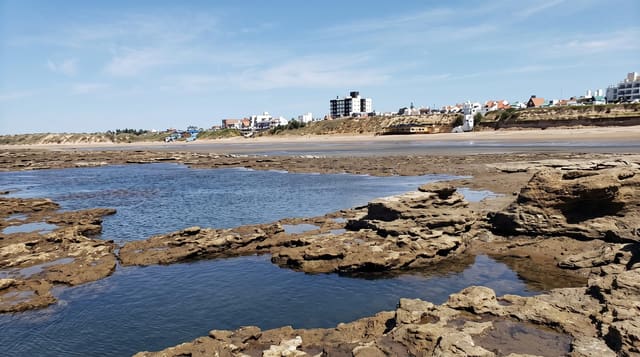
Shirahama means white beach, and the sand at Shirarahama is genuinely white - it is also, since the 1980s, largely imported from Western Australia, because the original sand eroded away and replenishment with local material did not match. That is not a secret and the town states it. Around the beach is a resort built on hot springs mentioned in the Nihon Shoki in the seventh century, which makes them among the oldest recorded in Japan; Saki no Yu, an open bath on the rocks at the water's edge, has been in use since then and is the one worth queueing for. Sandanbeki is a cliff of some fifty metres south of the town with a lift down to a sea cave inside it. Engetsuto, an islet with a hole worn through the middle, sits offshore and frames the sunset. Adventure World, a large zoo and marine park, is the other local draw.
The landscape
- Imported white sand - the beach replenished from Western Australia since the 1980s.
- Saki no Yu - a rock-edge bath fed by springs recorded in the seventh century.
- Sandanbeki - fifty-metre cliffs with a lift down into a sea cave.
- Engetsuto - an offshore islet with a hole worn through it, framing the sunset.
When to go
July and August for swimming; April to October otherwise. Two days.
What to expect
Summer weekends are extremely crowded and accommodation prices double. The resort strip is dated in parts. Saki no Yu has no roof and closes in high seas and rough weather. Getting there from Osaka takes over two hours.
Nearby
Kumano Kodo trailheads are east; Wakayama city is north.
What to pack for Shirahama
Chosen from what this place is for. Tap a kit for the full checklist.
- Broken-in walking shoes or boots - Grip and ankle support matter more than looks; never hike in brand-new boots. Find on Amazon
- Reef-safe sunscreen - High SPF that will not bleach the coral you are swimming over. Find on Amazon
- Head torch + spare batteries - Hands-free light is essential; caves are truly dark. Find on Amazon
- Swimwear - Needed at most public thermal pools; some traditional baths are nude and single-sex. Find on Amazon
Some links on this page are Amazon affiliate links - if you buy through them we may earn a small commission at no extra cost to you.
All packing kitsPlan your trip
Where to start if Shirahama is going on the list.
Booking links on this page are affiliate links - if you book through them we may earn a small commission at no extra cost to you. It never changes what we write about a place.
Opening times, ticket prices and seasonal closures change - check the official source before you go: official site.