Koyasan
Japan's holy mountain of Shingon Buddhism - a monastery town in the cedar forest where visitors sleep in temples and walk the lantern-lit Okunoin cemetery.
Updated 18 October 2026
AI illustration
UNESCO World Heritage
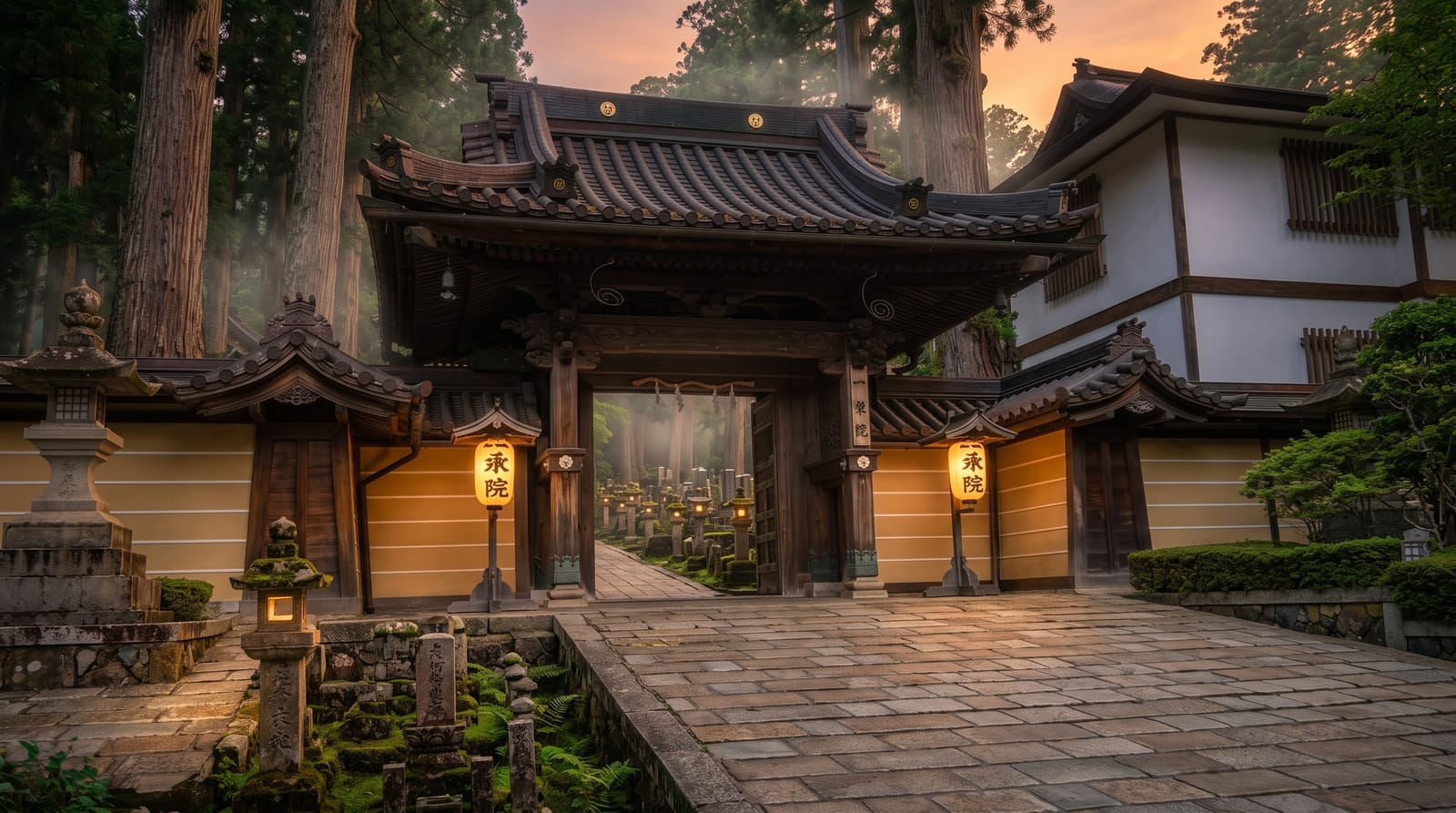
Koyasan is a monastery town on a forested mountain plateau, founded twelve centuries ago as the headquarters of Shingon Buddhism, and it remains one of the most atmospheric places in Japan to spend a night. Dozens of temples offer shukubo lodging - tatami rooms, vegetarian shojin ryori dinners and dawn prayers with the monks - and the town's masterpiece is Okunoin, Japan's largest cemetery, where a two-kilometre path of moss-covered memorials and stone lanterns leads through giant cedars to the mausoleum of Kobo Daishi, the founder, held by tradition to rest there in eternal meditation. Walked at dusk or dawn, lanterns glowing in the mist, it is an experience that outlasts any single sight.
History
The monk Kūkai founded the mountain monastery in 819, choosing a plain at about 800 metres among eight peaks because the terrain was said to resemble a lotus, and the original monastery grew into the town of Kōya, the headquarters of Kōyasan Shingon Buddhism, with a university of religious studies and 120 sub-temples, many of them lodging pilgrims. Okunoin, Kūkai's mausoleum, stands in the largest graveyard in Japan, and Kōya is also a common starting point for the Shikoku pilgrimage linked with him; in 2004 Kongōbu-ji became part of the Sacred Sites and Pilgrimage Routes in the Kii Mountain Range World Heritage Site (Wikipedia, Mount Kōya).
Highlights
- Okunoin at dawn or dusk - the lantern path through the great cemetery under the cedars.
- A shukubo temple stay - tatami, monastic vegetarian dinner and morning prayers.
- The Danjo Garan complex - the vermilion great pagoda at the mountain's ceremonial heart.
- Kongobu-ji - the head temple, with its painted screens and huge rock garden.
When to go
Late spring through autumn is the comfortable window; November's maples are superb. The mountain sits high enough to be markedly cooler than Osaka - a blessing in summer, and snow-dusted, quiet and cold in winter, when a heated temple room feels earned. Book temple lodging well ahead for weekends and autumn.
Good to know
The point of Koyasan is the overnight - day-trippers see temples but miss the dusk cemetery walk and morning prayers that make the place. Temple lodging is simple and not cheap; you are paying for atmosphere and tradition, not hotel comfort, and dinner is vegetarian and early. The Okunoin path asks for quiet respect - it is an active sacred site and family cemetery, not a photo set.
Nearby
Osaka and Nara are each within a couple of hours; the Kumano pilgrimage routes continue south through the same sacred mountains.
What to pack for Koyasan
Chosen from what this place is for. Tap a kit for the full checklist.
- Warm base layers - Merino or synthetic against the skin - never cotton, which chills when damp. Find on Amazon
- Comfortable walking shoes - Sightseeing means kilometres of pavement and cobbles daily. Find on Amazon
- Modest clothing - Shoulders and knees covered - the single most common requirement. Find on Amazon
- Shelter suited to the place - Tent, tarp or hut booking - match it to the terrain and rules. Find on Amazon
Some links on this page are Amazon affiliate links - if you buy through them we may earn a small commission at no extra cost to you.
All packing kitsPlan your trip
Where to start if Koyasan is going on the list.
Booking links on this page are affiliate links - if you book through them we may earn a small commission at no extra cost to you. It never changes what we write about a place.
Opening times, ticket prices and seasonal closures change - check the official source before you go: official site.