St Peter-Ording
A beach up to two kilometres wide at low tide, with restaurants standing on stilts out on the sand.
Updated 4 September 2026
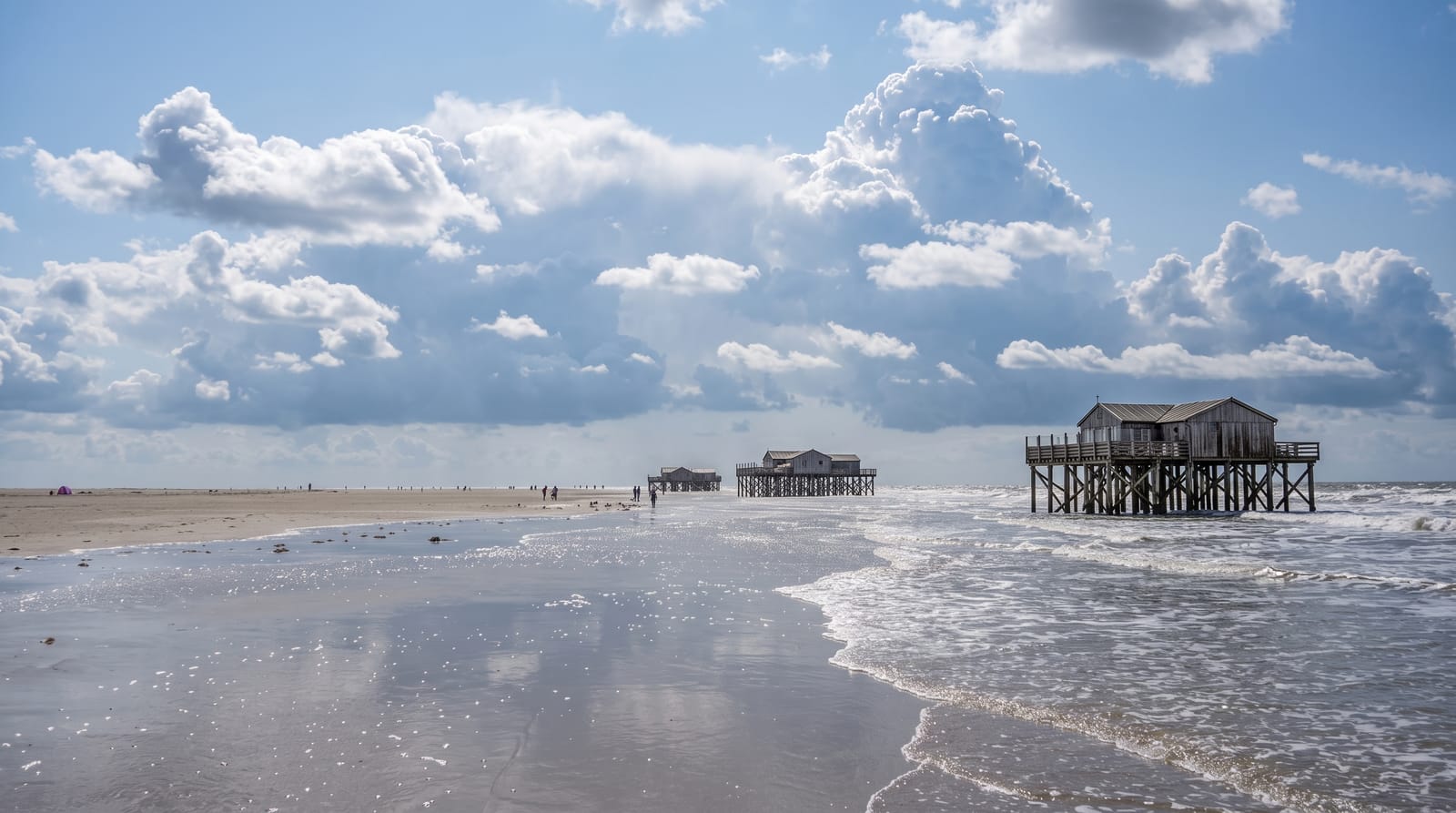
AI illustration
The beach at St Peter-Ording runs about twelve kilometres and is up to two kilometres wide when the tide is out, one of the largest sand beaches in Europe. Because the sand floods twice a day, the beach buildings are Pfahlbauten, restaurants and lifeguard stations raised on wooden piles several metres above the sand, reached by long walkways from the dunes; they are the town's emblem. Steady wind and the wide flat sand made the beach a centre for kite buggying, land sailing and kitesurfing. A sulphur spring found in 1957 supports a spa. The sand is separated from the dunes by a belt of salt marsh.
Highlights
- The stilt buildings - restaurants on piles standing out on the sand.
- The two-kilometre width - beach exposed at low tide across a huge area.
- The wind sports - kite buggying and land sailing on the flat sand.
- The salt marsh - a belt between dunes and beach crossed by walkways.
When to go
May to September; walks from the dunes to the water can take twenty minutes each way at low tide. Wind is constant, which suits sport more than sunbathing.
Practical notes
Reaching the water is a long walk across sand. Parking is paid and distant. The wind is relentless and the North Sea cold.
Nearby
Husum lies east; the Halligen are north.
What to pack for St Peter-Ording
Chosen from what this place is for. Tap a kit for the full checklist.
- Reef-safe sunscreen - High SPF that will not bleach the coral you are swimming over. Find on Amazon
- Quick-dry clothing - Board shorts or synthetics that shrug off spray and dry fast. Find on Amazon
- Loose, light, long clothing - Covering up beats bare skin in the desert - and locals dress this way for a reason. Find on Amazon
- Comfortable walking shoes - Sightseeing means kilometres of pavement and cobbles daily. Find on Amazon
Some links on this page are Amazon affiliate links - if you buy through them we may earn a small commission at no extra cost to you.
All packing kitsPlan your trip
Where to start if St Peter-Ording is going on the list.
Booking links on this page are affiliate links - if you book through them we may earn a small commission at no extra cost to you. It never changes what we write about a place.
Opening times, ticket prices and seasonal closures change - check the official source before you go: official site.


