Nezu Shrine
An early eighteenth-century shrine that survived the twentieth century intact, with a tunnel of small red torii up its slope.
Updated 20 October 2026
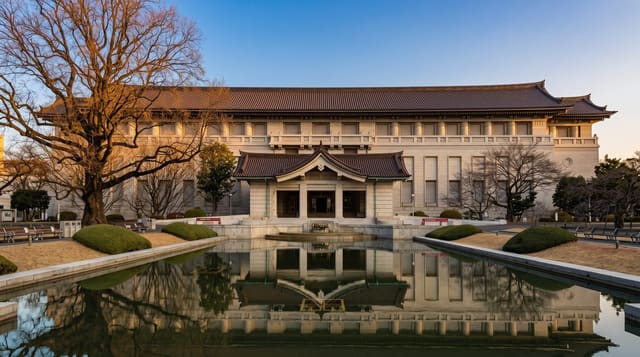
Nezu Shrine's buildings date from 1706, and the unusual thing about them in Tokyo is that they are still there - the main hall, worship hall, gate and corridor survived the 1923 earthquake and the fires of 1945, which almost nothing else of that age in the city did, and the group is designated an important cultural property. The layout is gongen-zukuri, with the halls linked by a connecting chamber under one roof, and the paintwork is deep red and black. A slope beside the main hall carries a passage of about a thousand small vermilion torii, close-set enough to form a tunnel - the same form as Fushimi Inari and a fraction of the size, but without the crowd. The azalea garden on the hillside holds around three thousand plants of a hundred varieties and flowers through the middle of April, when a festival fills the grounds with stalls.
History
Established in 1705, the shrine is one of the oldest places of worship in Tokyo, built in the ishi-no-ma-zukuri style after the Tōshō-gū at Nikkō; several of its buildings are Important Cultural Properties, and it is one of the Tokyo Ten Shrines (Wikipedia, Nezu Shrine).
What to look for
- 1706 buildings - a gongen-zukuri group that survived 1923 and 1945 intact.
- A torii tunnel - about a thousand small vermilion gates up the slope.
- Three thousand azaleas - a hundred varieties on the hillside, flowering in mid-April.
- Original paintwork form - deep red and black on halls linked under one roof.
When to go
Mid-April for the azalea festival; all year otherwise. An hour.
Practical notes
The azalea garden is charged and crowded during the festival; outside it the slope is plain. The torii passage is short - a minute's walk. Festival stalls fill the grounds and change the atmosphere. There is little English signage.
Nearby
Yanaka is north-east; Ueno Park is east.
Key facts
Source: Wikidata, item Q335612, read on 18 October 2026.
What to pack for Nezu Shrine
Chosen from what this place is for. Tap a kit for the full checklist.
- Comfortable walking shoes - Sightseeing means kilometres of pavement and cobbles daily. Find on Amazon
- Modest clothing - Shoulders and knees covered - the single most common requirement. Find on Amazon
- A slim anti-theft daypack - Zips that close properly; keep it in front in crowds and on transit. Find on Amazon
- A scarf or shawl - To cover the head or shoulders on entry; women especially at mosques. Find on Amazon
Some links on this page are Amazon affiliate links - if you buy through them we may earn a small commission at no extra cost to you.
All packing kitsPlan your trip
Where to start if Nezu Shrine is going on the list.
Booking links on this page are affiliate links - if you book through them we may earn a small commission at no extra cost to you. It never changes what we write about a place.
Opening times, ticket prices and seasonal closures change - check the official source before you go: official site.