Kamay ni Hesus
A hillside shrine at Lucban with a giant risen Christ at the top of 300 steps, a healing ministry and a crowded Lenten season.
Updated 2 October 2026
AI illustration
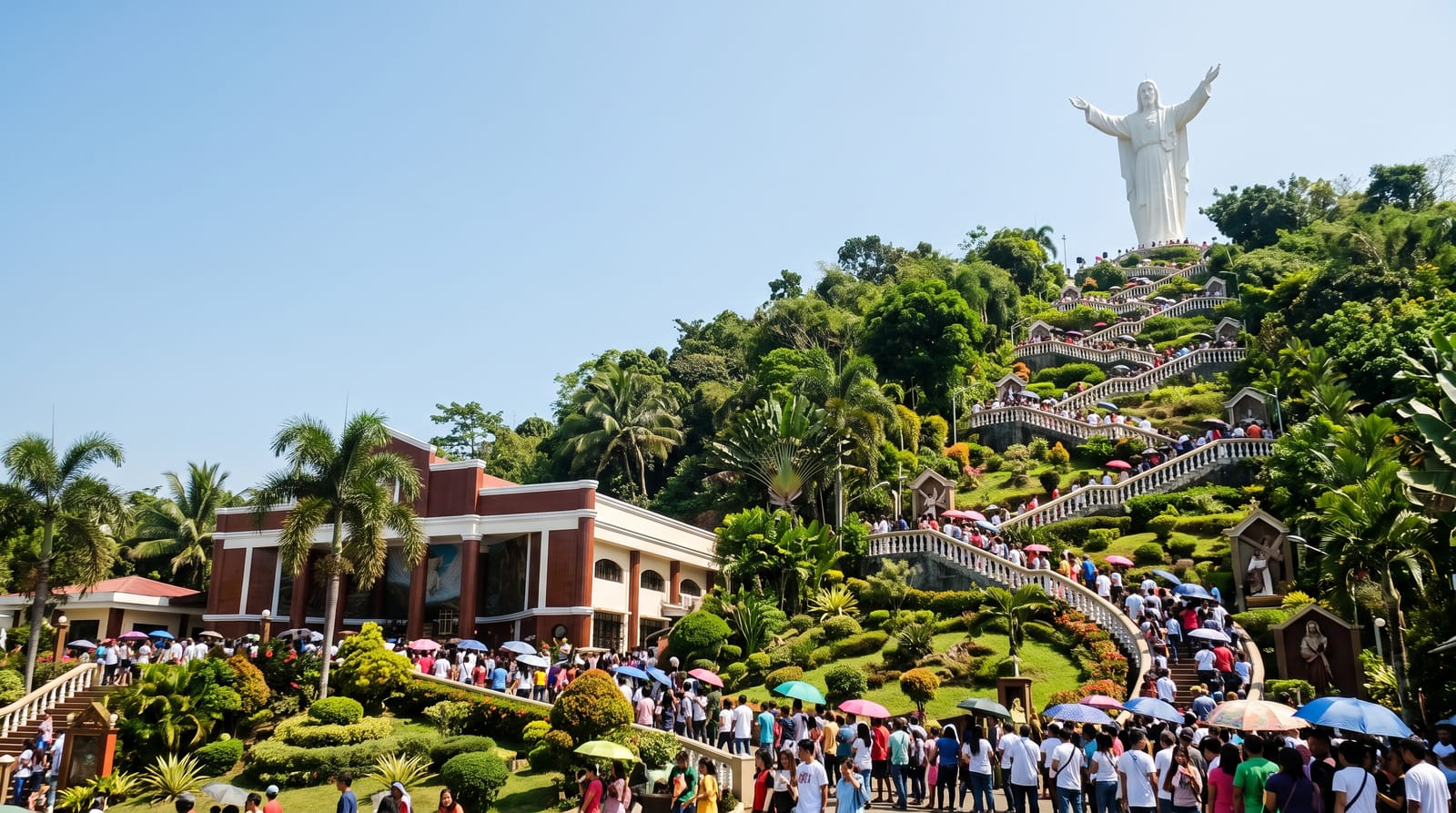
Kamay ni Hesus began in the 2000s as a healing ministry run by a local priest and grew into one of the busiest pilgrimage sites in southern Luzon. The centrepiece is a hillside climbed by around three hundred steps past life-size sculptural stations of the cross and scenes from the Bible, ending at a large statue of the risen Christ on the summit with a view over Lucban and toward Mount Banahaw. Below are the church, a healing hall where weekly services draw large numbers of people seeking cures, gardens, a replica of Noah's ark used as accommodation, and the retail and food area that inevitably followed. The atmosphere is closer to a devotional theme park than to an old shrine, which some visitors find off-putting and others find is exactly the point. Lucban itself, a few minutes away, is a handsome upland town known for its Pahiyas harvest festival in May and its longganisa.
Highlights
- The stairway stations - sculptures up the three hundred steps.
- The summit Christ - the large statue over Lucban.
- The healing hall - the weekly services at the base.
- The Banahaw view - the mountain across the valley.
When to go
November to May for the climb in dry weather. Lent and Holy Week are the peak, with very large crowds; weekdays outside those are calm.
Practical notes
The climb is three hundred steps in open sun with little shade. It is modern, commercial and busy - not a historic shrine. Lent brings crowds that fill the town's roads and parking.
Nearby
Lucban town and Kamay ni Hesus sit below Mount Banahaw; Tayabas basilica is about half an hour away.
What to pack for Kamay ni Hesus
Chosen from what this place is for. Tap a kit for the full checklist.
- Comfortable walking shoes - Sightseeing means kilometres of pavement and cobbles daily. Find on Amazon
- Modest clothing - Shoulders and knees covered - the single most common requirement. Find on Amazon
- A slim anti-theft daypack - Zips that close properly; keep it in front in crowds and on transit. Find on Amazon
- A scarf or shawl - To cover the head or shoulders on entry; women especially at mosques. Find on Amazon
Some links on this page are Amazon affiliate links - if you buy through them we may earn a small commission at no extra cost to you.
All packing kitsPlan your trip
Where to start if Kamay ni Hesus is going on the list.
Booking links on this page are affiliate links - if you book through them we may earn a small commission at no extra cost to you. It never changes what we write about a place.