Hakata Tonkotsu Ramen
Pork-bone broth boiled hard until it turns white, with thin straight noodles and a refill system for a second helping.
Updated 29 August 2026
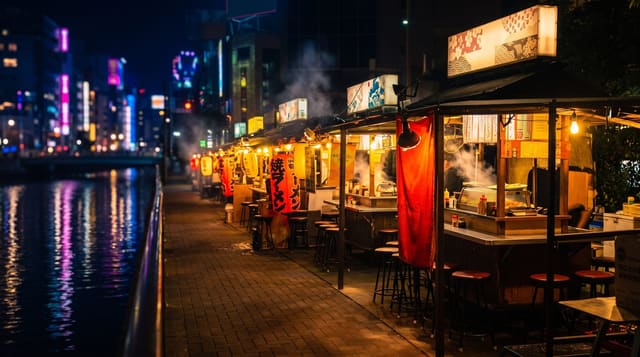
Tonkotsu broth is pork bones boiled at a rolling temperature for many hours, which emulsifies the collagen and marrow into the water and turns it opaque white and thick; the standard story is that the technique was arrived at in Kurume in the 1930s when a cook left a pot boiling too hard by accident. Hakata's version pairs it with very thin straight noodles, which cook in seconds and go soft quickly - hence kaedama, the refill: you order the noodles firm, eat them fast, and buy a second portion dropped into the remaining broth. Firmness is ordered by name, from yawa through futsu to barikata and harigane, which is barely cooked. Toppings are minimal - chashu, spring onion, pickled ginger, sesame, and a jar of spicy mustard greens on the table. The yatai, open-fronted street stalls that set up in the evening along Nakasu and Tenjin, are the traditional setting.
What's there
- White pork broth - bones boiled hard for hours until the fat emulsifies.
- Kaedama - a second portion of noodles ordered into the remaining broth.
- Firmness by name - from soft through barikata to harigane, barely cooked.
- Yatai stalls - open-fronted street kitchens setting up along the river in the evening.
When to go
All year; evenings for the yatai. An hour.
What to expect
Thin noodles soften fast - eat quickly or order them firm. Yatai are small, cash-only in many cases, and cramped in cold or wet weather. Prices at yatai are higher than at shops. The broth is very rich.
Nearby
Nakasu and Tenjin hold the yatai; Dazaifu is south-east.
What to pack for Hakata Tonkotsu Ramen
Chosen from what this place is for. Tap a kit for the full checklist.
- A reusable bag or container - For market produce and cutting down on packaging. Find on Amazon
- Wet wipes + hand sanitiser - Street food and washbasins do not always go together. Find on Amazon
Some links on this page are Amazon affiliate links - if you buy through them we may earn a small commission at no extra cost to you.
All packing kitsPlan your trip
Where to start if Hakata Tonkotsu Ramen is going on the list.
Booking links on this page are affiliate links - if you book through them we may earn a small commission at no extra cost to you. It never changes what we write about a place.
Opening times, ticket prices and seasonal closures change - check the official source before you go: official site.