Yanagawa
Four hundred and seventy kilometres of canals dug as castle moats and irrigation, punted in flat boats past willows.
Updated 29 August 2026
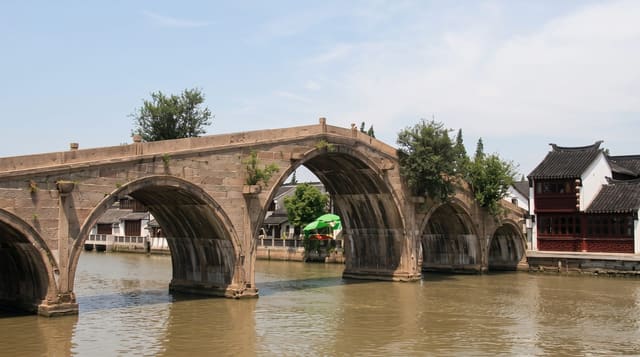
Yanagawa sits on the Chikugo delta and its canal network - some 470 kilometres in total across the district - was cut from the sixteenth century as a combination of castle moat, irrigation and drainage, and it still does the drainage job. The donkobune are flat punts poled by a boatman standing at the stern along about four kilometres of the central channels, under low stone bridges that require passengers to duck, past willows, brick walls, private gardens and the back doors of houses, with the boatman singing and pointing things out over the course of an hour. In winter the boats have a kotatsu, a heated table, under a cover. Ohana, the residence of the Tachibana family who held the domain, has a Japanese garden and a Western-style building of 1910. The local dish is seiromushi, steamed eel on rice in a bamboo box, and it is what the town is known for.
Highlights
- Punted flat boats - poled along four kilometres of central canals past willows.
- Low stone bridges - passengers ducking as the boat goes under them.
- A 470-kilometre network - moat, irrigation and drainage cut from the sixteenth century.
- Seiromushi - steamed eel on rice in a bamboo box, the town's dish.
When to go
All year; winter boats have heated tables under covers. Half a day.
What to expect
Boats do not run in high water and are cancelled after heavy rain. Commentary and songs are in Japanese. Eel restaurants queue at lunch and are expensive. The town outside the canals is ordinary.
Nearby
Fukuoka is north; Kumamoto is south.
What to pack for Yanagawa
Chosen from what this place is for. Tap a kit for the full checklist.
- Comfortable walking shoes - Sightseeing means kilometres of pavement and cobbles daily. Find on Amazon
- A slim anti-theft daypack - Zips that close properly; keep it in front in crowds and on transit. Find on Amazon
- A refillable water bottle - Many cities have public fountains; save money and plastic. Find on Amazon
- A light layer + compact umbrella - For museum air-con and a sudden shower. Find on Amazon
Some links on this page are Amazon affiliate links - if you buy through them we may earn a small commission at no extra cost to you.
All packing kitsPlan your trip
Where to start if Yanagawa is going on the list.
Booking links on this page are affiliate links - if you book through them we may earn a small commission at no extra cost to you. It never changes what we write about a place.
Opening times, ticket prices and seasonal closures change - check the official source before you go: official site.