Daisetsuzan National Park
One of Japan's largest national parks, a high volcanic plateau of hot springs, bear country and the earliest autumn colour in Japan.
Updated 21 October 2026
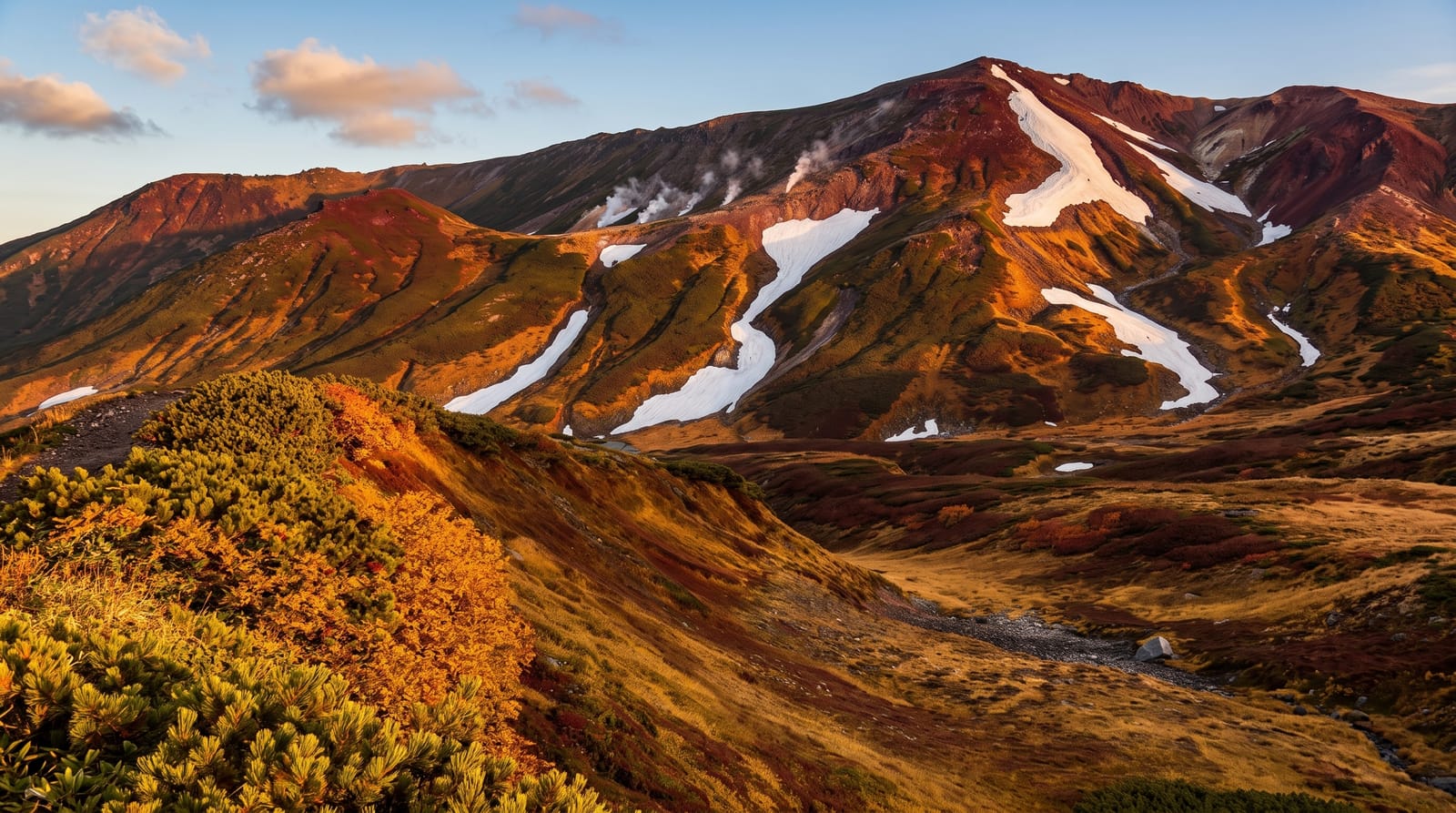
AI illustration
Daisetsuzan covers a plateau of volcanoes, alpine tundra and hot springs in the middle of Hokkaido, and until a larger park was created in the Hidaka mountains in 2024 it was the largest national park in Japan by area. The Ainu name for the range translates roughly as the playground of the gods, and the scale fits: ridges of bare volcanic rock, snow patches that survive the summer, and a plateau of dwarf pine and alpine flowers that hikers cross for days without meeting a road. Asahidake, the highest point in Hokkaido at 2,291 metres, is reached by ropeway to a boardwalk loop past steaming vents. On the northern side, Sounkyo cuts a gorge of columnar cliffs with two roadside waterfalls. Autumn colour arrives here in mid September, earlier than anywhere else in the country.
Highlights
- Asahidake ropeway - a boardwalk loop past steaming vents below the highest peak in Hokkaido.
- Sounkyo Gorge - columnar basalt cliffs with the Ginga and Ryusei waterfalls beside the road.
- The central traverse - a multi-day hut and tent route across the high plateau.
- Early autumn colour - alpine slopes turning red and gold from the middle of September.
When to go
Trails on the plateau are usable roughly from late June, once the snowfields shrink, until late September. Mid September is the peak of the alpine colour and the busiest fortnight of the year at the ropeway. The hot spring villages stay open through winter for skiing and backcountry touring, but the high routes are closed.
Things to know
Weather on the plateau turns fast and cold even in August, and the ropeway shuts in high wind, which strands the easy option. Brown bears live here in numbers and the park does not pretend otherwise. Public transport is thin, so most visitors need a car. Outside the two ropeway areas, facilities are basic and English signage is limited.
Nearby
Asahikawa and its zoo, the Furano and Biei farmland, and the caldera lakes of Akan to the east.
Key facts
Source: Wikidata, item Q1157659, read on 18 October 2026.
What to pack for Daisetsuzan National Park
Chosen from what this place is for. Tap a kit for the full checklist.
- Broken-in walking shoes or boots - Grip and ankle support matter more than looks; never hike in brand-new boots. Find on Amazon
- Binoculars - The single best wildlife tool - even a compact pair transforms a sighting. Find on Amazon
- Warm base layers - Merino or synthetic against the skin - never cotton, which chills when damp. Find on Amazon
- Shelter suited to the place - Tent, tarp or hut booking - match it to the terrain and rules. Find on Amazon
Some links on this page are Amazon affiliate links - if you buy through them we may earn a small commission at no extra cost to you.
All packing kitsPlan your trip
Where to start if Daisetsuzan National Park is going on the list.
Booking links on this page are affiliate links - if you book through them we may earn a small commission at no extra cost to you. It never changes what we write about a place.
Opening times, ticket prices and seasonal closures change - check the official source before you go: official site.