Sounkyo Gorge
A twenty-four kilometre gorge of columnar rock walls with an onsen village at its centre and a ropeway above it.
Updated 21 October 2026
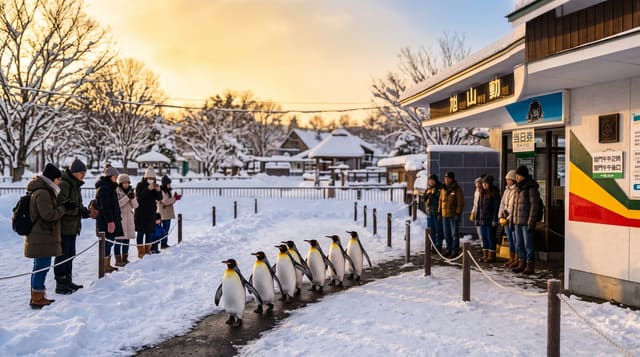
Sounkyo cuts through the northern edge of Daisetsuzan, one of Japan's largest national parks, and its walls are columnar joints - vertical hexagonal columns formed as thick volcanic rock cooled - running for about twenty-four kilometres and rising a hundred metres and more above the road. Two waterfalls, Ginga and Ryusei, drop off the wall side by side near the village and are known together as the paired falls; a steep path climbs to a platform where both are visible at once. The onsen village sits in the gorge floor and is the base for the ropeway and chairlift up Kurodake, which puts walkers at 1,520 metres and onto the trails across the Daisetsuzan plateau - the first place in Japan where autumn colour arrives each year, usually in mid-September. In winter an ice festival builds lit ice structures on the frozen river bed.
History
The gorge was formed by an eruption of the Daisetsuzan volcanoes about 30,000 years ago, whose welded tuff the Ishikari River has cut into cliffs running over 24 kilometres. In 1957 shops and hotels from the surrounding area were moved here, the start of the Sōunkyō Onsen resort, and a rebuilding begun in 1987 with the Ministry of the Environment merged 36 old buildings into 18 hotels, mostly finished in July 1998 (Wikipedia, Sōunkyō).
Highlights
- Columnar walls - hexagonal rock columns running twenty-four kilometres.
- The paired falls - Ginga and Ryusei dropping side by side off the wall.
- The Kurodake ropeway - access to 1,520 metres and the Daisetsuzan plateau.
- The earliest autumn - colour arriving here before anywhere else in Japan.
When to go
Mid-September for the first autumn colour; June to October otherwise. Two days.
Things to know
The onsen village is small and dated in parts. Ropeway and chairlift close in wind and cloud. The plateau above is real mountain terrain with fast weather changes. Autumn weekends are heavily booked.
Nearby
Asahidake is south in the same park; Asahikawa is west.
Key facts
Source: Wikidata, item Q3511708, read on 18 October 2026.
What to pack for Sounkyo Gorge
Chosen from what this place is for. Tap a kit for the full checklist.
- Broken-in walking shoes or boots - Grip and ankle support matter more than looks; never hike in brand-new boots. Find on Amazon
- Swimwear - Needed at most public thermal pools; some traditional baths are nude and single-sex. Find on Amazon
- Layers + a waterproof shell - Mountain weather turns fast; a packable rain jacket saves the day. Find on Amazon
- Quick-dry towel + flip-flops - For wet changing areas and hot poolside stone. Find on Amazon
Some links on this page are Amazon affiliate links - if you buy through them we may earn a small commission at no extra cost to you.
All packing kitsPlan your trip
Where to start if Sounkyo Gorge is going on the list.
Booking links on this page are affiliate links - if you book through them we may earn a small commission at no extra cost to you. It never changes what we write about a place.
Opening times, ticket prices and seasonal closures change - check the official source before you go: official site.