Aomori Nebuta Matsuri
Vast illuminated paper floats of figures from legend paraded through Aomori for six August nights, with dancers anyone can join.
Updated 19 October 2026
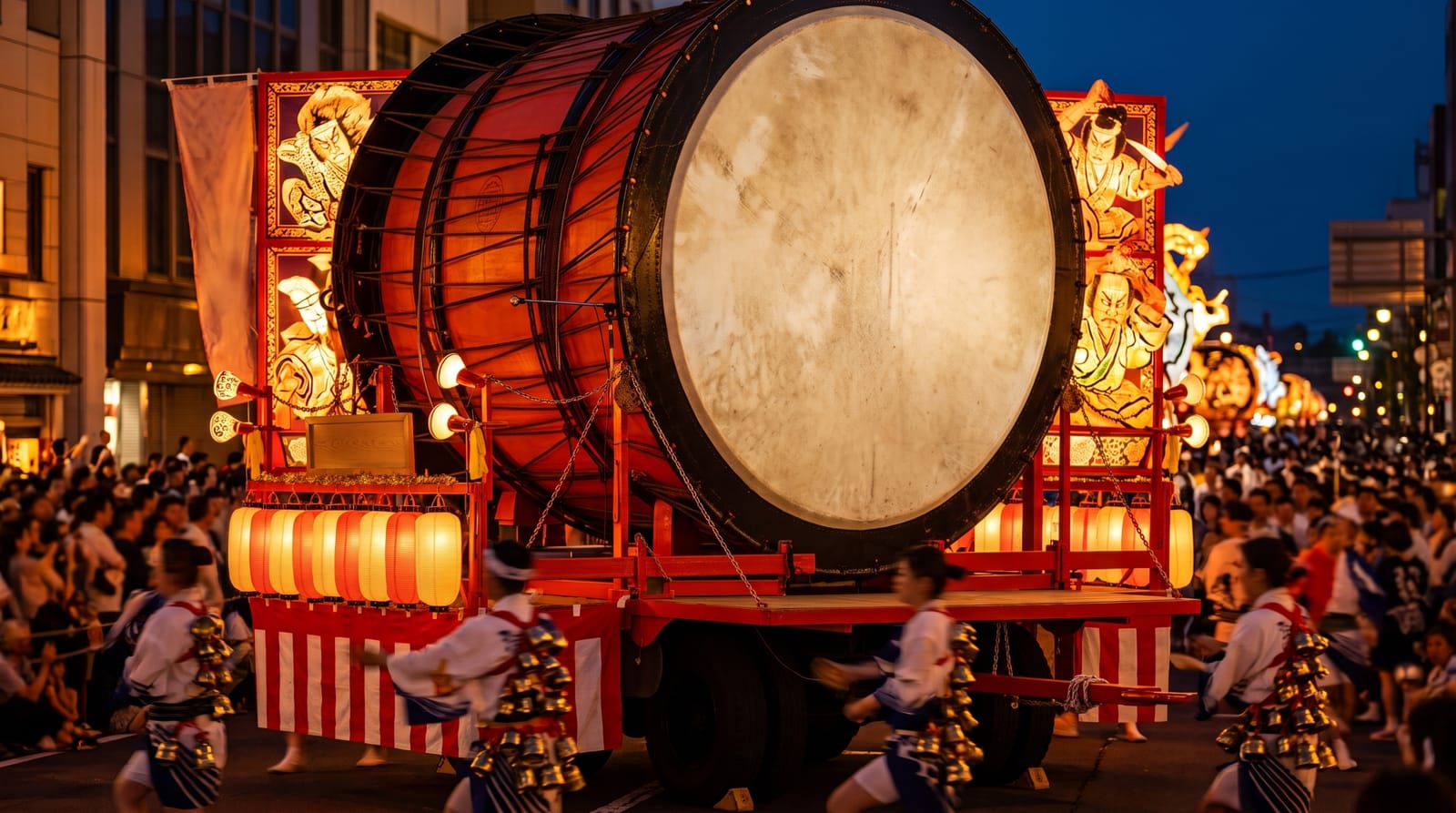
AI illustration
For six nights in early August Aomori builds and burns through a year of work. The floats are wire frames skinned in painted washi paper, lit from inside, several metres high and wide enough to fill a street, showing figures from legend, folklore and kabuki with faces contorted and colours at full volume. Each is pushed by a crew who spin and tilt it at corners so the light swings across the crowd. Around them run the haneto, dancers in a distinctive costume hung with small bells, chanting a two-syllable call and hopping rather than stepping. Anyone in the correct costume may join them, and rental shops in town exist for exactly that.
History
A popular story links the festival to the flutes and drums that Sakanoue no Tamuramaro, shogun of the early 9th century, used against his enemies in Mutsu Province, but he is unlikely to have campaigned in what is now Aomori, and the festival most likely grew out of Shinto ceremonies such as Tanabata. In the Edo and Meiji periods large lantern floats were often banned because of the danger of fire (Wikipedia, Aomori Nebuta Matsuri).
Highlights
- The lit floats - painted paper over wire, glowing from within, turned and rocked at every corner.
- The haneto dancers - hundreds of bell-hung costumes hopping alongside, open to visitors who hire the outfit.
- The final day on the water - floats loaded on to boats in the bay, with fireworks over the harbour.
- Wa Rasse - the year-round hall by the station holding full-size floats from recent festivals.
When to go
The dates are fixed in early August and do not move. Book accommodation months ahead, in Aomori or along the Shinkansen line, because the city sells out. Parades run in the evening, with one daytime run near the end. Arrive well before the start for a free kerbside position, or buy a grandstand seat in advance.
Practical notes
Crowds are dense, kerbside positions are claimed hours early, and August in Tohoku is humid enough to make a costume miserable. Hotel prices multiply and last-minute rooms simply do not exist. Rain does not stop it but flattens the effect. Outside the six nights, Aomori is a quiet port city and the museum is the only substitute.
Nearby
The Hakkoda mountains and Lake Towada lie south of the city.
Key facts
Source: Wikidata, item Q862407, read on 18 October 2026.
What to pack for Aomori Nebuta Matsuri
Chosen from what this place is for. Tap a kit for the full checklist.
- Strong insect repellent - DEET or picaridin; the jungle is where bites and disease risk are highest. Find on Amazon
- Comfortable walking shoes - Sightseeing means kilometres of pavement and cobbles daily. Find on Amazon
- Long, light, quick-dry clothing - Covers skin from insects and sun without cooking you in the humidity. Find on Amazon
- A slim anti-theft daypack - Zips that close properly; keep it in front in crowds and on transit. Find on Amazon
Some links on this page are Amazon affiliate links - if you buy through them we may earn a small commission at no extra cost to you.
All packing kitsPlan your trip
Where to start if Aomori Nebuta Matsuri is going on the list.
Booking links on this page are affiliate links - if you book through them we may earn a small commission at no extra cost to you. It never changes what we write about a place.
Opening times, ticket prices and seasonal closures change - check the official source before you go: official site.