Greenwood Great House
A plantation house that escaped burning and kept its original contents, including a rare collection of early musical instruments.
Updated 2 September 2026

AI illustration
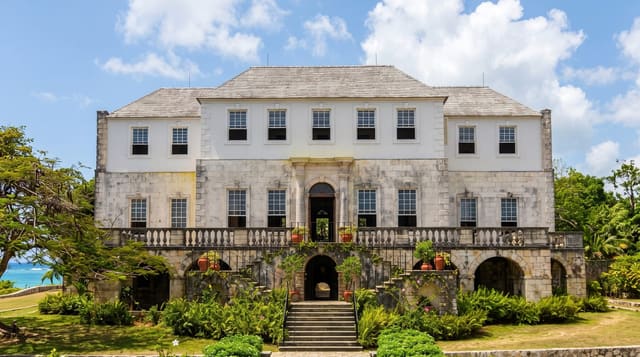
Greenwood was built around 1800 for the Barrett family, whose Jamaican estates paid for a good deal in England and one of whose descendants was the poet Elizabeth Barrett Browning. Unlike Rose Hall it was not burned in the 1831 rebellion and was never fully emptied, so what is inside is largely original: family portraits, a court barometer of 1780, a rare Steinway of the 1850s, and a collection of early musical instruments including a barrel organ, a polyphon and a set of musical glasses that the guide will play. The tour is small, informal and unusually frank about how the wealth was generated, and the veranda looks out over the coast.
Highlights
- The instrument collection - barrel organ, polyphon and musical glasses, played.
- The original contents - furniture, portraits and books left in the house.
- The library - Barrett family books, some from the eighteenth century.
- The veranda view - the coast from the hillside.
When to go
December to April is the dry season. Tours run through the day and take about forty-five minutes. It is far quieter than Rose Hall, and weekday mornings often mean a tour of two or three people.
What to expect
It is small and the tour is short. The house is privately owned and maintenance is modest compared with Rose Hall's restoration. The road up from the coast is narrow. Anyone expecting spectacle will prefer Rose Hall; anyone wanting the actual history will prefer this.
Nearby
Rose Hall is fifteen minutes west; Falmouth is twenty minutes east.
What to pack for Greenwood Great House
Chosen from what this place is for. Tap a kit for the full checklist.
- Comfortable walking shoes - Sightseeing means kilometres of pavement and cobbles daily. Find on Amazon
- A slim anti-theft daypack - Zips that close properly; keep it in front in crowds and on transit. Find on Amazon
- A refillable water bottle - Many cities have public fountains; save money and plastic. Find on Amazon
- A light layer + compact umbrella - For museum air-con and a sudden shower. Find on Amazon
Some links on this page are Amazon affiliate links - if you buy through them we may earn a small commission at no extra cost to you.
All packing kitsPlan your trip
Where to start if Greenwood Great House is going on the list.
Booking links on this page are affiliate links - if you book through them we may earn a small commission at no extra cost to you. It never changes what we write about a place.
Opening times, ticket prices and seasonal closures change - check the official source before you go: official site.