Selinunte
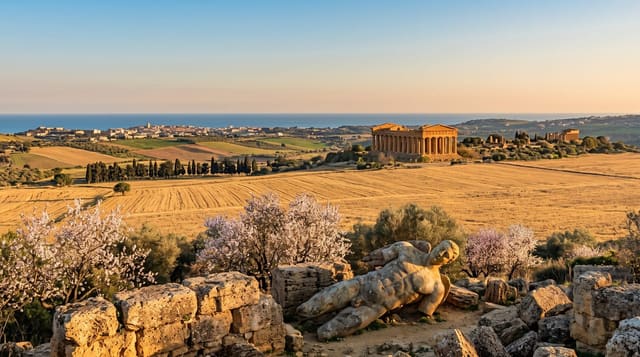
The largest archaeological park in Europe, where temples lie collapsed in fields of column drums by the sea.
Updated 19 October 2026

AI illustration
Selinus was founded in the seventh century BC and destroyed in 409 BC, then finally abandoned, and its ruins cover about two hundred and seventy hectares, making the archaeological park the largest in Europe. Temples are identified by letters rather than names because their dedications are unknown. Temple E was re-erected in the 1950s and stands complete; the others lie as they fell, most likely in earthquakes, in fields of drums and capitals the size of rooms. Temple G, never finished, would have been among the largest Greek temples ever built. Sculpted metopes from the site are in the Palermo museum.
History
Thucydides says Selinus was founded by colonists from Megara Hyblaea, led by Pammilus, about a century after that city's own founding. Its earliest temples date from 550 BC, at its height before 409 BC it may have had 30,000 inhabitants, not counting slaves, and it was abandoned in 250 BC and never lived in again (Wikipedia, Selinunte).
The main sights
- The collapsed temples - fields of column drums and capitals lying as they fell.
- Temple E - a temple re-erected in the 1950s and standing complete.
- Temple G - an unfinished giant, among the largest ever attempted.
- The acropolis - streets and defences on a terrace above the sea.
When to go
April to June and September to October; the site is enormous, open and shadeless, punishing in summer. Electric carts run between the zones. Allow at least three hours.
Things to know
The park is very large with long walks between areas and almost no shade. Most temples are ruin fields, not standing buildings. The sculpture is in Palermo.
Nearby
Marsala lies northwest; the Belice coast is alongside.
What to pack for Selinunte
Chosen from what this place is for. Tap a kit for the full checklist.
- Comfortable walking shoes - Sightseeing means kilometres of pavement and cobbles daily. Find on Amazon
- Modest clothing - Shoulders and knees covered - the single most common requirement. Find on Amazon
- A slim anti-theft daypack - Zips that close properly; keep it in front in crowds and on transit. Find on Amazon
- A scarf or shawl - To cover the head or shoulders on entry; women especially at mosques. Find on Amazon
Some links on this page are Amazon affiliate links - if you buy through them we may earn a small commission at no extra cost to you.
All packing kitsPlan your trip
Where to start if Selinunte is going on the list.
Booking links on this page are affiliate links - if you book through them we may earn a small commission at no extra cost to you. It never changes what we write about a place.
Opening times, ticket prices and seasonal closures change - check the official source before you go: official site.