Capuchin Catacombs
Corridors of clothed mummified bodies, arranged by trade and status, from the sixteenth century onward.
Updated 19 October 2026
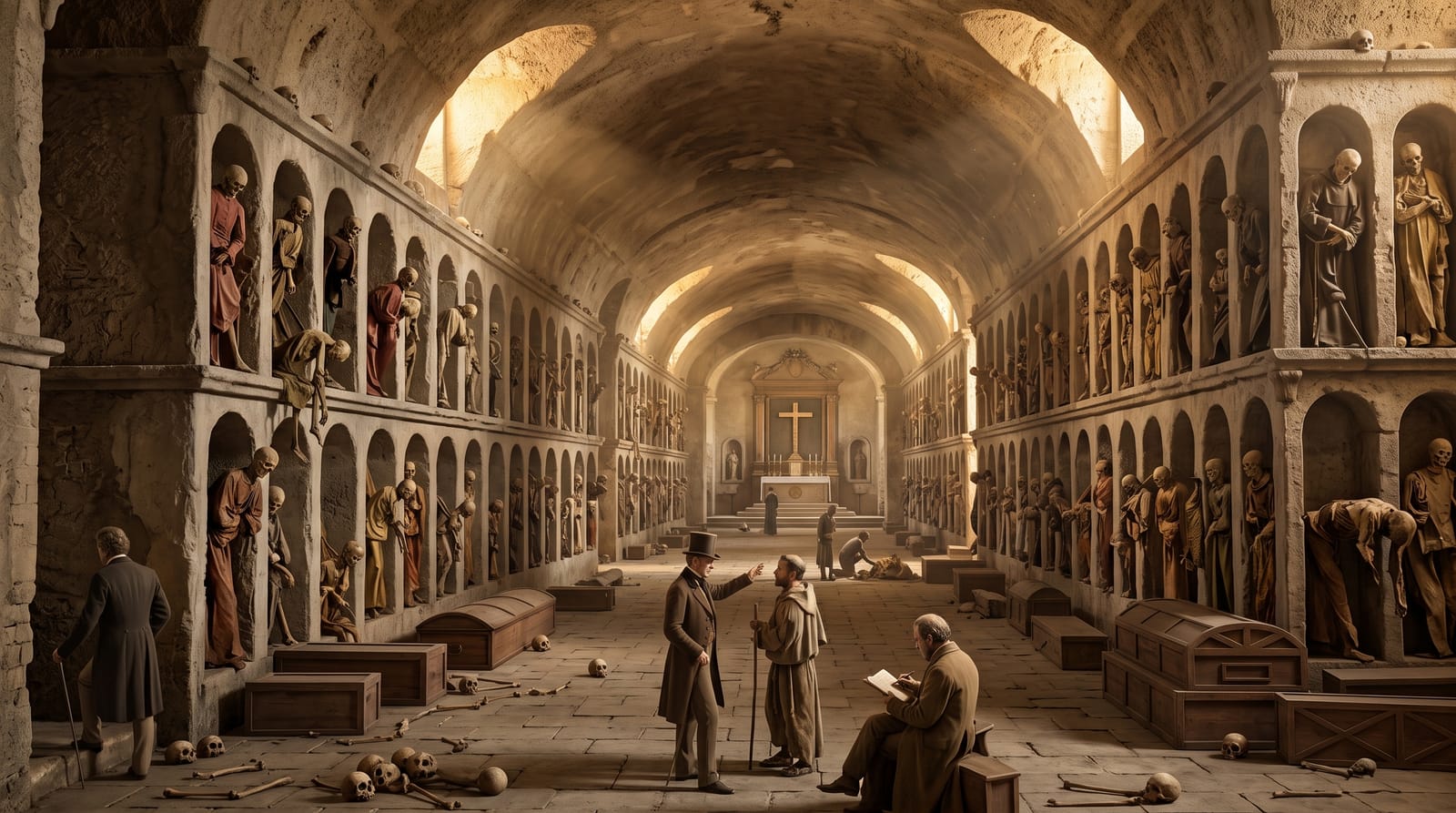
AI illustration
The Capuchin friars found in the late sixteenth century that bodies placed in their crypt dried out and preserved, and began arranging them in the corridors; over three centuries the practice extended to lay people who paid for the privilege, and around eight thousand bodies and mummies are held, dressed in their own clothes and grouped by category, with corridors for men, women, priests, professionals and children. The last burials were in the 1920s. Rosalia Lombardo, a two-year-old who died in 1920, was embalmed by a chemist whose formula was only reconstructed decades later and is unusually well preserved.
History
Palermo's Capuchin monastery outgrew its cemetery in the 16th century and the monks began digging crypts beneath it, and in 1599 they mummified one of their number, Brother Silvestro of Gubbio; bodies were dried on racks of ceramic pipes and sometimes washed with vinegar (Wikipedia, Catacombe dei Cappuccini).
What to look for
- The sorted corridors - bodies grouped by trade, status, sex and age.
- The original clothing - the dead dressed as they were buried.
- Rosalia Lombardo - a 1920 embalming preserved unusually well.
- The scale - around eight thousand bodies and mummies.
When to go
Year-round; the catacombs close for a midday break. It is cool underground. Photography is prohibited and the rule is enforced.
What to expect
This is a burial place holding real human remains and is genuinely confronting; it is not suitable for everyone or for young children. Photography is banned.
Nearby
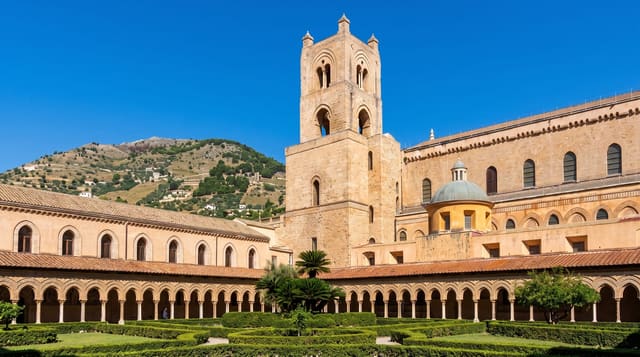
Central Palermo lies east; Monreale is uphill.
Key facts
Source: Wikidata, item Q1728834, read on 18 October 2026.
What to pack for Capuchin Catacombs
Chosen from what this place is for. Tap a kit for the full checklist.
- Head torch + spare batteries - Hands-free light is essential; caves are truly dark. Find on Amazon
- Comfortable walking shoes - Sightseeing means kilometres of pavement and cobbles daily. Find on Amazon
- Modest clothing - Shoulders and knees covered - the single most common requirement. Find on Amazon
- Grippy closed shoes - Cave floors are wet, muddy and slick with formations. Find on Amazon
Some links on this page are Amazon affiliate links - if you buy through them we may earn a small commission at no extra cost to you.
All packing kitsPlan your trip
Where to start if Capuchin Catacombs is going on the list.
Booking links on this page are affiliate links - if you book through them we may earn a small commission at no extra cost to you. It never changes what we write about a place.
Opening times, ticket prices and seasonal closures change - check the official source before you go: official site.