Castel Sant'Angelo
An emperor's tomb turned fortress, prison and papal refuge, linked to the Vatican by a covered escape corridor.
Updated 4 September 2026

AI illustration
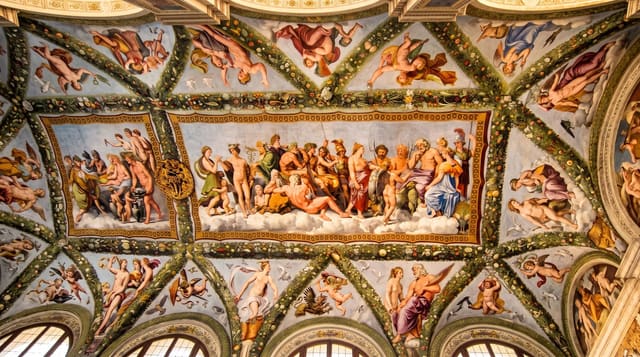
Hadrian built this as a mausoleum for himself and his successors, finished in 139, a drum on a square base by the Tiber. It became a fortress when Aurelian's walls incorporated it, then a papal stronghold, then a prison, and each function left layers: the spiral ramp Hadrian's builders cut, Renaissance papal apartments with frescoed loggias, cells that held Cellini and Cagliostro. The Passetto di Borgo, an eight-hundred-metre covered walkway on top of a wall, connects it to the Vatican and was used by Clement VII to escape the sack of Rome in 1527. The bronze angel on top marks a vision of the archangel sheathing his sword.
The main sights
- Hadrian's spiral ramp - the original second-century approach to the tomb chamber.
- The papal apartments - frescoed Renaissance rooms high in the drum.
- The Passetto di Borgo - the covered escape corridor to the Vatican.
- The terrace - a rooftop view over the Tiber to St Peter's dome.
When to go
April to June and September to October; the castle opens year-round and closes Mondays in some seasons. The Passetto is open on limited dates and needs separate booking.
What to expect
The Passetto is only accessible on specific tours and dates. Queues build from mid-morning in season. The interior is a warren of stairs with limited signage.
Nearby
The Vatican lies west; Piazza Navona is east across the river.
Key facts
Source: Wikidata, item Q486382, read on 18 October 2026.
What to pack for Castel Sant'Angelo
Chosen from what this place is for. Tap a kit for the full checklist.
- Comfortable walking shoes - Sightseeing means kilometres of pavement and cobbles daily. Find on Amazon
- A slim anti-theft daypack - Zips that close properly; keep it in front in crowds and on transit. Find on Amazon
- A refillable water bottle - Many cities have public fountains; save money and plastic. Find on Amazon
- A light layer + compact umbrella - For museum air-con and a sudden shower. Find on Amazon
Some links on this page are Amazon affiliate links - if you buy through them we may earn a small commission at no extra cost to you.
All packing kitsPlan your trip
Where to start if Castel Sant'Angelo is going on the list.
Booking links on this page are affiliate links - if you book through them we may earn a small commission at no extra cost to you. It never changes what we write about a place.
Opening times, ticket prices and seasonal closures change - check the official source before you go: official site.