Timna Park
A desert valley of red and ochre sandstone north of Eilat, holding wind-carved pillars, arches and some of the oldest copper mines in the world.
Updated 19 October 2026
AI illustration
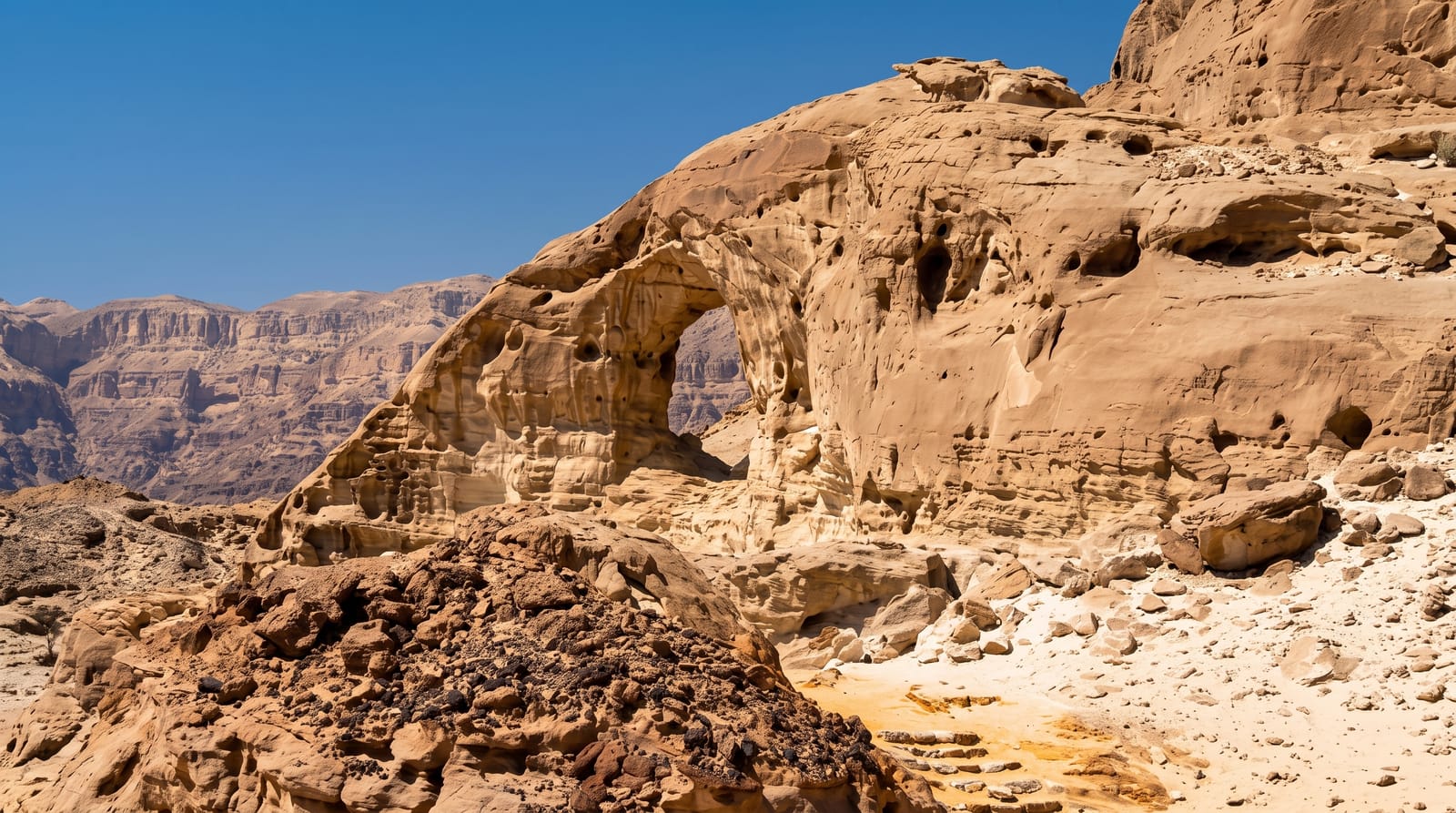
Timna is a horseshoe of desert valley enclosed by cliffs of sandstone in every shade from cream to deep red, and it holds two quite different attractions. The first is geology: wind and rare flash floods have carved the soft rock into mushrooms, arches and the great fluted buttresses known as Solomon's Pillars, and into a slot canyon narrow enough to touch both walls. The second is industry, of a very old kind, since copper was mined here from at least the third millennium BC, with Egyptian expeditions working the valley in the late Bronze Age and leaving a small rock-cut temple to the goddess Hathor along with rock carvings of chariots. Shafts, galleries and slag heaps are scattered across the valley, and marked trails and a driving route link the sites. Being a desert park, it is best in the cool months and early in the day.
History
Copper has been mined in the valley since the 6th or 5th millennium BCE, in the Neolithic, and a large part of it, with ancient mining remains and places of worship, is now a recreation park (Wikipedia, Timna Valley).
The landscape
- Solomon's Pillars - the great fluted sandstone buttresses with the Hathor temple below.
- The ancient copper mines - shafts, galleries and slag from mining over three thousand years old.
- The Mushroom and the arches - the wind-carved rock formations across the valley.
- The rock carvings - the chariot petroglyphs left by Egyptian expeditions.
When to go
November to March is the comfortable season; from spring to autumn the Arava is extremely hot and walking is only sensible at dawn. The park has a driving route with short walks off it, which suits the heat. Flash floods after rare rain can close the canyons.
Practical notes
It is a desert with almost no shade, and visitors underestimate both the heat and the water they need; the longer trails are for early mornings in winter only. A car is effectively required, as the sites are spread over a large valley. The reconstructed Tabernacle attraction near the entrance is a faith-based exhibit rather than an archaeological one, which some visitors find jarring.
Nearby
Eilat and the Red Sea coral reefs are half an hour south; the Arava valley runs north towards the Dead Sea.
Key facts
Source: Wikidata, item Q1973199, read on 18 October 2026.
What to pack for Timna Park
Chosen from what this place is for. Tap a kit for the full checklist.
- Broken-in walking shoes or boots - Grip and ankle support matter more than looks; never hike in brand-new boots. Find on Amazon
- Binoculars - The single best wildlife tool - even a compact pair transforms a sighting. Find on Amazon
- Loose, light, long clothing - Covering up beats bare skin in the desert - and locals dress this way for a reason. Find on Amazon
- Modest clothing - Shoulders and knees covered - the single most common requirement. Find on Amazon
Some links on this page are Amazon affiliate links - if you buy through them we may earn a small commission at no extra cost to you.
All packing kitsPlan your trip
Where to start if Timna Park is going on the list.
Booking links on this page are affiliate links - if you book through them we may earn a small commission at no extra cost to you. It never changes what we write about a place.