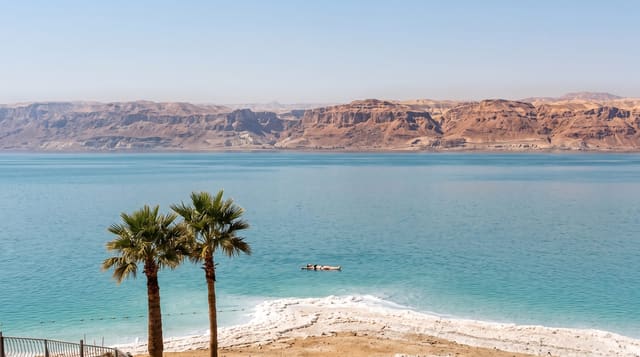
Makhtesh Ramon
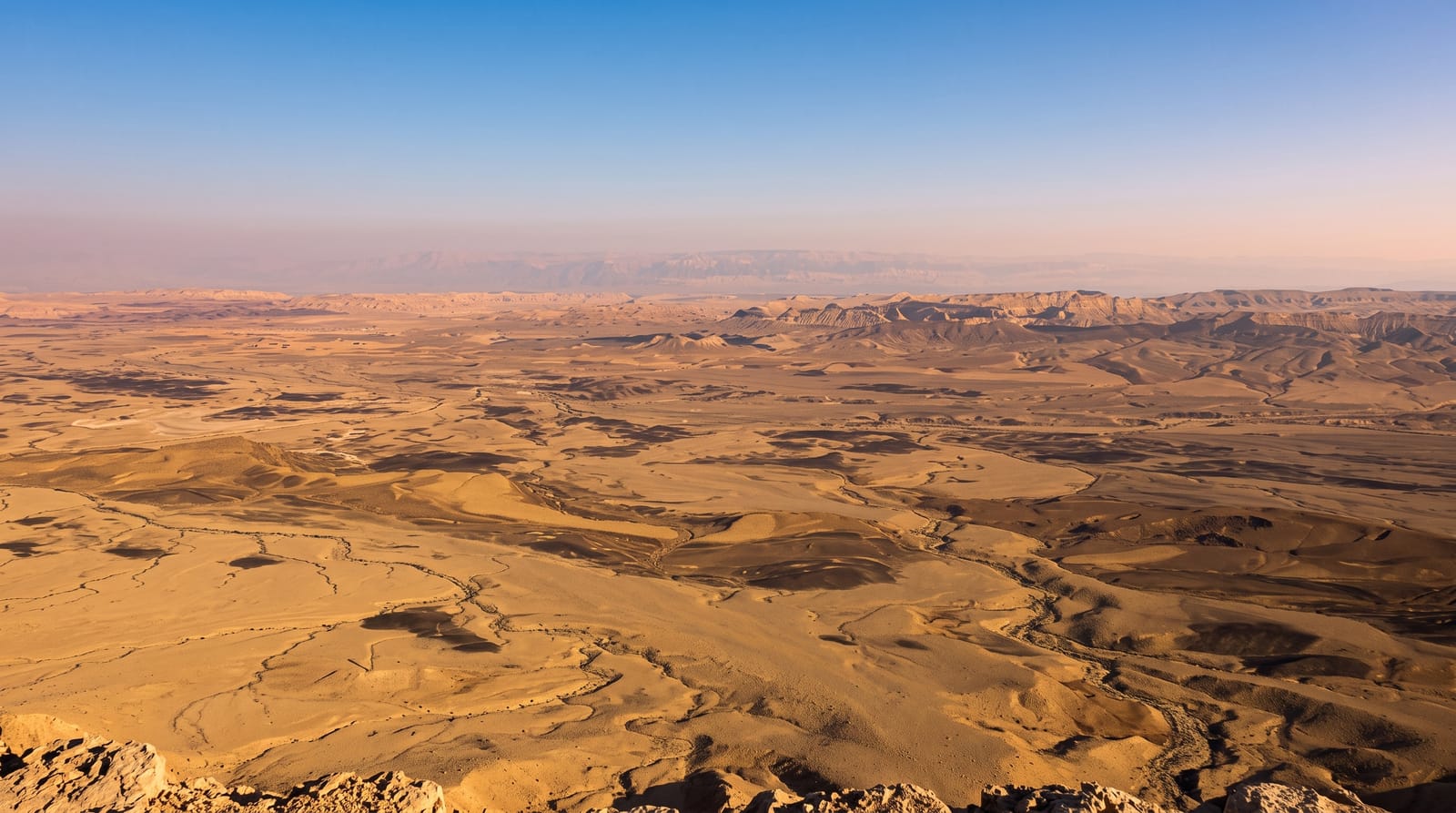
A vast erosion crater in the Negev, a landform found almost nowhere else, forty kilometres long and open at one end.
Updated 19 October 2026
AI illustration
A makhtesh is not a meteorite crater or a volcanic caldera but an erosion cirque: a hard rock layer breached by a valley, allowing the softer rock beneath to be washed out and leaving a steep-walled basin with a single drainage exit. The landform is essentially confined to the Negev and Sinai, and Makhtesh Ramon is the largest, roughly forty kilometres long and hundreds of metres deep. The town of Mitzpe Ramon sits right on the rim, so the view arrives without any walking at all, and Nubian ibex wander the streets. Inside, the floor holds coloured sands, a fossilised prismatic rock formation of basalt columns, and old quarry sites, all reached on marked routes. The dark skies here are among the best in the country for stargazing.
History
The makhtesh lies on the ancient Incense Route used by the Nabataeans 2,000 years ago, and the ruins of Khan Saharonim inside it served as a way station; today it forms the country's largest national park, the Ramon Nature Reserve (Wikipedia, Makhtesh Ramon).
Highlights
- The rim promenade at Mitzpe Ramon - the full crater view, free and immediate.
- The Carpentry - a hillside of hexagonal basalt prisms on the crater floor.
- Coloured sands - ochre and red sand layers in the western part of the floor.
- Night skies - some of the darkest accessible skies in the country.
When to go
October to April; summer in the Negev is severe and midday walking on the crater floor is dangerous. Sunrise and sunset from the rim are the classic moments, and winter nights are cold and exceptionally clear.
Things to know
Descending into the makhtesh needs a vehicle and, for the rougher tracks, four-wheel drive; walking routes on the floor are long, exposed and demand serious water. There is very little shade anywhere. Mitzpe Ramon is small, and accommodation books out on Israeli holidays and weekends.
Nearby
Sde Boker and Ben-Gurion's desert home lie north; Eilat and the Red Sea are south.
Key facts
Source: Wikidata, item Q1274674, read on 18 October 2026.
What to pack for Makhtesh Ramon
Chosen from what this place is for. Tap a kit for the full checklist.
- Broken-in walking shoes or boots - Grip and ankle support matter more than looks; never hike in brand-new boots. Find on Amazon
- Spare batteries + cards - Cold and long shoots drain power; never run out at the good light. Find on Amazon
- Loose, light, long clothing - Covering up beats bare skin in the desert - and locals dress this way for a reason. Find on Amazon
- Layers + a waterproof shell - Mountain weather turns fast; a packable rain jacket saves the day. Find on Amazon
Some links on this page are Amazon affiliate links - if you buy through them we may earn a small commission at no extra cost to you.
All packing kitsPlan your trip
Where to start if Makhtesh Ramon is going on the list.
Booking links on this page are affiliate links - if you book through them we may earn a small commission at no extra cost to you. It never changes what we write about a place.