Streedagh Beach
Three kilometres of storm beach in Sligo with 350-million-year-old coral fossils in the rocks and three Armada wrecks offshore.
Updated 28 August 2026
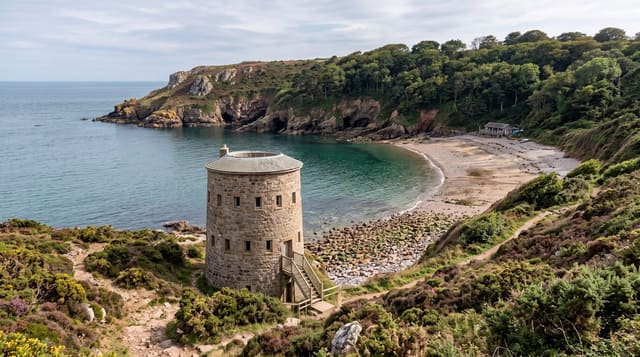
Streedagh is a long strand backed by dunes on the Sligo coast, with Benbulbin behind it and Donegal Bay in front. Two things distinguish it. The rock platform at the northern end holds one of the better exposed fossil beds in Ireland - Carboniferous limestone around 350 million years old, packed with corals and crinoids from a shallow tropical sea, visible in the pavement at low tide. And in September 1588 three ships of the Spanish Armada, La Lavia, La Juliana and Santa Maria de Vison, were driven ashore here in a gale; more than a thousand men died on this beach, and Francisco de Cuellar, one of the few survivors, left a written account of what followed. Timbers and cannon have been recovered from the site since the 1980s. A memorial stands at the dunes. There are no lifeguards and the rips here are strong.
What's there
- The fossil beds - corals and crinoids in 350-million-year-old limestone.
- The Armada site - where three ships came ashore in 1588.
- The strand - three kilometres of storm beach backed by dunes.
- Benbulbin - the flat-topped mountain directly inland.
When to go
May to September for the beach; low tide for the fossil platform, which is otherwise underwater. Winter storms expose and rebury archaeological material.
Before you go
No lifeguards and strong rip currents - this is not a safe swimming beach. The fossil platform is slippery and only accessible at low tide. Dunes are eroding and fenced in places.
Nearby
Mullaghmore is north; Grange and Drumcliffe are inland toward Sligo.
What to pack for Streedagh Beach
Chosen from what this place is for. Tap a kit for the full checklist.
- Reef-safe sunscreen - High SPF that will not bleach the coral you are swimming over. Find on Amazon
- Loose, light, long clothing - Covering up beats bare skin in the desert - and locals dress this way for a reason. Find on Amazon
- Quick-dry towel - A microfibre towel packs small and dries in minutes. Find on Amazon
- A wide-brim hat + sunglasses - Shade for your face and eyes where there is none overhead. Find on Amazon
Some links on this page are Amazon affiliate links - if you buy through them we may earn a small commission at no extra cost to you.
All packing kitsPlan your trip
Where to start if Streedagh Beach is going on the list.
Booking links on this page are affiliate links - if you book through them we may earn a small commission at no extra cost to you. It never changes what we write about a place.
Opening times, ticket prices and seasonal closures change - check the official source before you go: official site.