Mellifont Abbey
Ireland's first Cistercian monastery, founded in 1142, with the remains of an octagonal washing house unlike anything else here.
Updated 19 October 2026
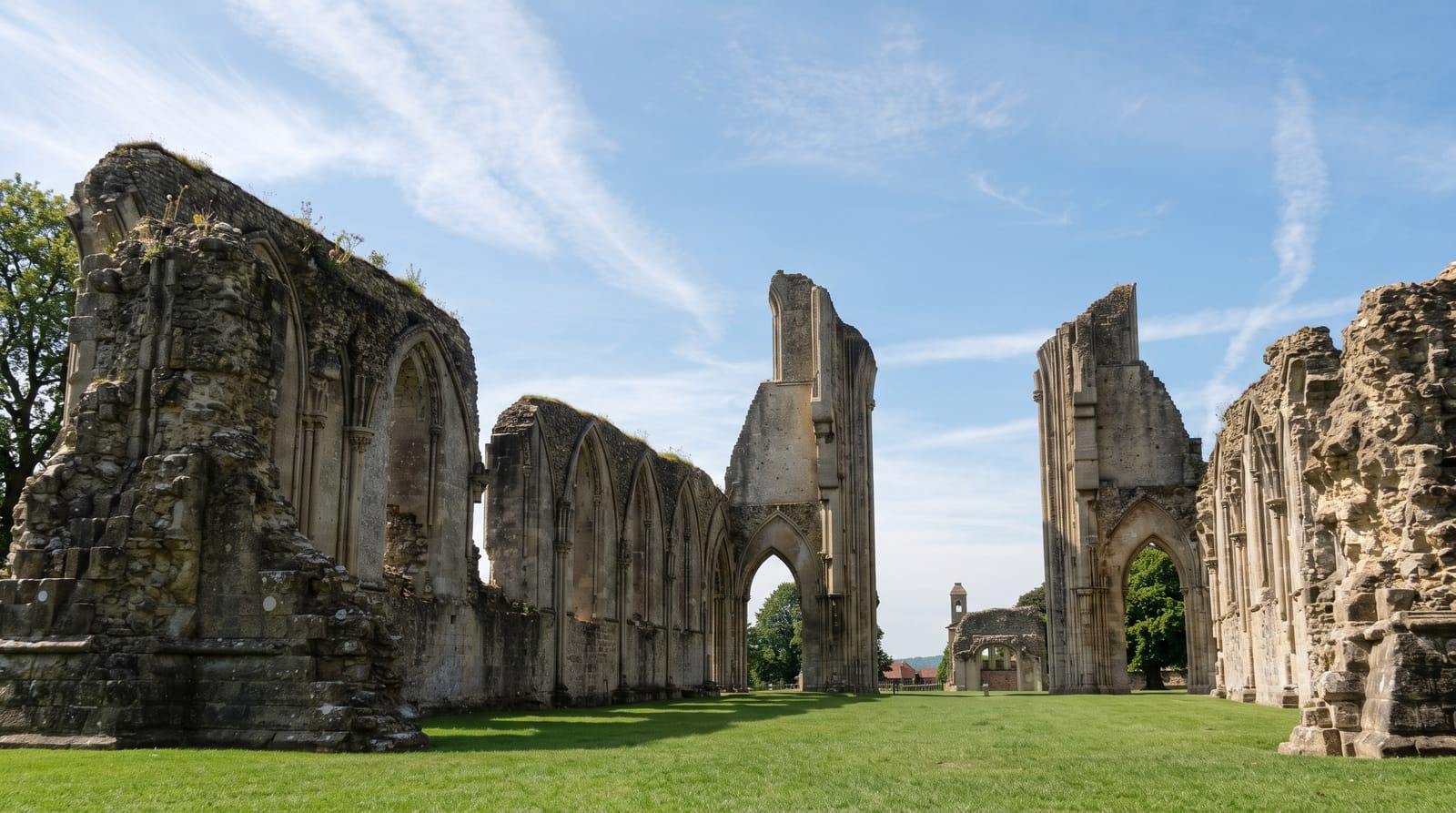
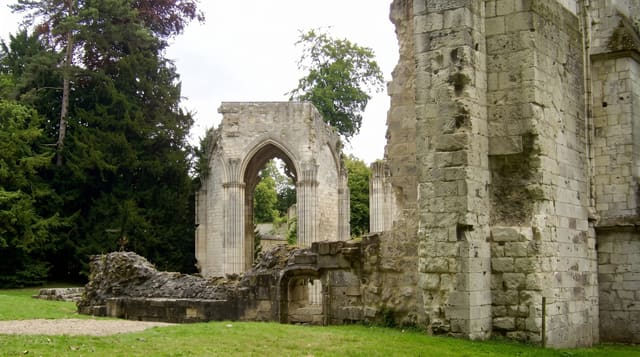
Mellifont was founded in 1142 by Malachy, archbishop of Armagh, with monks sent from Clairvaux by Bernard himself, and it introduced continental monastic architecture to Ireland - a formal cloister plan, laid out to a European template rather than the scattered arrangement of earlier Irish monasteries. Within fifty years it had over twenty daughter houses. The most distinctive survival is the lavabo: an octagonal two-storey building where monks washed before meals, with Romanesque arches, of which several bays still stand and which has no real parallel in Ireland. The chapter house survives with a vaulted roof. After the dissolution the site became a fortified house, and in 1603 Hugh O'Neill submitted to the crown here, ending the Nine Years War. Cromwellian forces used it in 1649. Most of the church is reduced to foundations laid out at ground level.
History
The abbey was founded in 1142 on the orders of Saint Malachy, Archbishop of Armagh, the first of its order in Ireland, and by 1170 it had a hundred monks and three hundred lay brothers. It hosted the Synod of Kells-Mellifont in 1152, became the model for later Irish Cistercian houses, and was dissolved in 1539; its name comes from the Latin melli-fons, "font of honey" (Wikipedia, Mellifont Abbey).
What's there
- The lavabo - the octagonal washing house, unique in Ireland.
- The chapter house - vaulted and standing, unlike most of the site.
- The cloister plan - the first continental monastic layout built in Ireland.
- The foundations - the church walls traced at ground level.
When to go
April to October, when the visitor centre is open; the ruins are accessible year-round. Allow an hour. The site is exposed with little shelter.
Practical notes
Most of the abbey is foundation courses only - the lavabo and chapter house are the substantial survivals. The visitor centre keeps seasonal hours and is closed for much of the year.
Nearby
Monasterboice and its high crosses are close; Drogheda and the Boyne are south.
Key facts
Source: Wikidata, item Q966426, read on 18 October 2026.
What to pack for Mellifont Abbey
Chosen from what this place is for. Tap a kit for the full checklist.
- Comfortable walking shoes - Sightseeing means kilometres of pavement and cobbles daily. Find on Amazon
- Modest clothing - Shoulders and knees covered - the single most common requirement. Find on Amazon
- A slim anti-theft daypack - Zips that close properly; keep it in front in crowds and on transit. Find on Amazon
- A scarf or shawl - To cover the head or shoulders on entry; women especially at mosques. Find on Amazon
Some links on this page are Amazon affiliate links - if you buy through them we may earn a small commission at no extra cost to you.
All packing kitsPlan your trip
Where to start if Mellifont Abbey is going on the list.
Booking links on this page are affiliate links - if you book through them we may earn a small commission at no extra cost to you. It never changes what we write about a place.
Opening times, ticket prices and seasonal closures change - check the official source before you go: official site.