Great Sugar Loaf
A quartzite cone that looks volcanic and is not, with a short steep scramble to a summit above the Wicklow coast.
Updated 28 August 2026
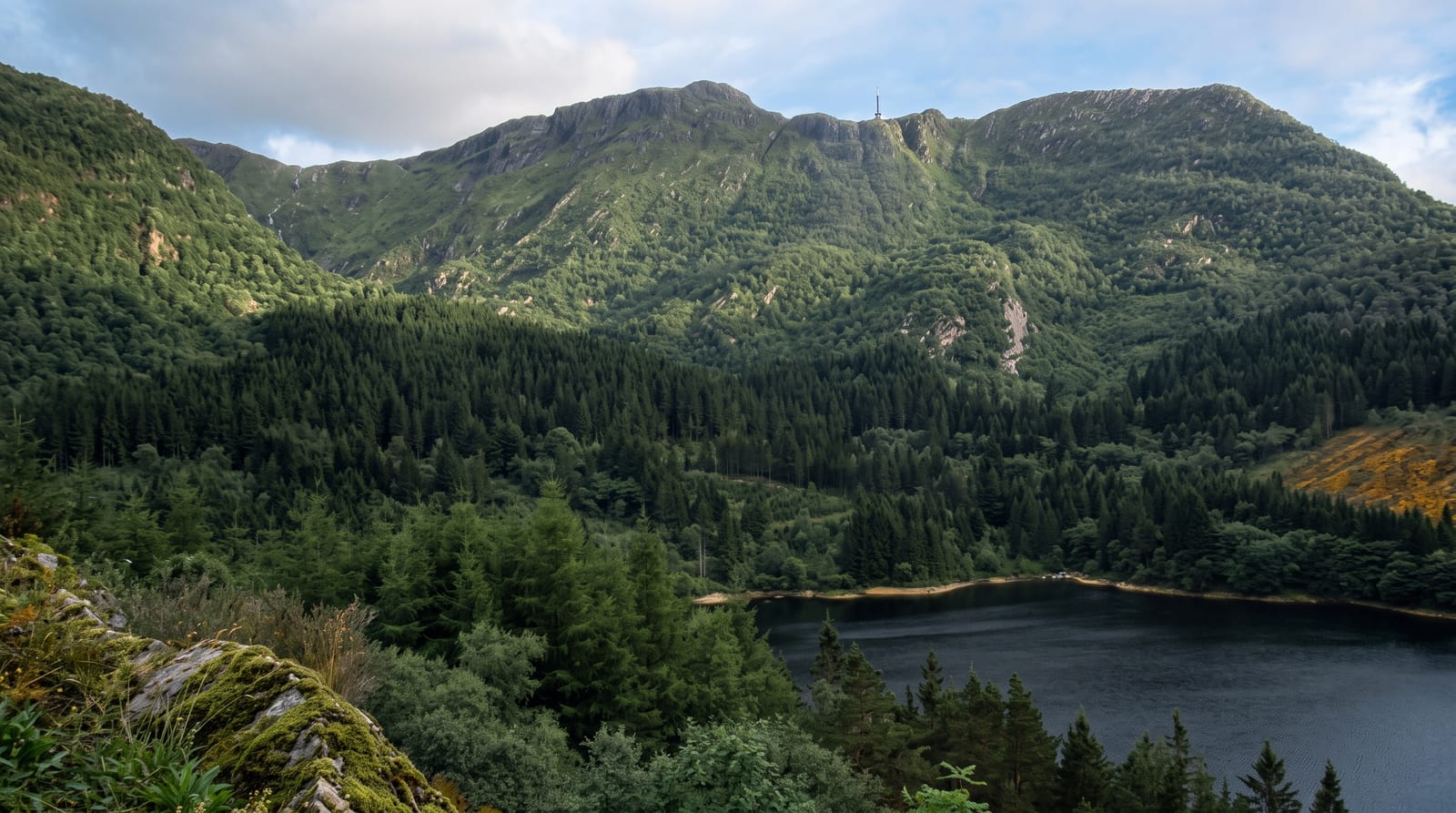
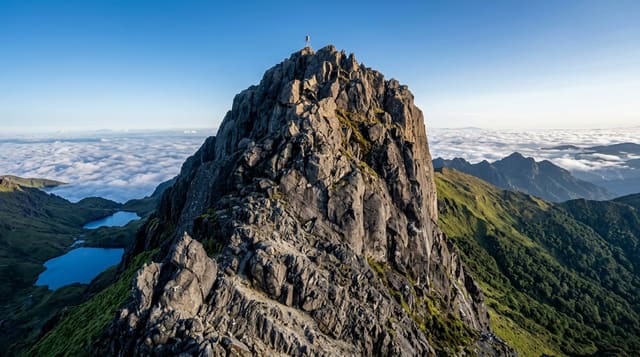
The Great Sugar Loaf is 501 metres and the most recognisable shape in north Wicklow - a near-perfect cone that people regularly assume is an extinct volcano. It is not. It is Cambrian quartzite, a hard rock that resisted the erosion which stripped away the softer material around it, leaving the cone standing. The standard route from the Red Lane car park is short - about two kilometres return - but the last section is a genuine scramble over loose scree and rock where hands come out of pockets, and it is steeper than the approach suggests. The reward is a 360-degree view: Dublin Bay and Howth to the north, the Irish Sea east, and the Wicklow uplands rolling away south and west. It is popular enough that the car park overflows onto the lane at weekends, and the loose surface makes the descent harder than the climb.
Highlights
- The cone - quartzite, not volcanic, left standing as softer rock eroded.
- The scramble - loose scree and rock over the final section.
- The summit view - Dublin Bay, the Irish Sea and the Wicklow hills.
- The short route - about two kilometres return from Red Lane.
When to go
April to October. Wet rock on the scree makes the descent slippery. Weekends fill the small car park; early mornings are quiet and the light is better for the coast view.
Before you go
Short but steep - the final scramble is real and unsuitable for anyone unsteady on loose ground. Descent is harder than ascent. No facilities at the car park, which overflows onto a narrow lane.
Nearby
Kilmacanogue and Powerscourt are nearby; the Bray to Greystones cliff walk is east.
Key facts
Source: Wikidata, item Q3079088, read on 18 October 2026.
What to pack for Great Sugar Loaf
Chosen from what this place is for. Tap a kit for the full checklist.
- Broken-in walking shoes or boots - Grip and ankle support matter more than looks; never hike in brand-new boots. Find on Amazon
- Layers for big temperature swings - Warm sun by day, near-freezing at night, even near the equator. Find on Amazon
- Layers + a waterproof shell - Mountain weather turns fast; a packable rain jacket saves the day. Find on Amazon
- Extra-strong sun protection - Thin air means fierce UV; hat, sunglasses and high-SPF sunscreen. Find on Amazon
Some links on this page are Amazon affiliate links - if you buy through them we may earn a small commission at no extra cost to you.
All packing kitsPlan your trip
Where to start if Great Sugar Loaf is going on the list.
Booking links on this page are affiliate links - if you book through them we may earn a small commission at no extra cost to you. It never changes what we write about a place.
Opening times, ticket prices and seasonal closures change - check the official source before you go: official site.