Glenveagh National Park
A glacial valley of bog, lake and mountain in Donegal, with a Victorian castle, walled gardens and a managed red deer herd.
Updated 19 October 2026
AI illustration
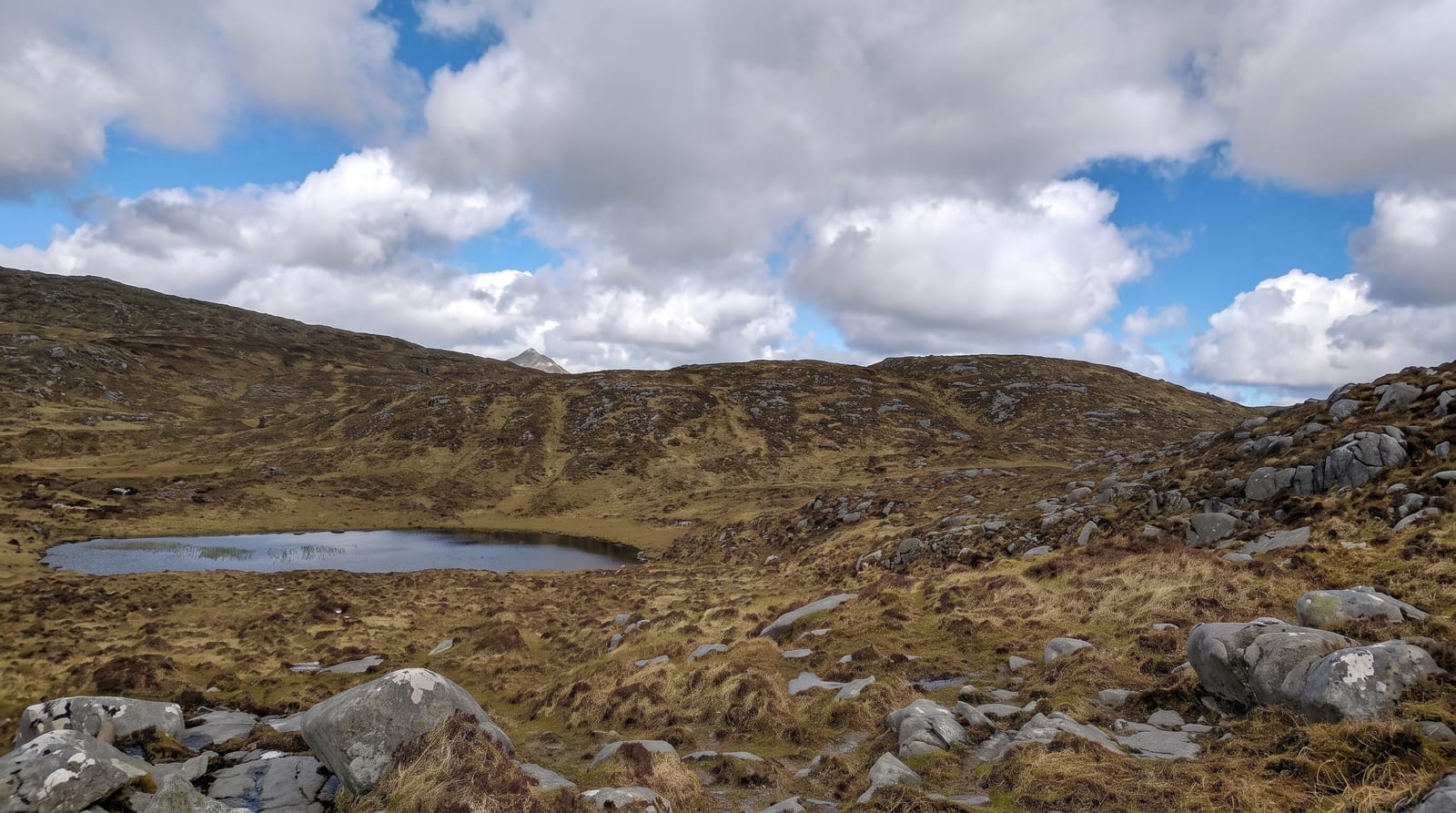
Glenveagh fills a long glacial valley in the Derryveagh Mountains, with Lough Veagh on its floor and a Victorian castle set on a spur above the water. It is the second largest national park in Ireland and most of it is bog, heath and bare rock rather than woodland, though oak and birch survive on the slopes. Red deer graze the higher ground in a herd that has been managed here for over a century. Golden eagles were reintroduced to the glen in the early 2000s, but a sighting is a matter of luck. From the visitor centre a shuttle runs the few kilometres to the castle, or you walk the lakeside road.
History
Captain John George Adair built Glenveagh Castle and founded the estate, and during the 1861 famine, after disputes with his tenants over hunting rights and trespassing sheep, he evicted 44 families. The estate passed to his wife Cornelia, then to Arthur Kingsley Porter in 1929 and Henry Plumer McIlhenny in 1937, who left it to the Irish state in the 1970s (Wikipedia, Glenveagh).
What's there
- Glenveagh Castle - the 1870s house above the lake, shown on guided tours.
- The castle gardens - sheltered terraces with planting that should not survive this latitude.
- Lough Veagh - the long lake filling the floor of the glacial valley.
- Red deer - the managed herd on the open hill above the woodland.
When to go
May and June bring rhododendron colour and long light in the gardens, and the autumn rut draws people to the upper glen. The park is open all year and free to enter; the castle is by guided tour with limited places. Midges are bad on still days from June onward, and this valley catches a great deal of rain.
Practical notes
The castle sits four kilometres from the visitor centre and the walk in and out eats an hour each way if you miss the shuttle. Tours of the house are short and timed, and the interiors interest people less than the setting does. Rain is constant here, the deer are usually distant specks, and eagle sightings are rare enough that you should not plan around them.
Nearby
Errigal and the Poisoned Glen are a short drive west; Letterkenny is east.
Key facts
Source: Wikidata, item Q140033, read on 18 October 2026.
What to pack for Glenveagh National Park
Chosen from what this place is for. Tap a kit for the full checklist.
- Broken-in walking shoes or boots - Grip and ankle support matter more than looks; never hike in brand-new boots. Find on Amazon
- Binoculars - The single best wildlife tool - even a compact pair transforms a sighting. Find on Amazon
- Layers + a waterproof shell - Mountain weather turns fast; a packable rain jacket saves the day. Find on Amazon
- A zoom camera or long lens - Animals rarely come close; reach beats megapixels. Find on Amazon
Some links on this page are Amazon affiliate links - if you buy through them we may earn a small commission at no extra cost to you.
All packing kitsPlan your trip
Where to start if Glenveagh National Park is going on the list.
Booking links on this page are affiliate links - if you book through them we may earn a small commission at no extra cost to you. It never changes what we write about a place.
Opening times, ticket prices and seasonal closures change - check the official source before you go: official site.