Five Finger Strand
A wild Inishowen beach backed by dunes among the highest in Europe, with five rock fingers offshore and a dangerous sea.
Updated 21 October 2026
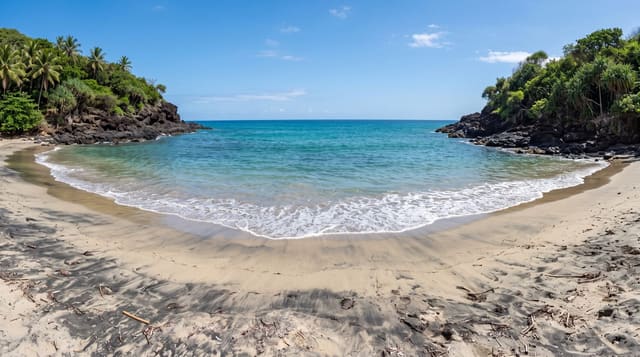
Five Finger Strand lies on the western side of the Inishowen peninsula in north Donegal, taking its name from five rock stacks standing off the northern end. Behind it is a dune system that reaches around thirty metres, among the tallest in Europe, held together by marram and actively eroding at the seaward face. Lagg church, the oldest Catholic church still in use in the peninsula, stands beside the road in. This is not a swimming beach: the strand shelves steeply, there is a powerful undertow and rip system, and there are no lifeguards at any time - local advice is consistently against entering the water. What it is good for is walking, the view north to Malin Head, and watching a big Atlantic swell come in from a safe distance. The dunes are fragile and should not be climbed.
Highlights
- The five stacks - the rock fingers standing off the northern end.
- The dunes - around thirty metres, among Europe's highest, and eroding.
- The strand - steep-shelving sand facing the open Atlantic.
- Lagg church - the peninsula's oldest Catholic church, on the road in.
When to go
May to September for the walking and the light. There is no safe swimming season - the currents are dangerous year-round. Big swell days are impressive from the dune top.
Before you go
Do not swim - the undertow is severe and there are no lifeguards. Climbing the dunes accelerates their erosion. Small car park, no facilities, narrow access road.
Nearby
Malin Head is north; Malin village and Trawbreaga Bay are east.
What to pack for Five Finger Strand
Chosen from what this place is for. Tap a kit for the full checklist.
- Reef-safe sunscreen - High SPF that will not bleach the coral you are swimming over. Find on Amazon
- Loose, light, long clothing - Covering up beats bare skin in the desert - and locals dress this way for a reason. Find on Amazon
- Quick-dry towel - A microfibre towel packs small and dries in minutes. Find on Amazon
- A wide-brim hat + sunglasses - Shade for your face and eyes where there is none overhead. Find on Amazon
Some links on this page are Amazon affiliate links - if you buy through them we may earn a small commission at no extra cost to you.
All packing kitsPlan your trip
Where to start if Five Finger Strand is going on the list.
Booking links on this page are affiliate links - if you book through them we may earn a small commission at no extra cost to you. It never changes what we write about a place.
Opening times, ticket prices and seasonal closures change - check the official source before you go: official site.