Abu Dulaf Mosque
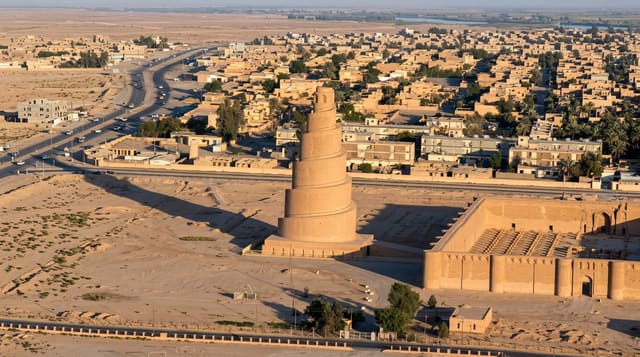
A ninth-century Abbasid mosque north of Samarra with a spiral minaret, standing roofless on open ground.
Updated 20 October 2026
UNESCO World Heritage
Abu Dulaf was commissioned by the caliph al-Mutawakkil in 859 during the brief period when the Abbasid caliphs ruled from Samarra rather than Baghdad, and it is the second of the city's two great congregational mosques, smaller than the Great Mosque with its Malwiya minaret but built on the same principle: an enormous rectangular enclosure, brick piers carrying arcades on the qibla side, and a spiral minaret standing outside the northern wall, a helical ramp winding up a tapering tower. The roof is long gone and what remains is the outer wall, the pier arcades and the minaret, standing on flat ground with the town some distance away. It forms part of the Samarra Archaeological City World Heritage property, which was inscribed in 2007 and placed on the list in danger at the same time.
What's there
- The spiral minaret - a helical ramp winding up the tapering tower.
- Brick pier arcades - the rows of supports on the prayer-hall side.
- The vast enclosure - the scale of a ninth-century congregational mosque.
- Open ground - the building standing alone outside the modern town.
When to go
November to March; the site is completely exposed and summer is severe. Morning and late afternoon give the best light on the brickwork. Access should be confirmed in advance.
Things to know
The mosque is roofless and largely reduced to walls and piers. Climbing the minaret may not be permitted and the ramp has no parapet. There is no interpretation and no facilities. Permissions for the Samarra area need arranging locally.
Nearby
Samarra and the Malwiya lie south; the Tigris runs east.
Key facts
Source: Wikidata, item Q22686625, read on 18 October 2026.
What to pack for Abu Dulaf Mosque
Chosen from what this place is for. Tap a kit for the full checklist.
- Comfortable walking shoes - Sightseeing means kilometres of pavement and cobbles daily. Find on Amazon
- Modest clothing - Shoulders and knees covered - the single most common requirement. Find on Amazon
- A slim anti-theft daypack - Zips that close properly; keep it in front in crowds and on transit. Find on Amazon
- A scarf or shawl - To cover the head or shoulders on entry; women especially at mosques. Find on Amazon
Some links on this page are Amazon affiliate links - if you buy through them we may earn a small commission at no extra cost to you.
All packing kitsPlan your trip
Where to start if Abu Dulaf Mosque is going on the list.
Booking links on this page are affiliate links - if you book through them we may earn a small commission at no extra cost to you. It never changes what we write about a place.
Opening times, ticket prices and seasonal closures change - check the official source before you go: official site.