Yogyakarta and the Kraton
The cultural heart of Java, a living sultanate whose walled palace, batik, gamelan and shadow puppetry make it the island's traditional arts capital.
Updated 21 October 2026
AI illustration
UNESCO World Heritage
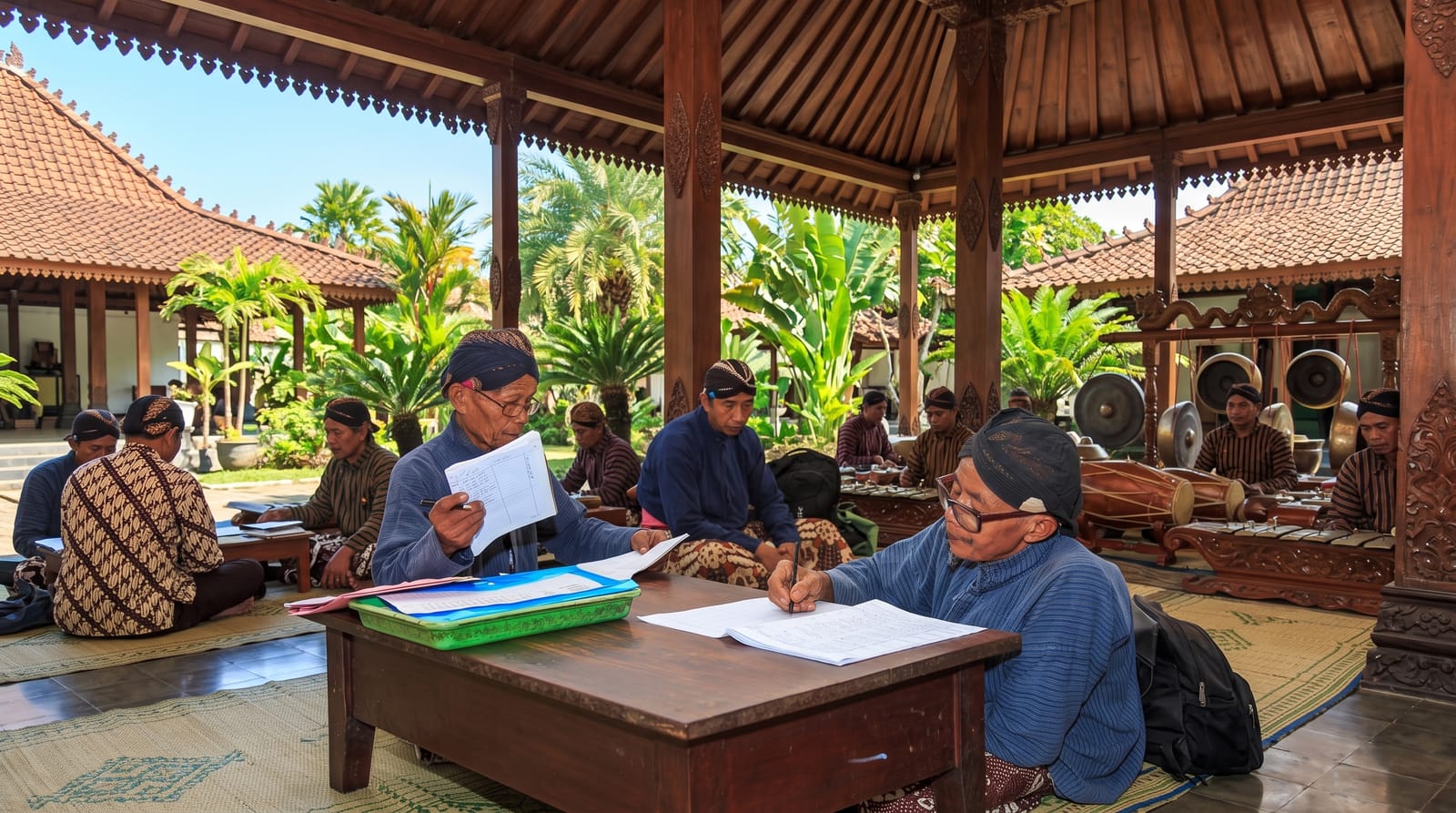
Yogyakarta is regarded as the soul of Javanese culture, a city still ruled by a sultan whose walled palace, the Kraton, sits at its heart as a working royal court and a repository of tradition. Within its pavilions, retainers in traditional dress attend the sultan, and gamelan music, classical dance and wayang kulit shadow-puppet performances keep centuries-old arts alive. Nearby lies the Taman Sari, the ruined pleasure garden and bathing complex of the old court, with its underground passages and pools. Beyond the palace, Yogyakarta is a lively, youthful university city and the best base for the two greatest monuments of Java, the Buddhist stupa of Borobudur and the Hindu temples of Prambanan, both a short drive away. It is also a centre of batik and silversmithing, and its street of artists and the Malioboro shopping thoroughfare give it a creative buzz.
History
The palace was built in 1755-1756 for Hamengkubuwono I, the first sultan of Yogyakarta, as one of his first acts after the Treaty of Giyanti created the sultanate; a banyan forest between two rivers, safe from floods, was chosen as the site. In June 1812 a British force under Stamford Raffles took the walled city in a single day and the palace was sacked, the first such attack on a Javanese court. Most of today's palace was built by Sultan Hamengkubuwono VIII, who reigned from 1921 to 1939, and it was repaired after earthquakes in 1876 and 2006; it remains the seat of the reigning sultan and a centre of Javanese culture, part of the Cosmological Axis of Yogyakarta World Heritage Site (Wikipedia, Kraton Ngayogyakarta Hadiningrat).
The main sights
- The Kraton - the sultan's walled palace, a living royal court with daily arts performances.
- Taman Sari - the ruined royal water gardens with their pools and passages.
- Batik and silver - the workshops and galleries of the city's craft traditions.
- Wayang kulit - traditional shadow-puppet theatre performed in the city.
When to go
May to September is the dry season and most comfortable; the wet season brings heavy afternoon rain. The city is a good base year-round for Borobudur and Prambanan. Arts performances and the Kraton keep set hours, so check schedules for dance and puppetry.
Practical notes
The Kraton is a working palace open only in part and for limited hours, and some visitors find the buildings modest compared with grander palaces elsewhere; its value is the living tradition rather than opulent architecture. The city is busy and traffic-choked, and Malioboro is crowded and touristy. Most people come chiefly for Borobudur and Prambanan and give the city itself less time than it deserves.
Nearby
Borobudur and Prambanan are short drives away; Mount Merapi's slopes and jeep tours are close to the north.
Key facts
Source: Wikidata, item Q10778917, read on 18 October 2026.
What to pack for Yogyakarta and the Kraton
Chosen from what this place is for. Tap a kit for the full checklist.
- Head torch + spare batteries - Hands-free light is essential; caves are truly dark. Find on Amazon
- Comfortable walking shoes - Sightseeing means kilometres of pavement and cobbles daily. Find on Amazon
- Modest clothing - Shoulders and knees covered - the single most common requirement. Find on Amazon
- Grippy closed shoes - Cave floors are wet, muddy and slick with formations. Find on Amazon
Some links on this page are Amazon affiliate links - if you buy through them we may earn a small commission at no extra cost to you.
All packing kitsPlan your trip
Where to start if Yogyakarta and the Kraton is going on the list.
Booking links on this page are affiliate links - if you book through them we may earn a small commission at no extra cost to you. It never changes what we write about a place.
Opening times, ticket prices and seasonal closures change - check the official source before you go: official site.


