Sebangau National Park
A peat-swamp forest near Palangkaraya holding one of the largest wild orangutan populations, and a huge carbon store.
Updated 29 August 2026
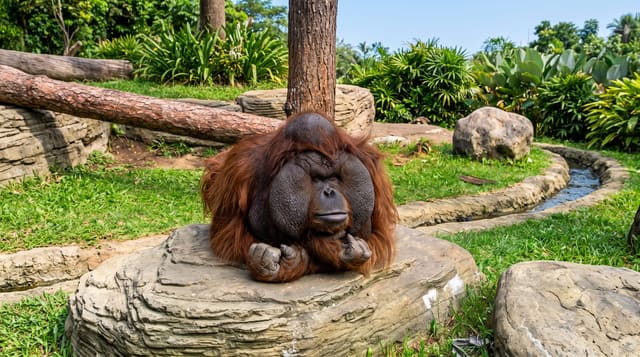
Sebangau covers about five and a half thousand square kilometres of peat swamp forest between the Katingan and Sebangau rivers, gazetted in 2004 after decades of logging, and its importance is double. It holds one of the largest remaining wild orangutan populations, estimated in the thousands - unhabituated animals in genuine forest rather than at feeding platforms. And the peat beneath it is metres deep and stores an enormous quantity of carbon, which is why the fires that burn in drained peat here in bad El Niño years are a global rather than a local problem; the 2015 fires produced haze across Southeast Asia and emissions comparable to a mid-sized country's annual output. Restoration work blocks old logging canals to re-wet the peat. Access is by boat from Kereng Bangkirai.
What you'll find
- Wild unhabituated orangutans - one of the largest remaining populations.
- Deep peat forest - metres of peat storing carbon on a globally significant scale.
- Canal blocking - the restoration dams re-wetting drained peat.
- Blackwater rivers - tannin-stained water reflecting the forest edge.
When to go
June to September, though this is also fire season in bad years. Two days.
What to expect
Orangutans here are wild and sightings are genuinely uncertain. Haze from peat fires can make visiting impossible in bad years. Facilities are minimal and boats are the only access.
Nearby
Palangkaraya is the city; Tanjung Puting is far to the west.
Key facts
Source: Wikidata, item Q1377662, read on 18 October 2026.
What to pack for Sebangau National Park
Chosen from what this place is for. Tap a kit for the full checklist.
- Broken-in walking shoes or boots - Grip and ankle support matter more than looks; never hike in brand-new boots. Find on Amazon
- Binoculars - The single best wildlife tool - even a compact pair transforms a sighting. Find on Amazon
- Layers + a waterproof shell - Mountain weather turns fast; a packable rain jacket saves the day. Find on Amazon
- A zoom camera or long lens - Animals rarely come close; reach beats megapixels. Find on Amazon
Some links on this page are Amazon affiliate links - if you buy through them we may earn a small commission at no extra cost to you.
All packing kitsPlan your trip
Where to start if Sebangau National Park is going on the list.
Booking links on this page are affiliate links - if you book through them we may earn a small commission at no extra cost to you. It never changes what we write about a place.
Opening times, ticket prices and seasonal closures change - check the official source before you go: official site.