Jepara
The centre of Javanese furniture carving, and the home town of Kartini, whose letters began Indonesian feminism.
Updated 19 October 2026
Jepara on the north coast has been a woodcarving town for centuries, and the trade dominates it: workshops line the roads for kilometres, carving teak and mahogany into furniture, panels and screens in a dense floral style, supplying Indonesia and a substantial export trade, with the raw timber, the carving, the finishing and the shipping all present in the same district. The town's other claim is Kartini: Raden Ajeng Kartini, born here in 1879 into the priyayi elite, was educated to twelve and then secluded in the Javanese manner, wrote a body of letters to Dutch correspondents on women's education and the constraints on Javanese women, died at twenty-five after childbirth, and became after publication the founding figure of Indonesian feminism, with a national day on her birthday.
History
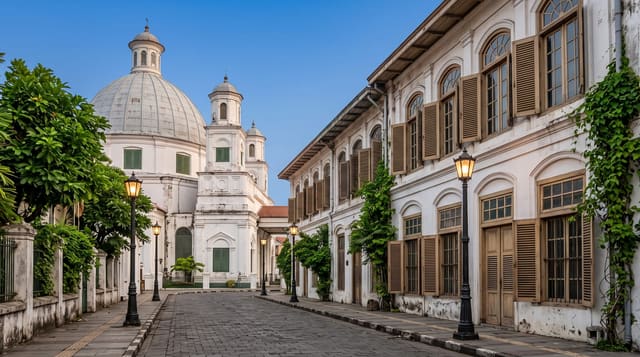
In the 16th century Jepara was an important port: in early 1513 its king, Pati Unus, sent a fleet said to number a hundred ships against Portuguese Malacca, without success, and the rule of Ratu Kalinyamat later in that century was the most influential in its history. It was the site of a Dutch fort in the 17th century and is the birthplace of Kartini (Wikipedia, Jepara).
The main sights
- Carving workshops - kilometres of them, teak and mahogany worked by hand.
- The Kartini museum - the town's memorial to the writer of the letters.
- A working export trade - timber, carving and shipping in one district.
- A north coast port town - the harbour and beaches at Kartini beach and Bandengan.
When to go
May to September. A day.
Before you go
The furniture trade is industrial in scale and much of the town is workshops and yards. Illegal timber has been an issue in the sector. The Kartini museum is small and mostly in Indonesian.
Nearby
Kudus and its minaret mosque are south-east; Karimunjawa boats leave from here.
Key facts
Source: Wikidata, item Q2662601, read on 18 October 2026.
What to pack for Jepara
Chosen from what this place is for. Tap a kit for the full checklist.
- Reef-safe sunscreen - High SPF that will not bleach the coral you are swimming over. Find on Amazon
- Comfortable walking shoes - Sightseeing means kilometres of pavement and cobbles daily. Find on Amazon
- Modest clothing - Shoulders and knees covered - the single most common requirement. Find on Amazon
- Quick-dry towel - A microfibre towel packs small and dries in minutes. Find on Amazon
Some links on this page are Amazon affiliate links - if you buy through them we may earn a small commission at no extra cost to you.
All packing kitsPlan your trip
Where to start if Jepara is going on the list.
Booking links on this page are affiliate links - if you book through them we may earn a small commission at no extra cost to you. It never changes what we write about a place.
Opening times, ticket prices and seasonal closures change - check the official source before you go: official site.