The Dieng Plateau
A high volcanic plateau in central Java with coloured crater lakes, steaming vents and some of the oldest Hindu temples on the island.
Updated 19 October 2026
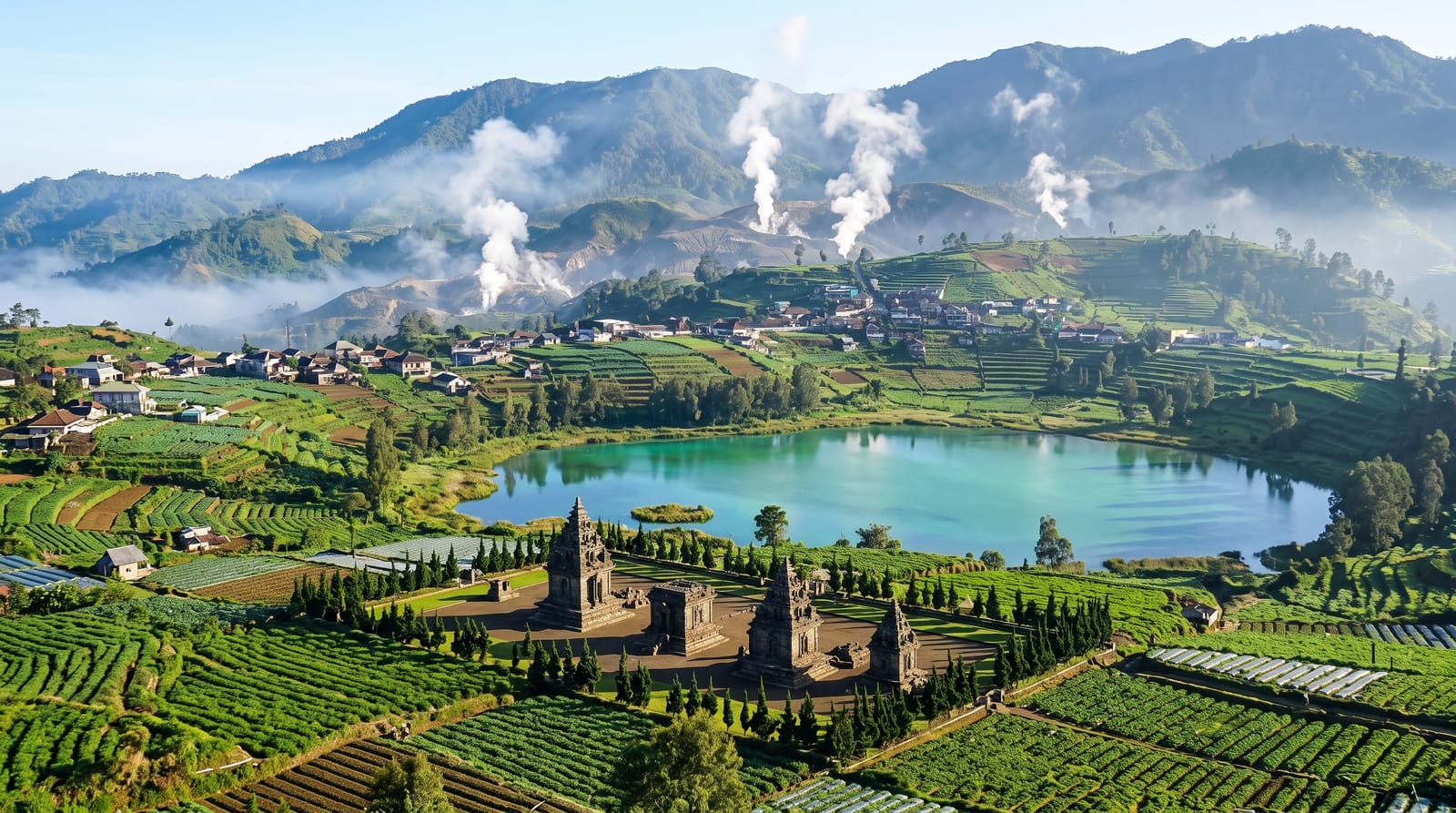
AI illustration
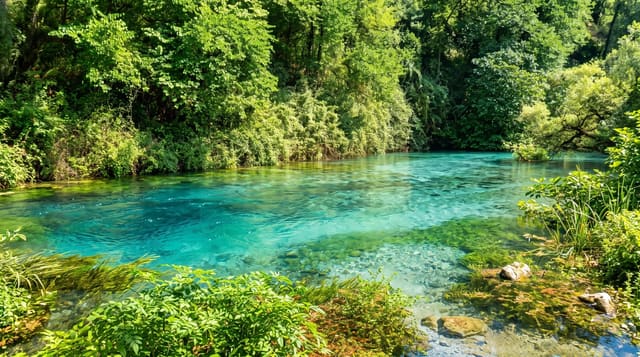
The Dieng Plateau sits at more than 2,000 metres in the volcanic highlands of central Java, a caldera floor of patchwork farmland scattered with reminders that it is very much alive: steaming fumaroles, bubbling mud, and crater lakes tinted strange colours by dissolved minerals, of which the Telaga Warna, the lake of many colours, shifts between turquoise and green. Among the fields stand the Arjuna temples, a cluster of small stone Hindu shrines built in the eighth century that are among the oldest surviving temples in Java, their weathered forms rising from the cool highland grass. The plateau is chilly, often misty, and famous for the golden sunrise seen from viewpoints above it, where a sea of cloud fills the valleys below. It is a landscape quite unlike lowland Java, mixing geology, ancient history and highland farming.
History
The name comes from the Old Javanese di, "place", and hyang, "ancestors" or "gods", "the place where the gods reside". Ninth-century inscriptions mention Dieng as a centre of Hindu worship, among them the Gunung Wule inscription of 861, the Kapuhunan inscription of 878 and the Wintang Mas II inscription of 919, and the plateau itself is the floor of an ancient lake, dammed by lava, that slowly dried out (Wikipedia, Dieng Plateau).
What you'll find
- Telaga Warna - the crater lake that shifts colour with the light and minerals.
- The Arjuna temples - the eighth-century Hindu shrines among the fields.
- Sikidang crater - the steaming vents and bubbling mud of the active field.
- The sunrise viewpoints - the golden dawn over a sea of cloud filling the valleys.
When to go
May to September is drier with clearer sunrises; the plateau is misty and cold much of the year, and genuinely chilly at dawn, so warm layers matter. The famous sunrises need an early, dark start. The wet season brings heavy cloud that can hide the views.
Practical notes
It is high and cold, surprising visitors who expect tropical warmth, and often wrapped in mist that can obscure the sunrise entirely, so a clear morning is a matter of luck. The road up from Wonosobo is winding and slow. The temples are small and weathered, of more interest for their age than their scale. Volcanic gas areas are fenced for good reason, so stay on the paths.
Nearby
Wonosobo is the gateway town; Borobudur and Yogyakarta are a few hours to the southeast.
Key facts
Source: Wikidata, item Q1220857, read on 18 October 2026.
What to pack for The Dieng Plateau
Chosen from what this place is for. Tap a kit for the full checklist.
- Broken-in walking shoes or boots - Grip and ankle support matter more than looks; never hike in brand-new boots. Find on Amazon
- Spare batteries + cards - Cold and long shoots drain power; never run out at the good light. Find on Amazon
- Modest clothing - Shoulders and knees covered - the single most common requirement. Find on Amazon
- Layers + a waterproof shell - Mountain weather turns fast; a packable rain jacket saves the day. Find on Amazon
Some links on this page are Amazon affiliate links - if you buy through them we may earn a small commission at no extra cost to you.
All packing kitsPlan your trip
Where to start if The Dieng Plateau is going on the list.
Booking links on this page are affiliate links - if you book through them we may earn a small commission at no extra cost to you. It never changes what we write about a place.
Opening times, ticket prices and seasonal closures change - check the official source before you go: official site.