Udayagiri and Khandagiri Caves
Jain monastic cells cut into two facing hills in the second century BC, with an inscription by the king who made them.
Updated 21 October 2026
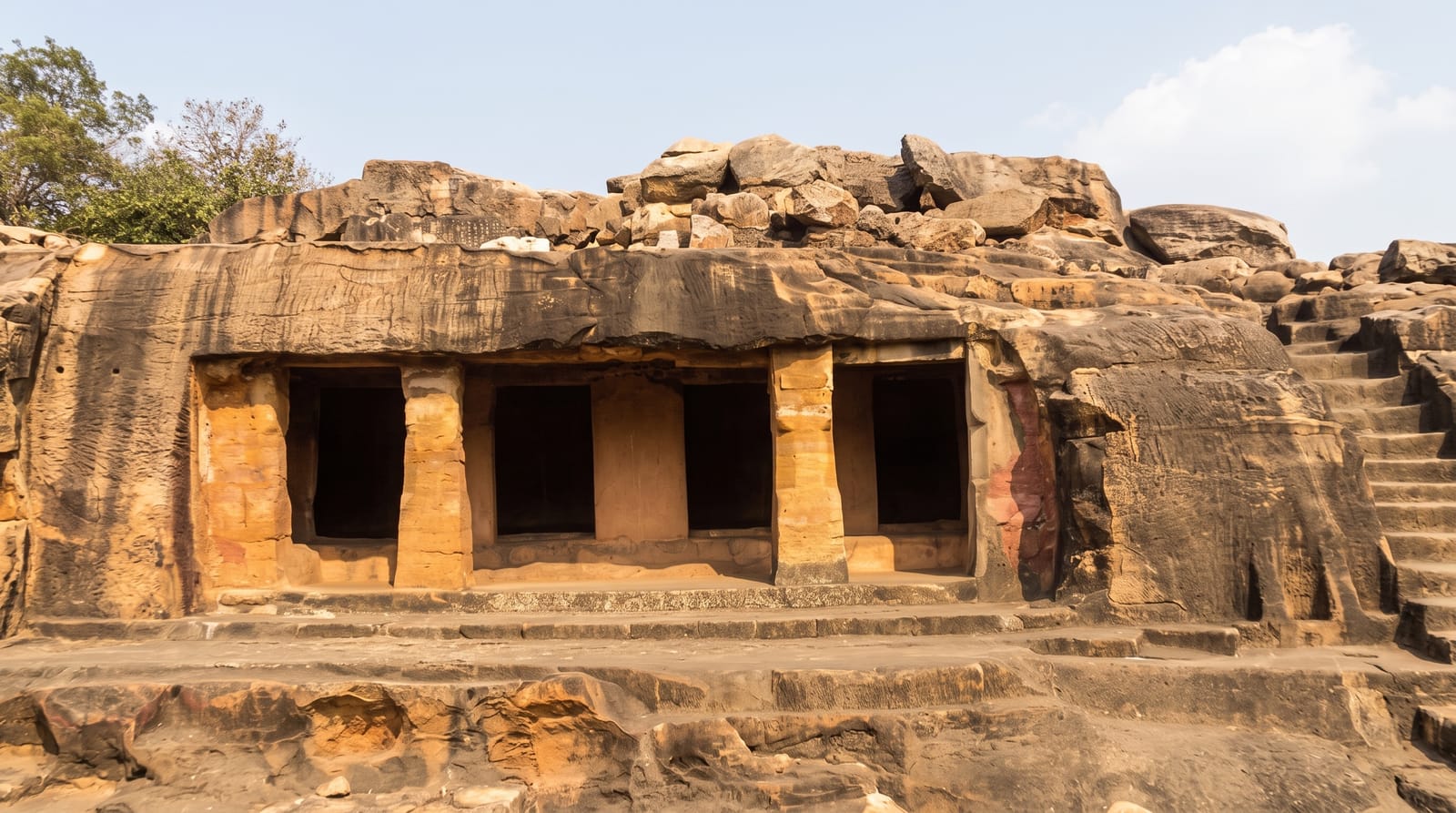
AI illustration
Two sandstone hills face each other outside Bhubaneswar, and both are cut with chambers made for Jain ascetics in the second and first centuries BC under King Kharavela and his line. Udayagiri has the larger group, including the two-storey Rani Gumpha with carved friezes of processions, hunts and dancers across its facade, and the Hathi Gumpha, whose inscription by King Kharavela is a primary source for the period, recording his campaigns and public works year by year. Khandagiri opposite has more cells and a later Jain temple on the summit. Monkeys occupy both hills in numbers.
What's there
- Rani Gumpha - a two-storey cave with carved narrative friezes.
- The Hathi Gumpha inscription - Kharavela's year-by-year record of his reign.
- The monastic cells - low chambers cut for ascetics across both hills.
- The Khandagiri summit - a later Jain temple with views over Bhubaneswar.
When to go
October to March; Odisha summers are severe and the hills are exposed. Mornings are best. The caves are quiet on weekdays and busy at weekends.
Good to know
Cells are low and cramped, cut for sleeping rather than standing. Monkeys are aggressive and take food and bags. The climb between levels is on uneven rock with no railings in places.
Nearby
Lingaraj temple lies east; Bhubaneswar's old town is nearby.
Key facts
Source: Wikidata, item Q3536413, read on 18 October 2026.
What to pack for Udayagiri and Khandagiri Caves
Chosen from what this place is for. Tap a kit for the full checklist.
- Head torch + spare batteries - Hands-free light is essential; caves are truly dark. Find on Amazon
- Comfortable walking shoes - Sightseeing means kilometres of pavement and cobbles daily. Find on Amazon
- Modest clothing - Shoulders and knees covered - the single most common requirement. Find on Amazon
- Grippy closed shoes - Cave floors are wet, muddy and slick with formations. Find on Amazon
Some links on this page are Amazon affiliate links - if you buy through them we may earn a small commission at no extra cost to you.
All packing kitsPlan your trip
Where to start if Udayagiri and Khandagiri Caves is going on the list.
Booking links on this page are affiliate links - if you book through them we may earn a small commission at no extra cost to you. It never changes what we write about a place.
Opening times, ticket prices and seasonal closures change - check the official source before you go: official site.