Jagannath Temple, Puri
A temple whose wooden deities are replaced entirely every dozen years or so, and whose flag flies against the wind.
Updated 19 October 2026
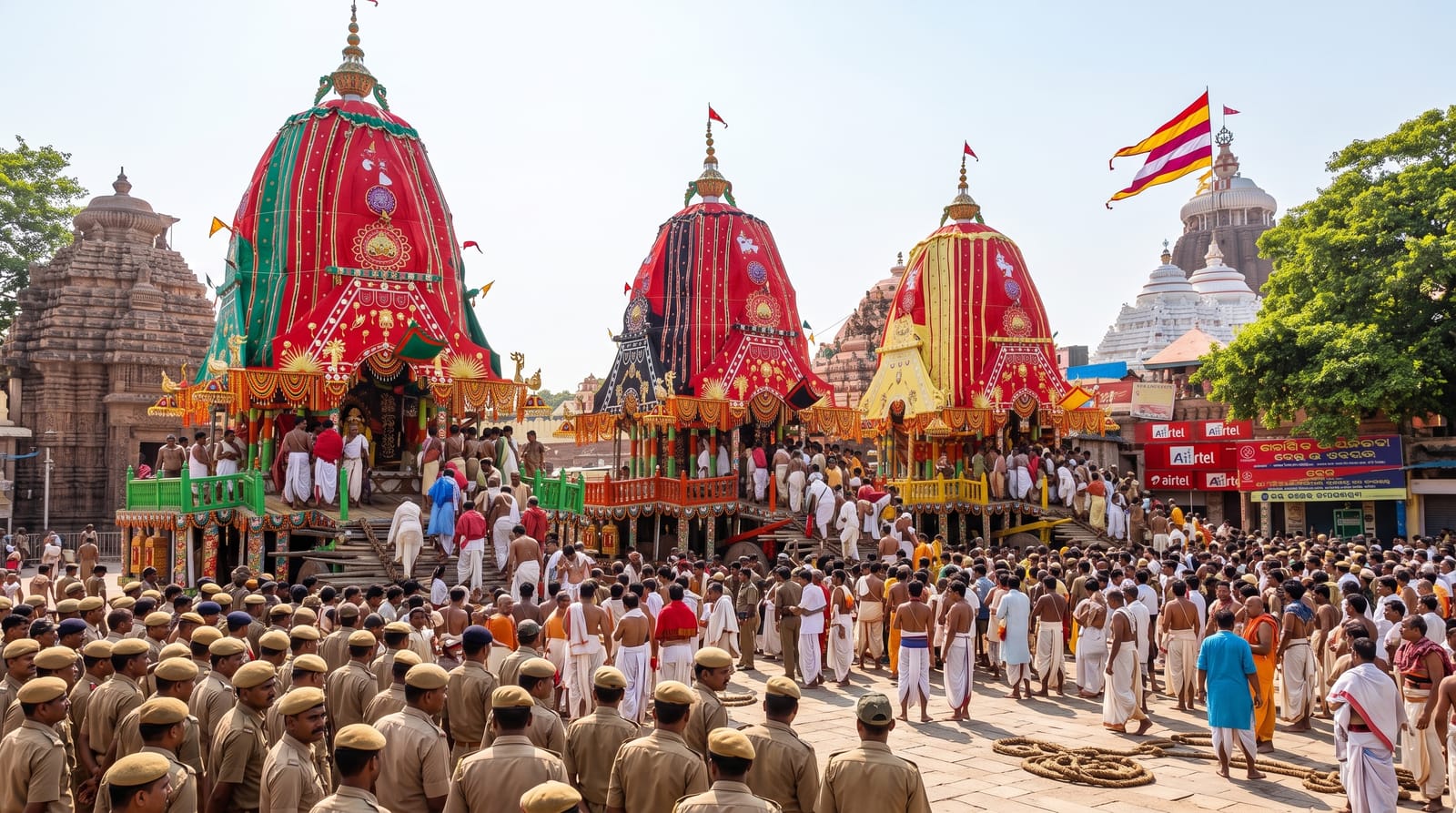
AI illustration
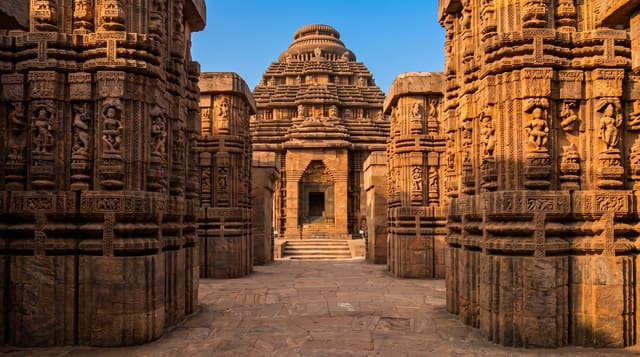
The temple at Puri is one of the Char Dham and dates in its present form from the twelfth century, its tower rising about sixty-five metres in the Kalinga style. Its deities, Jagannath, Balabhadra and Subhadra, are carved in wood rather than stone and are replaced in a ceremony called Nabakalebara, held when a particular calendrical coincidence occurs, roughly every twelve to nineteen years, with the new images made from specified neem trees found by prescribed signs. The kitchen is among the largest in the world, cooking for thousands daily in earthen pots stacked in a wood-fired hearth. A flag on the tower is observed to fly against the prevailing wind.
History
Puri, called Purusottama Kshetra or Nilachala in early sources, was a sacred site before the present temple, which temple records credit to King Indradyumna of Avanti. The foundational structure of the present temple was built in the early 12th century by Anantavarman Chodaganga of the Eastern Ganga dynasty, who ruled about 1078-1150, and his successor Anangabhima Deva III, about 1211-1238, dedicated the kingdom of Utkala to Jagannath and called himself the god's servant; in the 15th and 16th centuries the Gajapati kings of Odisha shaped the temple's institutions (Wikipedia, Jagannath Temple, Puri).
The main sights
- The wooden deities - images replaced entirely in the Nabakalebara ceremony.
- The temple kitchen - one of the largest, cooking in stacked earthen pots.
- The tower - a sixty-five metre Kalinga-style spire above the town.
- The flag - changed daily by a climber, flying against the wind.
When to go
October to March; Rath Yatra in June or July is the great festival. The temple is busy year-round with queues at all hours.
Good to know
Entry is restricted to those born Hindu and this is enforced at the gates; others can view from the Raghunandan Library roof opposite. Phones, cameras and leather are prohibited. Priests inside press hard for donations.
Nearby
Raghurajpur lies inland; Konark is northeast.
Key facts
Source: Wikidata, item Q1678260, read on 18 October 2026.
What to pack for Jagannath Temple, Puri
Chosen from what this place is for. Tap a kit for the full checklist.
- Comfortable walking shoes - Sightseeing means kilometres of pavement and cobbles daily. Find on Amazon
- Modest clothing - Shoulders and knees covered - the single most common requirement. Find on Amazon
- A slim anti-theft daypack - Zips that close properly; keep it in front in crowds and on transit. Find on Amazon
- A scarf or shawl - To cover the head or shoulders on entry; women especially at mosques. Find on Amazon
Some links on this page are Amazon affiliate links - if you buy through them we may earn a small commission at no extra cost to you.
All packing kitsPlan your trip
Where to start if Jagannath Temple, Puri is going on the list.
Booking links on this page are affiliate links - if you book through them we may earn a small commission at no extra cost to you. It never changes what we write about a place.
Opening times, ticket prices and seasonal closures change - check the official source before you go: official site.