Sivasagar
The capital of a kingdom that ruled Assam for six hundred years and turned back the Mughals repeatedly.
Updated 19 October 2026
AI illustration
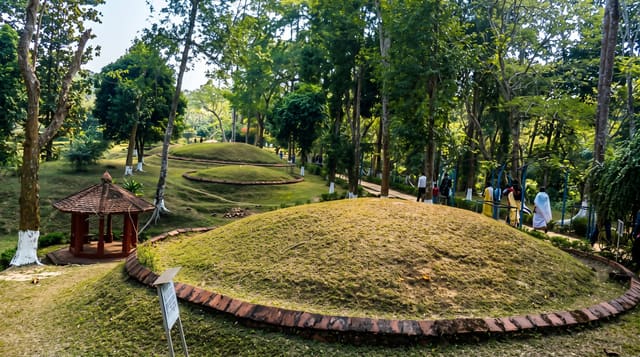
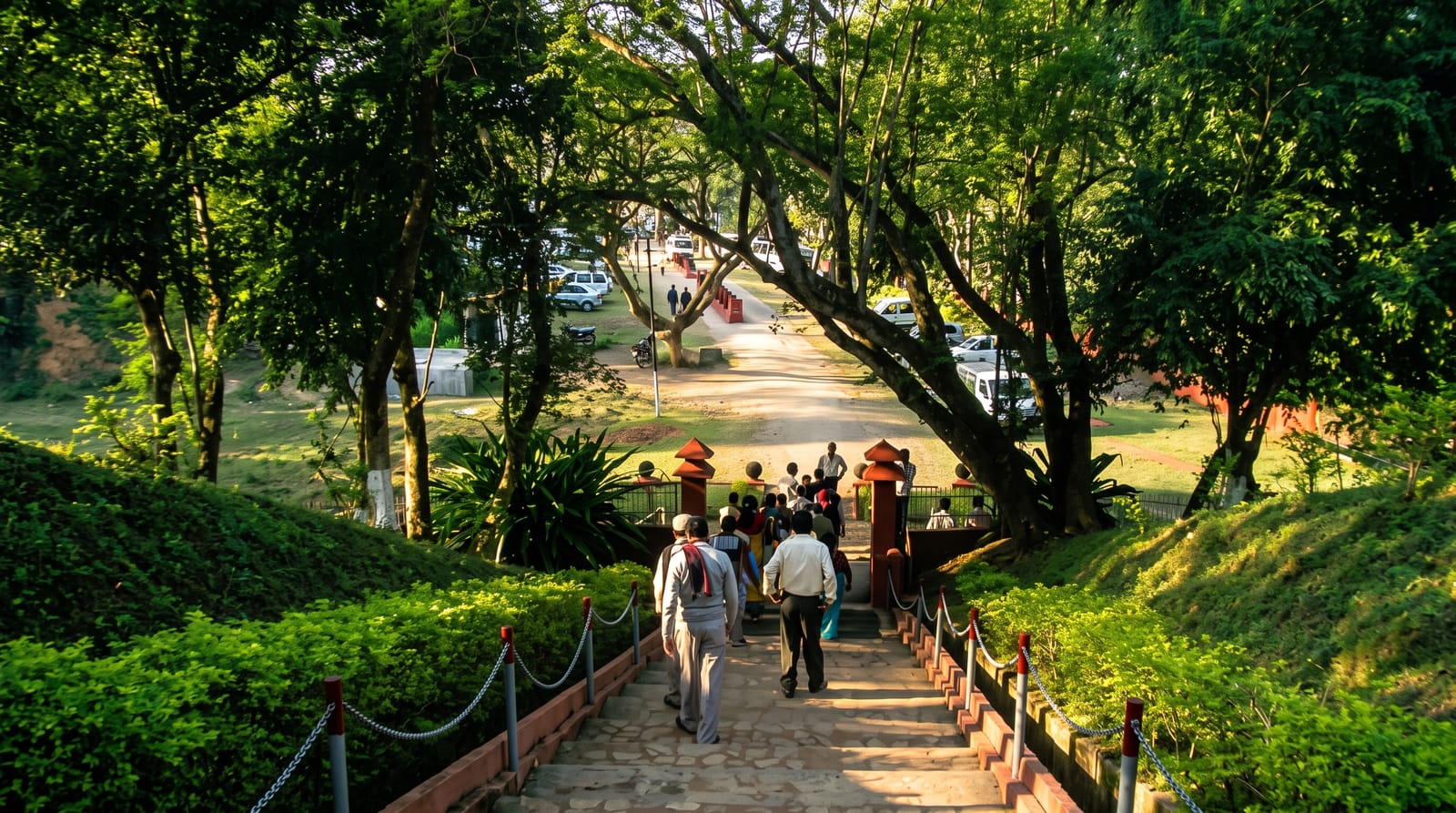
The Ahom kingdom ruled Assam from 1228 to 1826, close to six hundred years, defeating repeated Mughal invasions including the decisive battle at Saraighat in 1671, and Sivasagar was among its capitals. Its monuments are distinctive: Rang Ghar, a two-storey oval pavilion of the 1740s built as a royal viewing stand for games and buffalo fights, commonly called one of Asia's oldest surviving amphitheatre structures; Talatal Ghar, a palace with underground floors and tunnels; and Kareng Ghar. The Sivasagar tank, dug in 1734, covers about a hundred and twenty-nine acres with three temples on its bank and stands above the surrounding land.
History
Sivasagar, formerly Rangpur, was the capital of the Ahom kingdom from 1699 to 1788. In 1733 the Ahom queen Ambika Devi had a tank of 257 acres dug at the capital, and the place came to be called Sivpur after the Siva Dol temple built on its bank, a name that in time became Sibsagar; the Ahom kingdom fell to the Burmese Konbaung dynasty in 1819, and the British took the province in 1825 and annexed it fully in 1826 (Wikipedia, Sivasagar).
The main sights
- Rang Ghar - an oval royal viewing pavilion of the 1740s.
- Talatal Ghar - a palace with underground storeys and blocked tunnels.
- The Sivasagar tank - a huge eighteenth-century tank above ground level.
- The bank temples - Shivadol and two others on the tank's edge.
When to go
November to March; Assam summers are hot and the monsoon brings flooding. Sites are spread across the town and a vehicle helps. Mornings are quiet.
What to expect
Monuments are scattered with limited interpretation. Underground sections at Talatal Ghar are sealed. The town itself is workaday and facilities modest.
Nearby
Charaideo lies east; Jorhat is southwest.
Key facts
Source: Wikidata, item Q1284453, read on 18 October 2026.
What to pack for Sivasagar
Chosen from what this place is for. Tap a kit for the full checklist.
- Head torch + spare batteries - Hands-free light is essential; caves are truly dark. Find on Amazon
- Strong insect repellent - DEET or picaridin; the jungle is where bites and disease risk are highest. Find on Amazon
- Comfortable walking shoes - Sightseeing means kilometres of pavement and cobbles daily. Find on Amazon
- Modest clothing - Shoulders and knees covered - the single most common requirement. Find on Amazon
Some links on this page are Amazon affiliate links - if you buy through them we may earn a small commission at no extra cost to you.
All packing kitsPlan your trip
Where to start if Sivasagar is going on the list.
Booking links on this page are affiliate links - if you book through them we may earn a small commission at no extra cost to you. It never changes what we write about a place.
Opening times, ticket prices and seasonal closures change - check the official source before you go: official site.