Puri Rath Yatra
Three chariots built new each year and pulled by hand through the streets, the origin of the word juggernaut.
Updated 4 September 2026
AI illustration
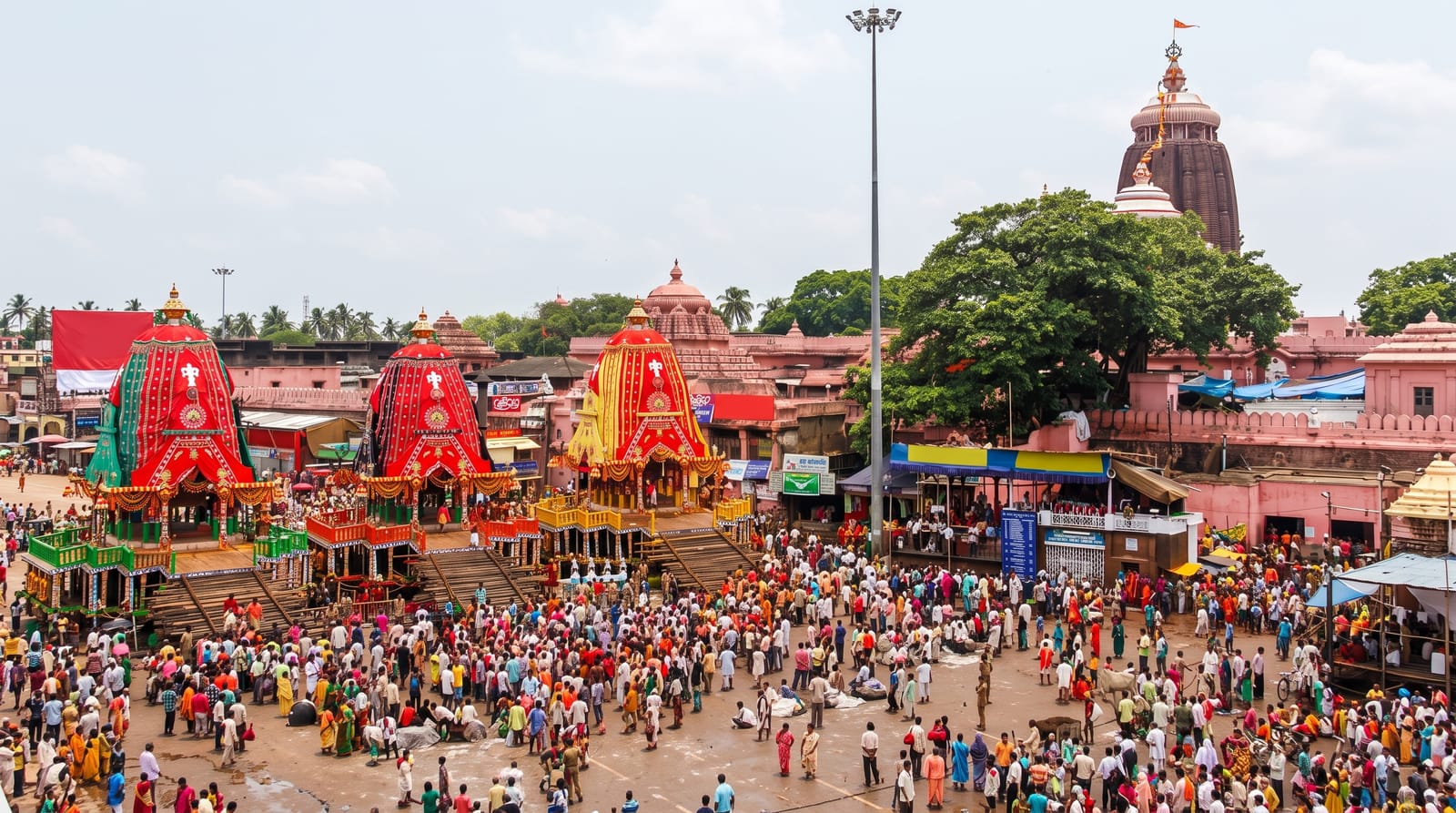
Once a year the deities of the Jagannath temple leave it: three chariots are built from scratch in the weeks before, the largest about thirteen metres high on sixteen wheels, using timber allotted by tradition and no metal in the structure, and the images are carried out and installed on them. Hundreds of thousands of people then pull the chariots by rope along the Grand Road to the Gundicha temple, about three kilometres, over one or more days. English observers of this in the colonial period produced the word juggernaut, from Jagannath, for an unstoppable force. The chariots are dismantled after and their wood used in the temple kitchen.
What you'll find
- The three chariots - built new each year without metal, the largest on sixteen wheels.
- The pulling - hundreds of thousands hauling on ropes along the Grand Road.
- The Grand Road - the three-kilometre processional route.
- The dismantling - chariot timber going afterwards to the temple kitchen.
When to go
June or July, on the date set by the lunar calendar; the return journey follows about a week later. Puri accommodation books out months ahead and the town fills entirely.
Practical notes
Crowds are enormous and have caused deaths in crushes; the authorities manage barriers tightly. The chariots move slowly and may take more than a day. Heat and humidity in the season are severe.
Nearby
The Jagannath temple is the starting point; Konark lies northeast.
What to pack for Puri Rath Yatra
Chosen from what this place is for. Tap a kit for the full checklist.
- Strong insect repellent - DEET or picaridin; the jungle is where bites and disease risk are highest. Find on Amazon
- Comfortable walking shoes - Sightseeing means kilometres of pavement and cobbles daily. Find on Amazon
- Modest clothing - Shoulders and knees covered - the single most common requirement. Find on Amazon
- Long, light, quick-dry clothing - Covers skin from insects and sun without cooking you in the humidity. Find on Amazon
Some links on this page are Amazon affiliate links - if you buy through them we may earn a small commission at no extra cost to you.
All packing kitsPlan your trip
Where to start if Puri Rath Yatra is going on the list.
Booking links on this page are affiliate links - if you book through them we may earn a small commission at no extra cost to you. It never changes what we write about a place.
Opening times, ticket prices and seasonal closures change - check the official source before you go: official site.