Nalanda
The excavated ruins of a monastic university that taught for seven centuries and burned in the twelfth.
Updated 14 October 2026
AI illustration
UNESCO World Heritage
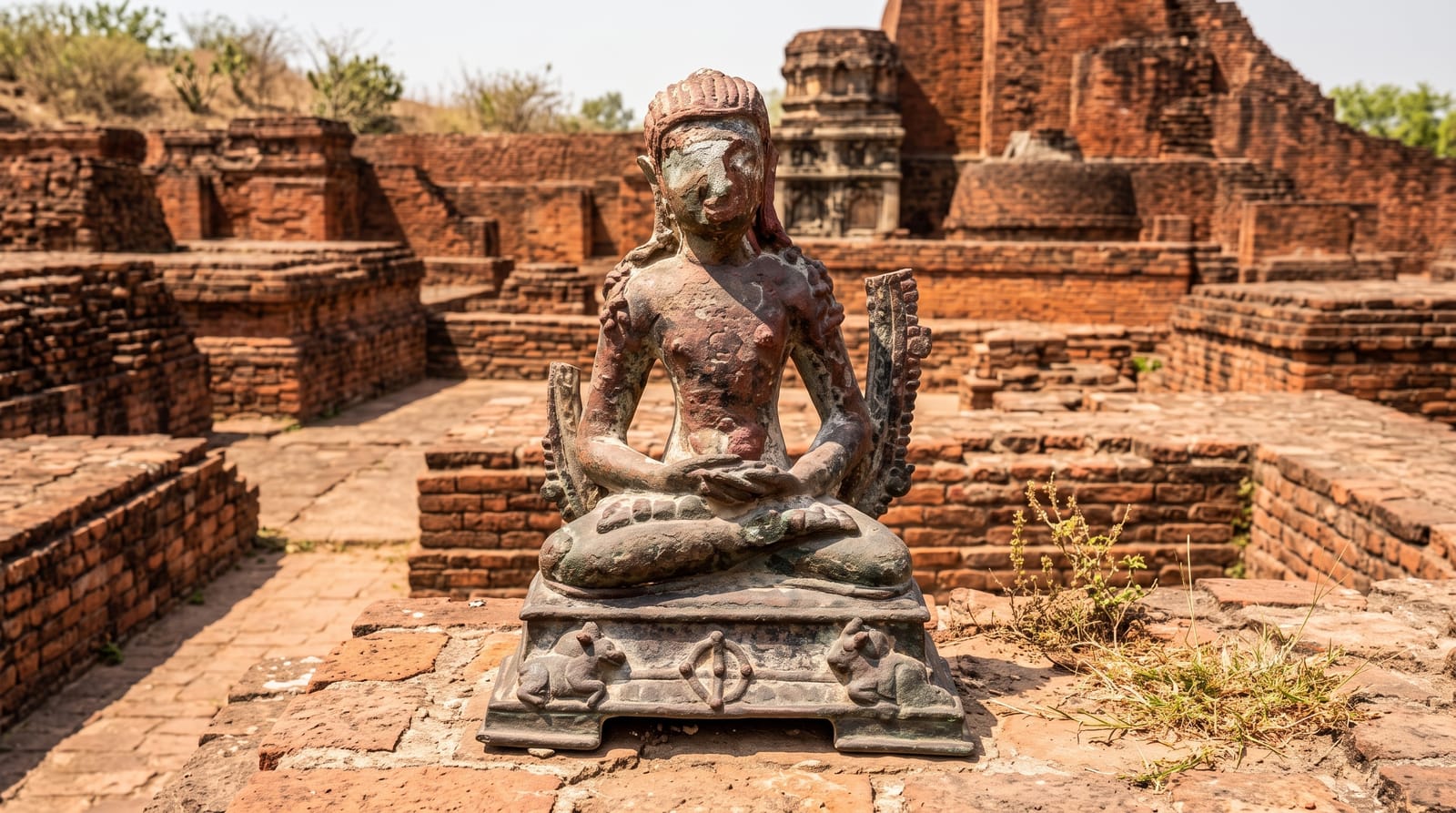
Nalanda operated from around the fifth century to the twelfth as a monastic university drawing students from China, Korea, Tibet, Central Asia and Southeast Asia, teaching Buddhist philosophy alongside logic, grammar, medicine and astronomy; the Chinese pilgrims Xuanzang and Yijing studied here and left detailed accounts. Estimates of its population run to thousands of monks and hundreds of teachers. It was destroyed around 1200 and its library, by the traditional account, burned for months. The excavated site shows brick monasteries in rows with cells around courtyards, temples, stairways and a large stupa, and it was inscribed by UNESCO in 2016.
Highlights
- The monastery rows - brick viharas with cells around open courtyards.
- The great stupa - the stepped Sariputta stupa at the site's centre.
- The excavated lanes - streets between the monastic and temple blocks.
- The site museum - sculpture, seals and objects recovered here.
When to go
October to March; Bihar summers are severe and the site is open brick with no shade. Mornings are best. The museum closes on Fridays.
What to expect
The remains are foundations and low walls; the scale needs imagination. There is no shade at all. Guides at the gate vary widely in accuracy. Facilities are limited.
Nearby
Rajgir lies south; Bodh Gaya is southwest.
What to pack for Nalanda
Chosen from what this place is for. Tap a kit for the full checklist.
- Comfortable walking shoes - Sightseeing means kilometres of pavement and cobbles daily. Find on Amazon
- Modest clothing - Shoulders and knees covered - the single most common requirement. Find on Amazon
- A slim anti-theft daypack - Zips that close properly; keep it in front in crowds and on transit. Find on Amazon
- A scarf or shawl - To cover the head or shoulders on entry; women especially at mosques. Find on Amazon
Some links on this page are Amazon affiliate links - if you buy through them we may earn a small commission at no extra cost to you.
All packing kitsPlan your trip
Where to start if Nalanda is going on the list.
Booking links on this page are affiliate links - if you book through them we may earn a small commission at no extra cost to you. It never changes what we write about a place.
Opening times, ticket prices and seasonal closures change - check the official source before you go: official site.