Junagarh Fort
A fort on flat ground rather than a hill, never taken, holding painted and mirrored palaces inside.
Updated 19 October 2026

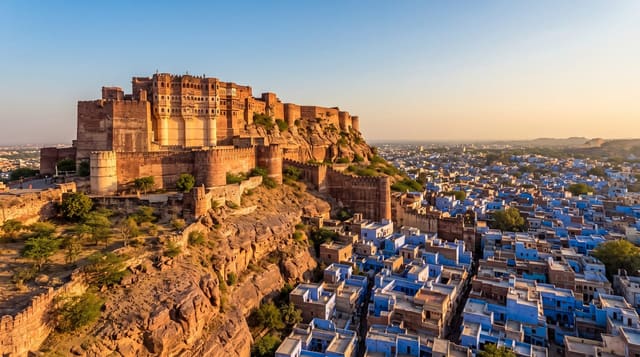
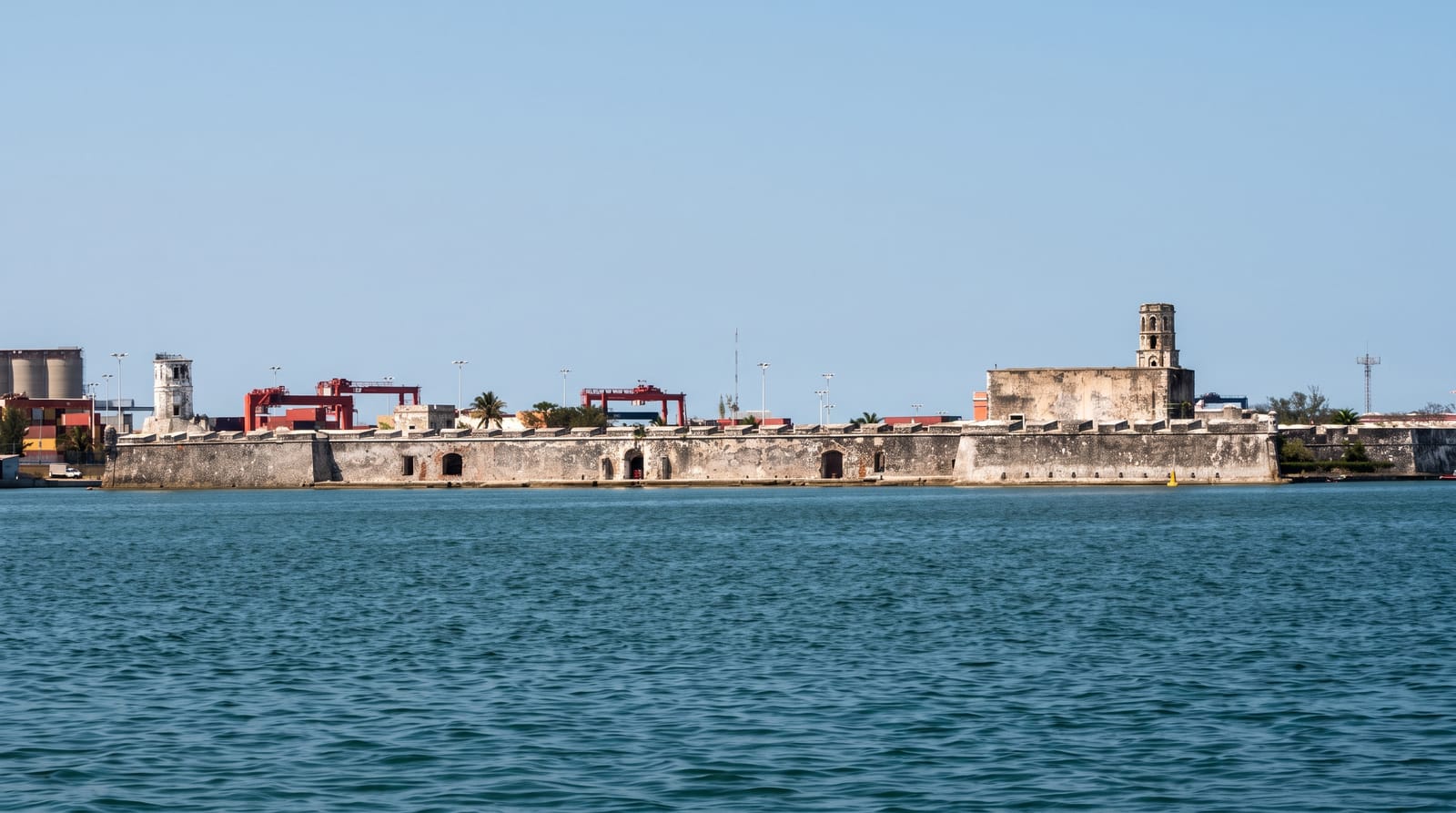
AI illustration
Junagarh was begun in 1589 by Raja Rai Singh, a general in Akbar's service, and unlike most Rajput strongholds it stands on the plain, defended by walls, bastions and a moat rather than by height, and it was never taken despite repeated attempts. Successive rulers added palaces inside over three centuries, so the interiors range from carved red sandstone courts to the Anup Mahal with gilded plasterwork, the Phool Mahal with mirrors and coloured glass, the Chandra Mahal, and a hall built for a First World War biplane presented to the maharaja, which is still parked in the fort.
History
An older stone fort was built in 1478 by Rao Bika, who founded Bikaner in 1472. The present fort, first called Chintamani, was built for Raja Rai Singh, who ruled from 1571 to 1611, under his prime minister Karan Chand, its walls and moat begun in 1589 and finished in 1594; later rulers such as Karan Singh and Anup Singh added palaces, and it was renamed Junagarh, "old fort", in the early 20th century when the royal family moved to Lalgarh Palace (Wikipedia, Junagarh Fort).
The main sights
- Anup Mahal - gilded and lacquered plasterwork over red and gold walls.
- Phool Mahal - mirrored and coloured glass interiors.
- The biplane - a First World War aircraft displayed inside the fort.
- The courtyards - carved sandstone courts between the palace blocks.
When to go
October to March; Bikaner summers exceed forty degrees. Interiors are cool. The fort is quieter than the Jaipur and Jodhpur equivalents at most times.
Things to know
Interiors are visited on a set route with an audio guide, and independent wandering is limited. Photography inside is charged. Bikaner is a long way from the main Rajasthan circuit.
Nearby
Karni Mata temple lies south; Jaisalmer is southwest.
Key facts
Source: Wikidata, item Q2758341, read on 18 October 2026.
What to pack for Junagarh Fort
Chosen from what this place is for. Tap a kit for the full checklist.
- Comfortable walking shoes - Sightseeing means kilometres of pavement and cobbles daily. Find on Amazon
- Modest clothing - Shoulders and knees covered - the single most common requirement. Find on Amazon
- A slim anti-theft daypack - Zips that close properly; keep it in front in crowds and on transit. Find on Amazon
- A scarf or shawl - To cover the head or shoulders on entry; women especially at mosques. Find on Amazon
Some links on this page are Amazon affiliate links - if you buy through them we may earn a small commission at no extra cost to you.
All packing kitsPlan your trip
Where to start if Junagarh Fort is going on the list.
Booking links on this page are affiliate links - if you book through them we may earn a small commission at no extra cost to you. It never changes what we write about a place.
Opening times, ticket prices and seasonal closures change - check the official source before you go: official site.