Hemkund Sahib
A gurudwara beside a glacial lake at 4,600 metres, open three months a year and reached only on foot.
Updated 19 October 2026

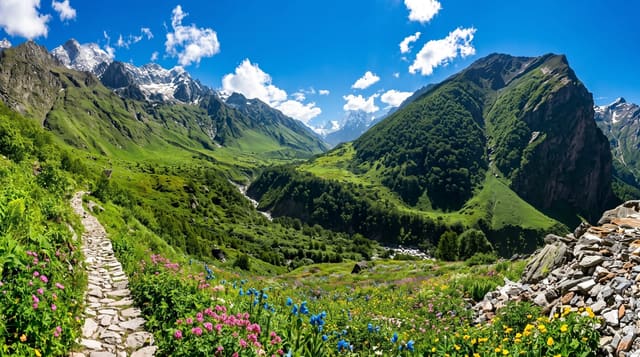
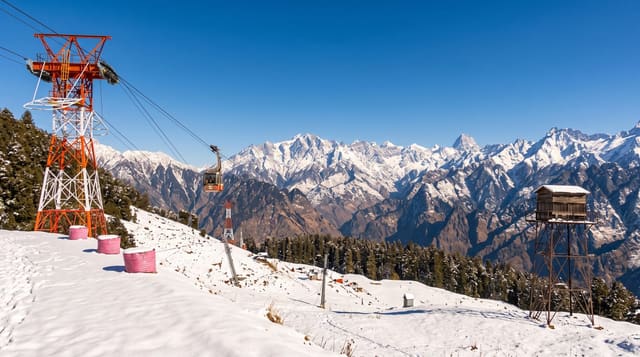
AI illustration
Hemkund Sahib stands at about 4,630 metres beside a glacial lake ringed by seven peaks, identified with the place described in the writings of Guru Gobind Singh, and it is among the highest gurudwaras in the world. It can only be reached on foot or by pony: a walk of roughly thirteen kilometres from Govindghat to Ghangaria, then a steep six kilometres more, climbing about a thousand metres. Pilgrims bathe in the lake, which stays near freezing, before entering. Snow closes the route for most of the year and the shrine opens roughly from late May to early October. The Valley of Flowers branches off the same trail.
History
The name joins the Sanskrit hem, "snow", and kund, "bowl", and the gurdwara is devoted to Guru Gobind Singh, tenth Guru of the Sikhs. The Dasam Granth says that in a former life Guru Gobind Singh meditated intensely at Hemkund (Wikipedia, Gurdwara Hemkund Sahib).
The main sights
- The glacial lake - dark water ringed by seven peaks below the shrine.
- The gurudwara - one of the highest Sikh shrines in the world.
- The climb - about nineteen kilometres in total, the last part very steep.
- The Brahma Kamal - the high-altitude flower growing around the lake.
When to go
June to early October, the only months the route is clear; July and August bring monsoon rain and the Valley of Flowers alongside at its peak. Snow can close the trail at either end of the season.
Practical notes
The final climb is steep at altitude and hard for the unacclimatised; altitude sickness is common. Bathing in the lake is genuinely near freezing. Accommodation at Ghangaria is basic and books out.
Nearby
The Valley of Flowers branches off the same trail; Badrinath is north.
What to pack for Hemkund Sahib
Chosen from what this place is for. Tap a kit for the full checklist.
- Broken-in walking shoes or boots - Grip and ankle support matter more than looks; never hike in brand-new boots. Find on Amazon
- Warm base layers - Merino or synthetic against the skin - never cotton, which chills when damp. Find on Amazon
- Strong insect repellent - DEET or picaridin; the jungle is where bites and disease risk are highest. Find on Amazon
- Layers for big temperature swings - Warm sun by day, near-freezing at night, even near the equator. Find on Amazon
Some links on this page are Amazon affiliate links - if you buy through them we may earn a small commission at no extra cost to you.
All packing kitsPlan your trip
Where to start if Hemkund Sahib is going on the list.
Booking links on this page are affiliate links - if you book through them we may earn a small commission at no extra cost to you. It never changes what we write about a place.
Opening times, ticket prices and seasonal closures change - check the official source before you go: official site.