Badrinath Temple
A brightly painted Vishnu temple between two peaks, with a hot spring at the steps in a valley of snow.
Updated 19 October 2026

AI illustration
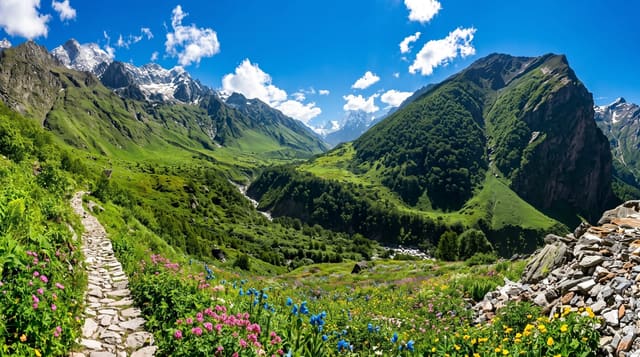
Badrinath stands at about 3,130 metres on the Alaknanda between the Nar and Narayan peaks, with Neelkanth rising behind, and it is one of the four Char Dham sites as well as one of the hundred and eight divya desams of Vaishnavism. The temple facade is painted in strong colours in a Garhwali style, reached up a flight of steps, and the Tapt Kund hot spring at the foot is used by pilgrims to bathe before entering, its water hot enough to be startling in a valley that holds snow much of the year. The temple is served by priests from Kerala by long tradition, and closes for winter.
History
Local tradition says the image of Badrinarayan was first served by Narada; when the region became Buddhist the image was thrown into the Tapt Kund, and Adi Shankara later recovered it and re-established the temple with the help of a Parmar ruler. Another story credits Ramanuja with reinstalling the image, and in the 16th century the King of Garhwal moved it to the present temple; the throne of Badrinath was named after the deity, and the king received ritual obeisance from pilgrims until the late 19th century (Wikipedia, Badrinath Temple).
What you'll find
- The painted facade - strong colours on the temple front above the steps.
- Tapt Kund - the hot spring where pilgrims bathe before darshan.
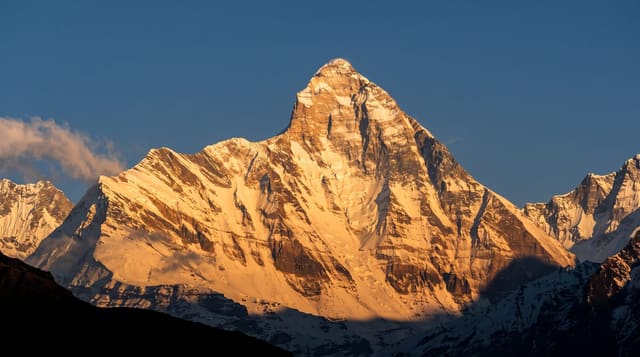
- Neelkanth peak - the pyramid mountain rising behind the valley.
- Mana village - the last settlement before the pass, a few kilometres on.
When to go
May to June and September to October, within the open season from roughly late April to November; the monsoon brings landslides on the approach road, which is prone to blockage.
Before you go
Roads into the Garhwal are narrow, winding and frequently blocked by landslides in season. Altitude affects many pilgrims. Queues for darshan are long and accommodation basic.
Nearby
Mana village and the Vasudhara falls lie north; Joshimath is south.
Key facts
Source: Wikidata, item Q799695, read on 18 October 2026.
What to pack for Badrinath Temple
Chosen from what this place is for. Tap a kit for the full checklist.
- Warm base layers - Merino or synthetic against the skin - never cotton, which chills when damp. Find on Amazon
- Strong insect repellent - DEET or picaridin; the jungle is where bites and disease risk are highest. Find on Amazon
- Layers for big temperature swings - Warm sun by day, near-freezing at night, even near the equator. Find on Amazon
- Comfortable walking shoes - Sightseeing means kilometres of pavement and cobbles daily. Find on Amazon
Some links on this page are Amazon affiliate links - if you buy through them we may earn a small commission at no extra cost to you.
All packing kitsPlan your trip
Where to start if Badrinath Temple is going on the list.
Booking links on this page are affiliate links - if you book through them we may earn a small commission at no extra cost to you. It never changes what we write about a place.
Opening times, ticket prices and seasonal closures change - check the official source before you go: official site.