Hampi
A UNESCO-listed field of temples and palaces scattered across a surreal landscape of giant boulders, the ruined capital of a great medieval South Indian empire.
Updated 18 October 2026

AI illustration
UNESCO World Heritage
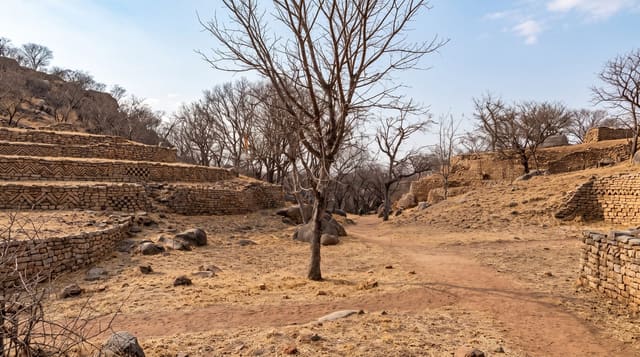
Hampi, in the interior of Karnataka, was the capital of the Vijayanagara empire, one of the greatest kingdoms of medieval South India and by some accounts one of the largest and richest cities in the world before it was sacked in the sixteenth century. What remains, a World Heritage Site, is extraordinary: hundreds of temples, palaces, pavilions, markets and waterworks spread over a vast area of a landscape unlike anywhere else, a boulder-strewn terrain of giant rounded granite rocks piled improbably across hills and along a river, glowing gold at sunrise and sunset. Among the ruins stand the still-active Virupaksha temple with its towering gateway, the Vittala temple with its famous stone chariot and musical pillars, royal enclosures, elephant stables and stepped tanks. You explore by bicycle, moped or on foot over several days, and the combination of romantic ruins and dreamlike boulder scenery makes it one of India's most captivating places.
History
Hampi is older than the Vijayanagara Empire: the Ramayana and the Puranas know it as Pampa Devi Tirtha Kshetra, and its name comes from Pampa, the old name of the Tungabhadra River. From 1336 to 1565 it was the capital of the Vijayanagara Empire, a fortified city that Persian and Portuguese travellers described as prosperous and grand, with many temples, farms and markets, and by 1500 it is estimated to have been the second-largest city in the world after Beijing and probably the richest in India; it was abandoned in 1565, and the Virupaksha temple and its monastery remain an active religious centre (Wikipedia, Hampi).
The main sights
- The Vittala Temple - with its iconic stone chariot and musical pillars.
- Virupaksha Temple - the still-active temple with its soaring gateway tower.
- The royal enclosure - the palaces, elephant stables and stepped tank.
- The boulder landscape - the surreal piled granite, glowing at sunrise and sunset.
When to go
October to February is the cool, dry season and by far the most comfortable for exploring the exposed ruins; the rest of the year is punishingly hot. Sunrise and sunset are magical on the boulders and best for photography. The Hampi festival and temple car festivals add colour at certain times.
Before you go
The ruins are spread over a large area, so seeing them means a lot of getting about by bike, moped or auto-rickshaw, and a lot of walking in what can be fierce heat and sun. It is fairly remote, reached by an overnight train or a long drive. Facilities are basic backpacker-style, and one side of the river is quieter than the temple-town side. The heat outside winter is genuinely limiting.
Nearby
The Tungabhadra dam is close; the Badami cave temples and Goa's beaches are longer trips.
Key facts
Source: Wikidata, item Q26732, read on 18 October 2026.
What to pack for Hampi
Chosen from what this place is for. Tap a kit for the full checklist.
- Reef-safe sunscreen - High SPF that will not bleach the coral you are swimming over. Find on Amazon
- Padded shorts - The one thing that makes a full day in the saddle bearable. Find on Amazon
- Head torch + spare batteries - Hands-free light is essential; caves are truly dark. Find on Amazon
- Comfortable walking shoes - Sightseeing means kilometres of pavement and cobbles daily. Find on Amazon
Some links on this page are Amazon affiliate links - if you buy through them we may earn a small commission at no extra cost to you.
All packing kitsPlan your trip
Where to start if Hampi is going on the list.
Booking links on this page are affiliate links - if you book through them we may earn a small commission at no extra cost to you. It never changes what we write about a place.
Opening times, ticket prices and seasonal closures change - check the official source before you go: official site.