Chamba
An old hill capital above the Ravi with a group of stone temples standing since the tenth century.
Updated 19 October 2026
AI illustration
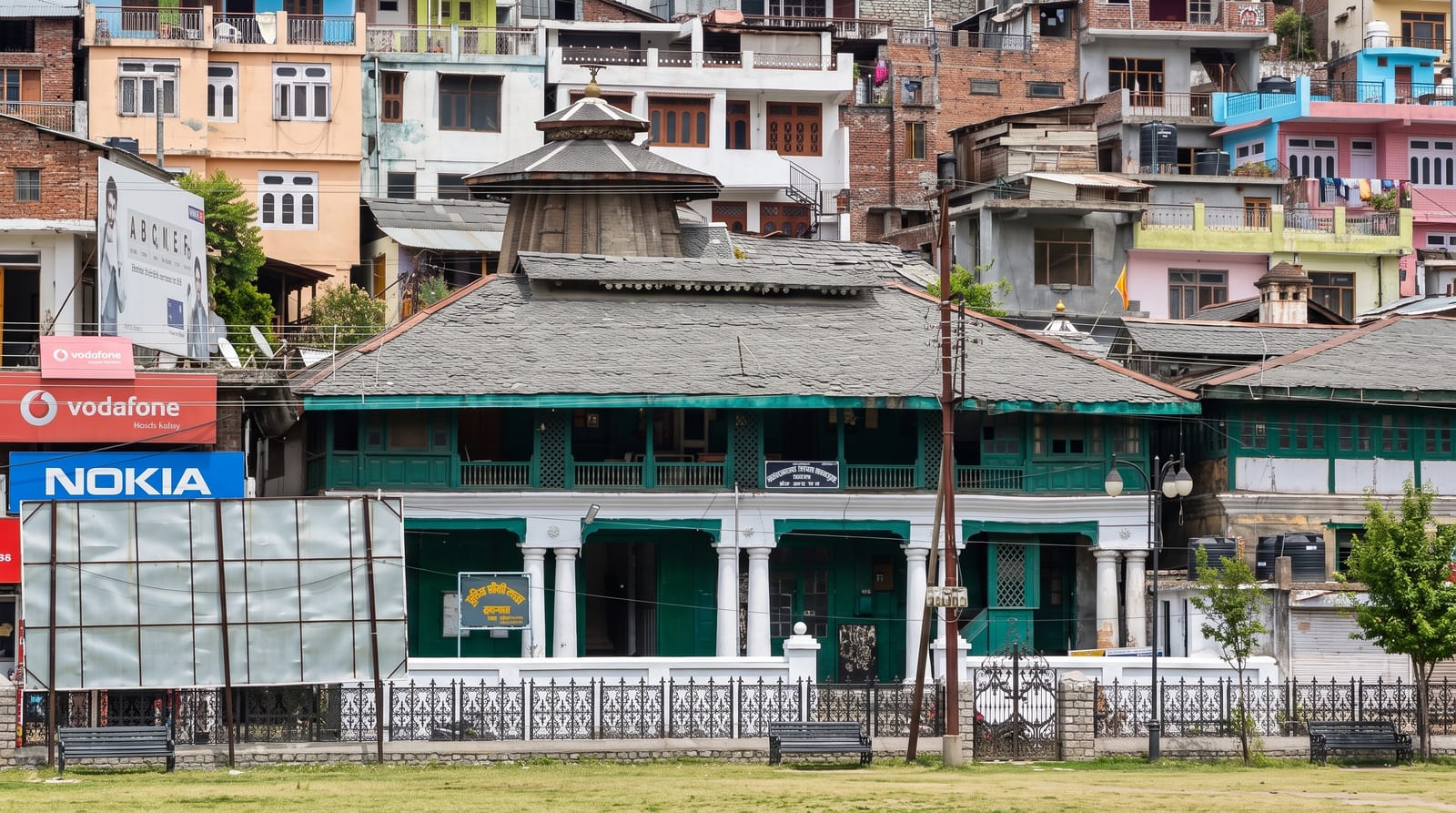
Chamba was the capital of a hill state founded in the sixth century and moved here in the tenth, and it kept its dynasty until 1948, which is why so much survives. The Lakshmi Narayan temple group at the town centre holds six stone shikhara temples of the tenth century onward, built in the north Indian style with brass images. Above the town at Bharmour and Chatrarhi are further early temples with metal sculpture. The Bhuri Singh Museum holds Pahari miniature paintings, the Chamba school being among the finest, along with the Chamba rumal, a double-sided embroidered handkerchief technique local to here.
History
The earliest rulers of the region were the Koli tribes, followed by the Khasas and Audumbaras in the 2nd century BC and Thakurs and Ranas in the Gupta period. Around 500 AD Maru founded a Rajput kingdom with its capital at Brahmapura, later Bharmour, and in 920 Raja Sahil Varman moved the capital to a plateau in the lower Ravi valley and named the new city Champavati after his daughter (Wikipedia, Chamba, Himachal Pradesh).
What you'll find
- The Lakshmi Narayan group - six stone temples of the tenth century onward.
- The Bhuri Singh Museum - Pahari miniatures and Chamba rumal embroidery.
- The Chaugan - the long grassy maidan at the centre of town.
- The Ravi gorge - the river running below the town.
When to go
March to June and September to November; the Minjar fair in July or August is the main festival, when a silk streamer is offered to the Ravi. Monsoon rain is heavy and roads are landslide-prone.
Practical notes
Photography inside the temples is restricted. The town is congested and the roads in are long and winding. Bharmour and Chatrarhi are further trips requiring a full day each.
Nearby
Khajjiar lies southwest; Bharmour is east up the valley.
What to pack for Chamba
Chosen from what this place is for. Tap a kit for the full checklist.
- Strong insect repellent - DEET or picaridin; the jungle is where bites and disease risk are highest. Find on Amazon
- Comfortable walking shoes - Sightseeing means kilometres of pavement and cobbles daily. Find on Amazon
- Modest clothing - Shoulders and knees covered - the single most common requirement. Find on Amazon
- Long, light, quick-dry clothing - Covers skin from insects and sun without cooking you in the humidity. Find on Amazon
Some links on this page are Amazon affiliate links - if you buy through them we may earn a small commission at no extra cost to you.
All packing kitsPlan your trip
Where to start if Chamba is going on the list.
Booking links on this page are affiliate links - if you book through them we may earn a small commission at no extra cost to you. It never changes what we write about a place.
Opening times, ticket prices and seasonal closures change - check the official source before you go: official site.