Ajmer Sharif Dargah
The tomb of Moinuddin Chishti, visited by people of every faith, with cooking pots that feed thousands at once.
Updated 19 October 2026
AI illustration
Moinuddin Chishti settled in Ajmer in the early thirteenth century and established the Chishti order in India, whose teaching of service and inclusion drew followers across religious lines, and his tomb has been one of the most visited shrines in South Asia ever since, with emperors from Akbar onward endowing it and pilgrims of all faiths coming. Two enormous copper cauldrons, degs, stand in the courtyard, gifts of Akbar and Jahangir, in which rice, ghee, nuts and dried fruit are cooked in one batch to feed thousands. Qawwali singers perform in the courtyard, and the annual Urs marks the saint's death anniversary.
History
Moinuddin Chishti, a 13th-century Sufi saint born in Sistan, came to Delhi in the reign of Sultan Iltutmish and moved on to Ajmer, where he worked to establish the Chishti order in India. After his death in March 1236 his tomb became deeply venerated, honoured by rulers including Iltutmish, Razia Sultana, Muhammad bin Tughluq, Sher Shah Suri, Akbar, Jahangir and Shah Jahan, and hundreds of thousands still gather for his Urs (Wikipedia, Shrine of Mu'in al-Din Chishti).
What's there
- The tomb chamber - the marble shrine under its dome, crowded with pilgrims.
- The great degs - Mughal-era cauldrons cooking food for thousands.
- The qawwali - devotional singing performed in the courtyard.
- The mixed pilgrimage - visitors from many faiths at the same shrine.
When to go
October to March; the Urs, on the Islamic calendar, brings hundreds of thousands and is the most intense time. Thursday evenings are the traditional qawwali nights.
Before you go
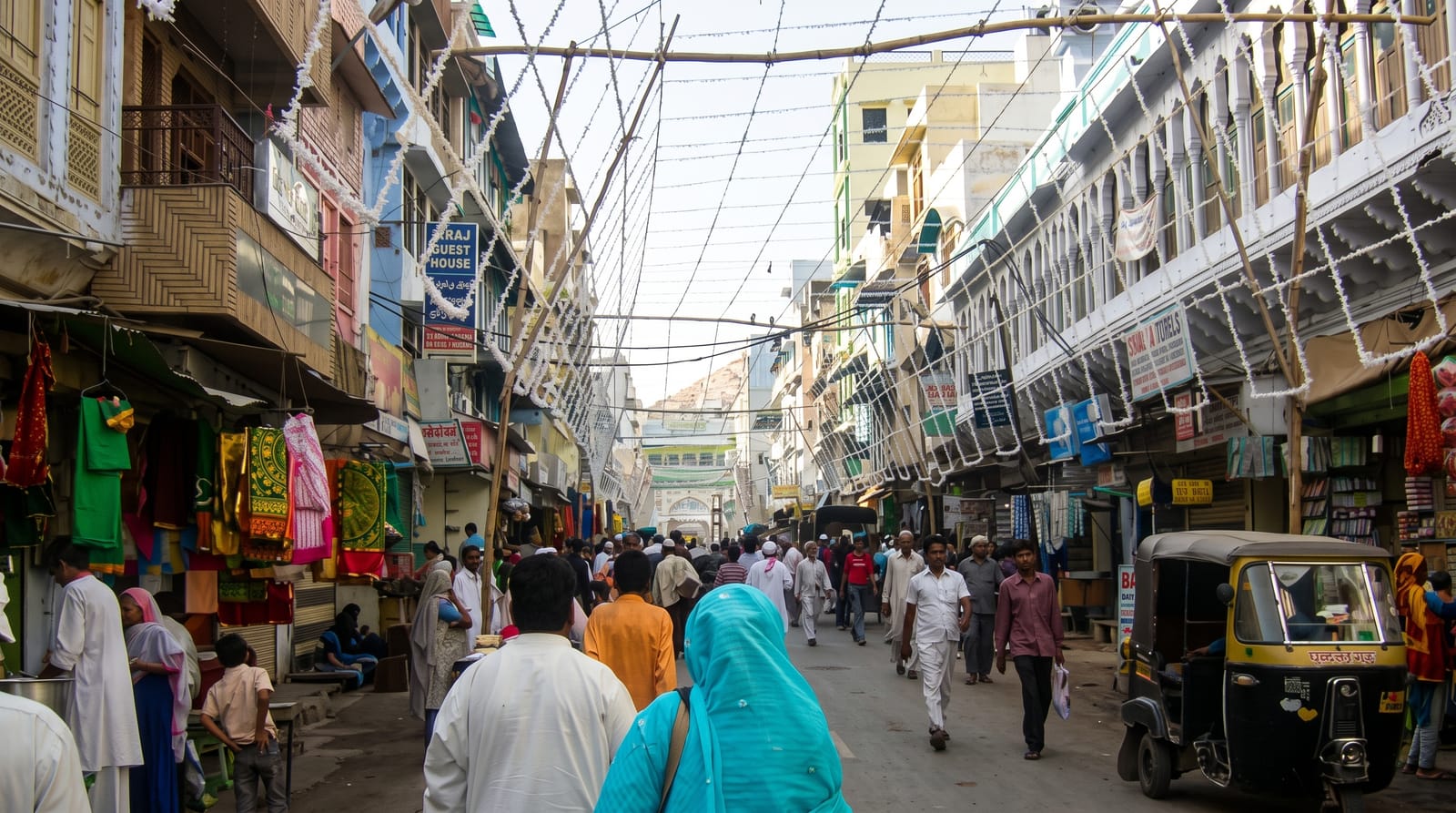
Crowds are dense and the approach lane is packed with stalls and insistent guides who attach themselves to visitors and demand payment. Heads must be covered. Belongings need careful watching.
Nearby
Pushkar lies northwest over the hill; Jaipur is northeast.
Key facts
Source: Wikidata, item Q5222593, read on 18 October 2026.
What to pack for Ajmer Sharif Dargah
Chosen from what this place is for. Tap a kit for the full checklist.
- Comfortable walking shoes - Sightseeing means kilometres of pavement and cobbles daily. Find on Amazon
- Modest clothing - Shoulders and knees covered - the single most common requirement. Find on Amazon
- A slim anti-theft daypack - Zips that close properly; keep it in front in crowds and on transit. Find on Amazon
- A scarf or shawl - To cover the head or shoulders on entry; women especially at mosques. Find on Amazon
Some links on this page are Amazon affiliate links - if you buy through them we may earn a small commission at no extra cost to you.
All packing kitsPlan your trip
Where to start if Ajmer Sharif Dargah is going on the list.
Booking links on this page are affiliate links - if you book through them we may earn a small commission at no extra cost to you. It never changes what we write about a place.
Opening times, ticket prices and seasonal closures change - check the official source before you go: official site.