Ahmedabad Old City
India's first UNESCO world heritage city, built as gated neighbourhoods with secret passages between them.
Updated 18 October 2026
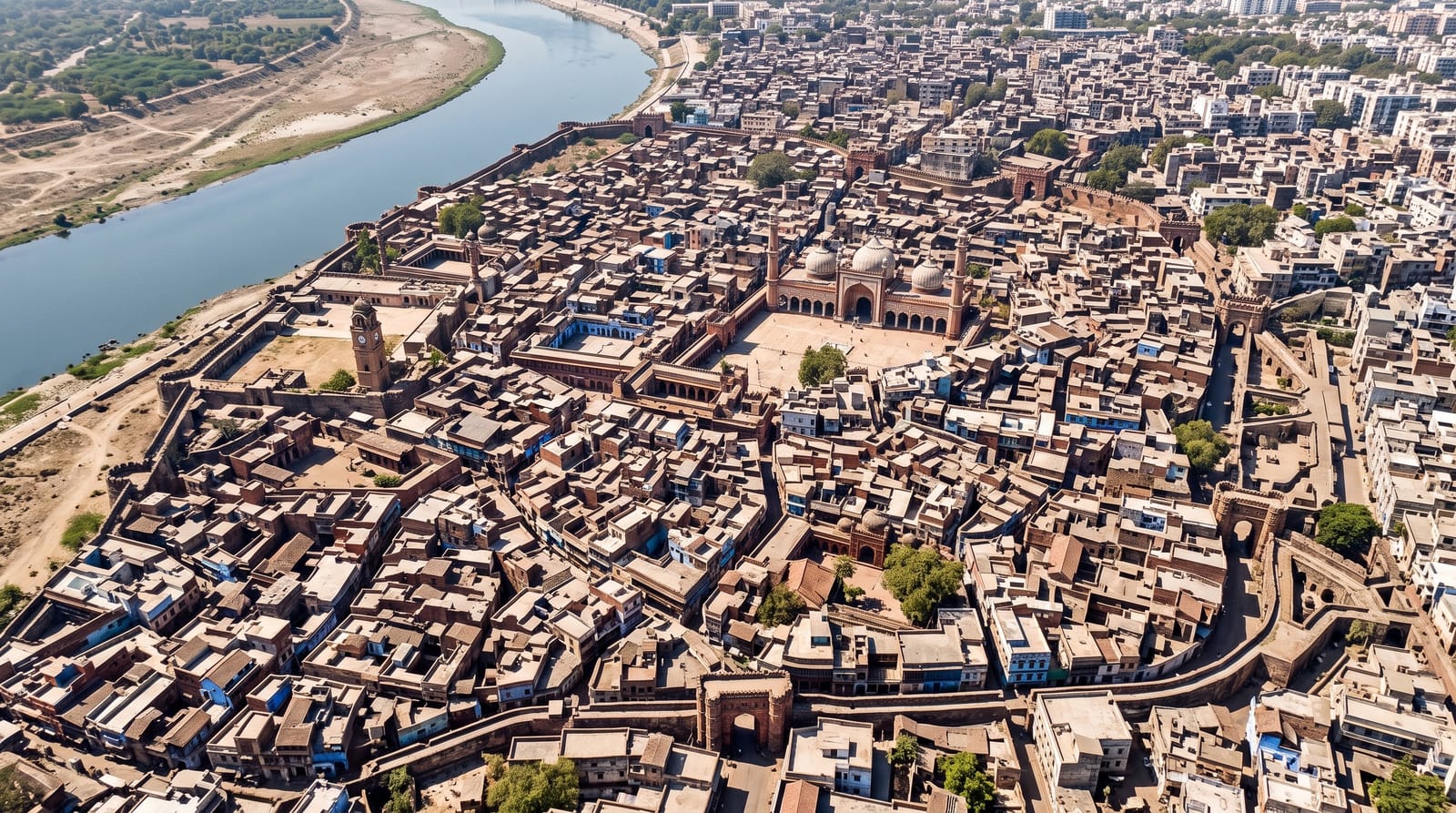
AI illustration
UNESCO World Heritage
Ahmedabad was founded in 1411 and its walled city was inscribed by UNESCO in 2017 as the first world heritage city in India, largely for its urban form: the pol, a gated residential cluster shared by a community, entered through a single gate, with carved timber houses, an internal square, a bird feeder pole and, in many, concealed passages linking one pol to the next for escape. Around them stand the Jama Masjid of 1424, the Sidi Saiyyed mosque with its stone lattice tree window, the Bhadra fort and Manek Chowk, a jewellery market by day that becomes a street food market at night.
History
The earliest settlement, Ashaval, lay south of the present old city, and in the 11th century Karna of the Chaulukya dynasty made it his capital as Karnavati. Ahmad Shah I of the Gujarat Sultanate founded the walled city in 1411, beginning the Bhadra Fort at the Manek Burj bastion and laying out Manek Chowk, its first square; his grandson Mahmud Begada moved the capital away in 1484-1535 but refortified the city, which fell to the Mughals in 1573, and in the Mughal-Maratha struggles of 1707-1753 many suburbs were emptied and the walls damaged. Under British Company rule from 1817 trade recovered, and in July 2017 the historic city was inscribed by UNESCO as a World Heritage City (Wikipedia, Historic City of Ahmadabad).
Highlights
- The pols - gated neighbourhoods of carved timber houses.
- Sidi Saiyyed - the mosque with the celebrated stone tree lattice.
- The Jama Masjid - the 1424 mosque with its pillared hall.
- Manek Chowk - jewellery by day, street food after dark.
When to go
November to February; Ahmedabad summers exceed forty-five degrees. The morning heritage walk starts at dawn and is the best way into the pols. Uttarayan, the kite festival, falls in January.
Before you go
Pols are residential and largely private; a guided walk is the practical way to see inside them. Many timber houses are decaying or demolished. The city is dry, with alcohol prohibited across Gujarat.
Nearby
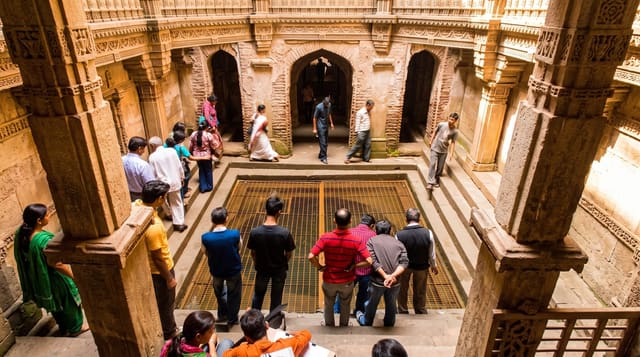
Adalaj stepwell lies north; Sabarmati ashram is on the river.
Key facts
Source: Wikidata, item Q5472448, read on 18 October 2026.
What to pack for Ahmedabad Old City
Chosen from what this place is for. Tap a kit for the full checklist.
- Comfortable walking shoes - Sightseeing means kilometres of pavement and cobbles daily. Find on Amazon
- Modest clothing - Shoulders and knees covered - the single most common requirement. Find on Amazon
- A slim anti-theft daypack - Zips that close properly; keep it in front in crowds and on transit. Find on Amazon
- A scarf or shawl - To cover the head or shoulders on entry; women especially at mosques. Find on Amazon
Some links on this page are Amazon affiliate links - if you buy through them we may earn a small commission at no extra cost to you.
All packing kitsPlan your trip
Where to start if Ahmedabad Old City is going on the list.
Booking links on this page are affiliate links - if you book through them we may earn a small commission at no extra cost to you. It never changes what we write about a place.
Opening times, ticket prices and seasonal closures change - check the official source before you go: official site.