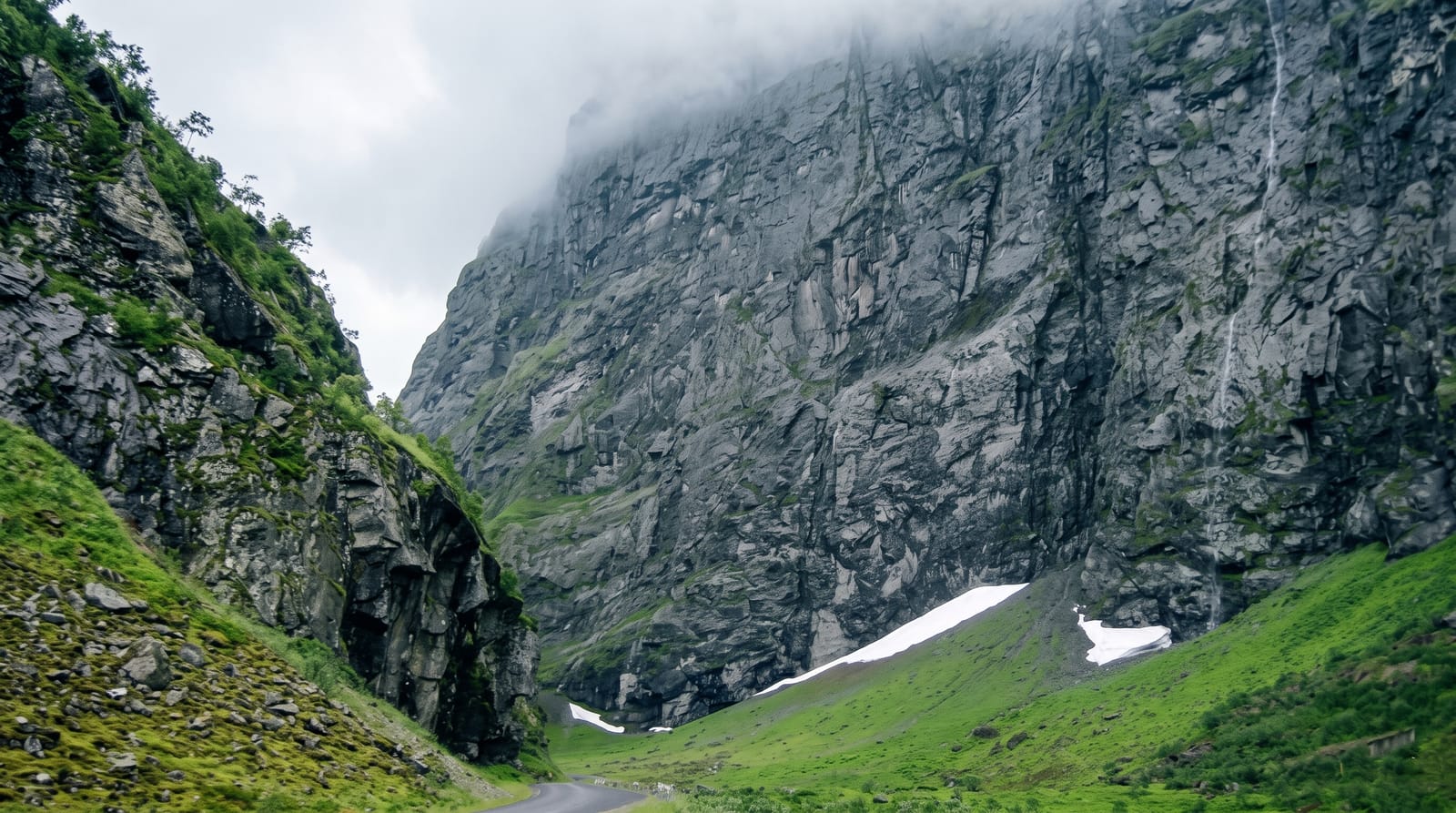
Thjorsardalur
A wide valley abandoned after Hekla buried its farms in 1104, now holding falls, ravines and a rebuilt longhouse.
Updated 12 October 2026
Thjorsardalur opens north of the Thjorsa river below Hekla, and its history is one eruption: in 1104 Hekla covered the valley in tephra and the farms in it were abandoned, some of them not excavated until the 1930s. The best known, Stong, was dug out and roofed, and a full reconstruction of it - Thjodveldisbaerinn, the Commonwealth Farm - was begun nearby in 1974 for the eleven hundredth anniversary of settlement and completed in 1977. The valley also holds Haifoss and Granni at its head, the green ravine of Gjain, and Hjalparfoss at its mouth, so it works as a day rather than a stop. Forestry has been planted across the tephra since the middle of the last century.
What's there
- A valley emptied by Hekla in 1104 - farms buried in tephra and abandoned.
- Stong and its reconstruction - the excavated farm and the Commonwealth Farm of 1977.
- Haifoss, Gjain and Hjalparfoss - the valley's three set pieces.
- Planted forest on ash - the reclamation work of recent decades.
When to go
June to September; the gravel side roads are shut much of the rest of the year. A full day.
Good to know
Roads 327 and 332 are rough gravel with fords in places and hire car agreements often exclude them. The reconstruction keeps short summer hours. Ash and dust blow hard in dry wind. Facilities are minimal outside the campsite.
Nearby
Hekla stands above the valley; Landmannalaugar lies beyond it inland.
Key facts
Source: Wikidata, item Q335459, read on 18 October 2026.
What to pack for Thjorsardalur
Chosen from what this place is for. Tap a kit for the full checklist.
- Broken-in walking shoes or boots - Grip and ankle support matter more than looks; never hike in brand-new boots. Find on Amazon
- Shelter suited to the place - Tent, tarp or hut booking - match it to the terrain and rules. Find on Amazon
- Layers + a waterproof shell - Mountain weather turns fast; a packable rain jacket saves the day. Find on Amazon
- A warm sleeping bag + mat - Rated a little colder than you expect the nights to be. Find on Amazon
Some links on this page are Amazon affiliate links - if you buy through them we may earn a small commission at no extra cost to you.
All packing kitsPlan your trip
Where to start if Thjorsardalur is going on the list.
Booking links on this page are affiliate links - if you book through them we may earn a small commission at no extra cost to you. It never changes what we write about a place.
Opening times, ticket prices and seasonal closures change - check the official source before you go: official site.