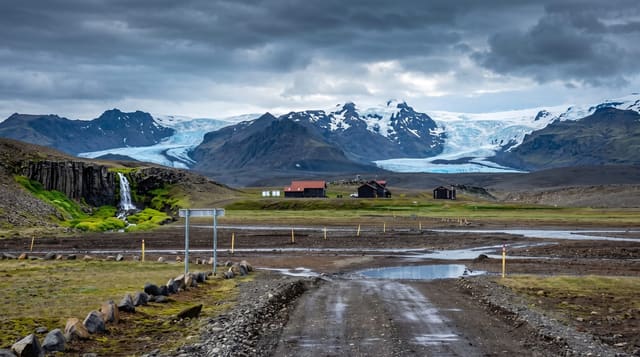
Teigarhorn
One of the world's best zeolite sites, protected since 1975, where collecting is forbidden.
Updated 30 August 2026
Teigarhorn is a farm and headland just outside Djupivogur that is internationally known among mineralogists for its zeolites - crystals that grew in cavities in the basalt as hot water moved through it - and specimens collected here in the nineteenth century are in museum collections across Europe. The site was protected as a natural monument in 1975 and became a country park later, and collecting minerals is not allowed. The old farmhouse holds a small exhibition, partly about the mineral history and partly about Nicoline Weywadt, who lived here and was the first woman in Iceland to work as a photographer. Iceland's highest recorded air temperature, 30.5 degrees in June 1939, was measured at this station.
Highlights
- A world-class zeolite locality - crystals grown in basalt cavities.
- Protected since 1975 - collecting is prohibited.
- Nicoline Weywadt's house - the first Icelandic woman to work as a photographer.
- The national heat record - 30.5 degrees measured here in June 1939.
When to go
May to September; the exhibition keeps summer hours. Two hours.
What to expect
You cannot take anything away, and the best crystals are long gone to museums - what is visible in the rock is modest. The exhibition is small and seasonal. The shore is slippery and the path is rough in places.
Nearby
Djupivogur is minutes south; Papey lies offshore from there.
What to pack for Teigarhorn
Chosen from what this place is for. Tap a kit for the full checklist.
- Broken-in walking shoes or boots - Grip and ankle support matter more than looks; never hike in brand-new boots. Find on Amazon
- Layers + a waterproof shell - Mountain weather turns fast; a packable rain jacket saves the day. Find on Amazon
- Daypack with rain cover - 20-30 litres holds water, snacks, layers and a first-aid kit. Find on Amazon
- Offline maps + a power bank - Download the trail before you lose signal; carry backup charge. Find on Amazon
Some links on this page are Amazon affiliate links - if you buy through them we may earn a small commission at no extra cost to you.
All packing kitsPlan your trip
Where to start if Teigarhorn is going on the list.
Booking links on this page are affiliate links - if you book through them we may earn a small commission at no extra cost to you. It never changes what we write about a place.
Opening times, ticket prices and seasonal closures change - check the official source before you go: official site.