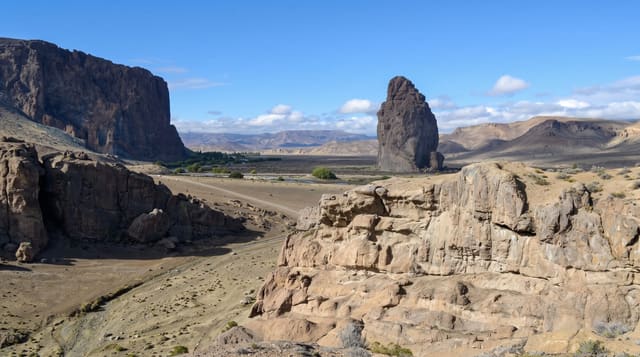
Sarmiento Petrified Forest
Badlands of striped clay strewn with the stone trunks of trees that fell some sixty-five million years ago.
Updated 4 September 2026
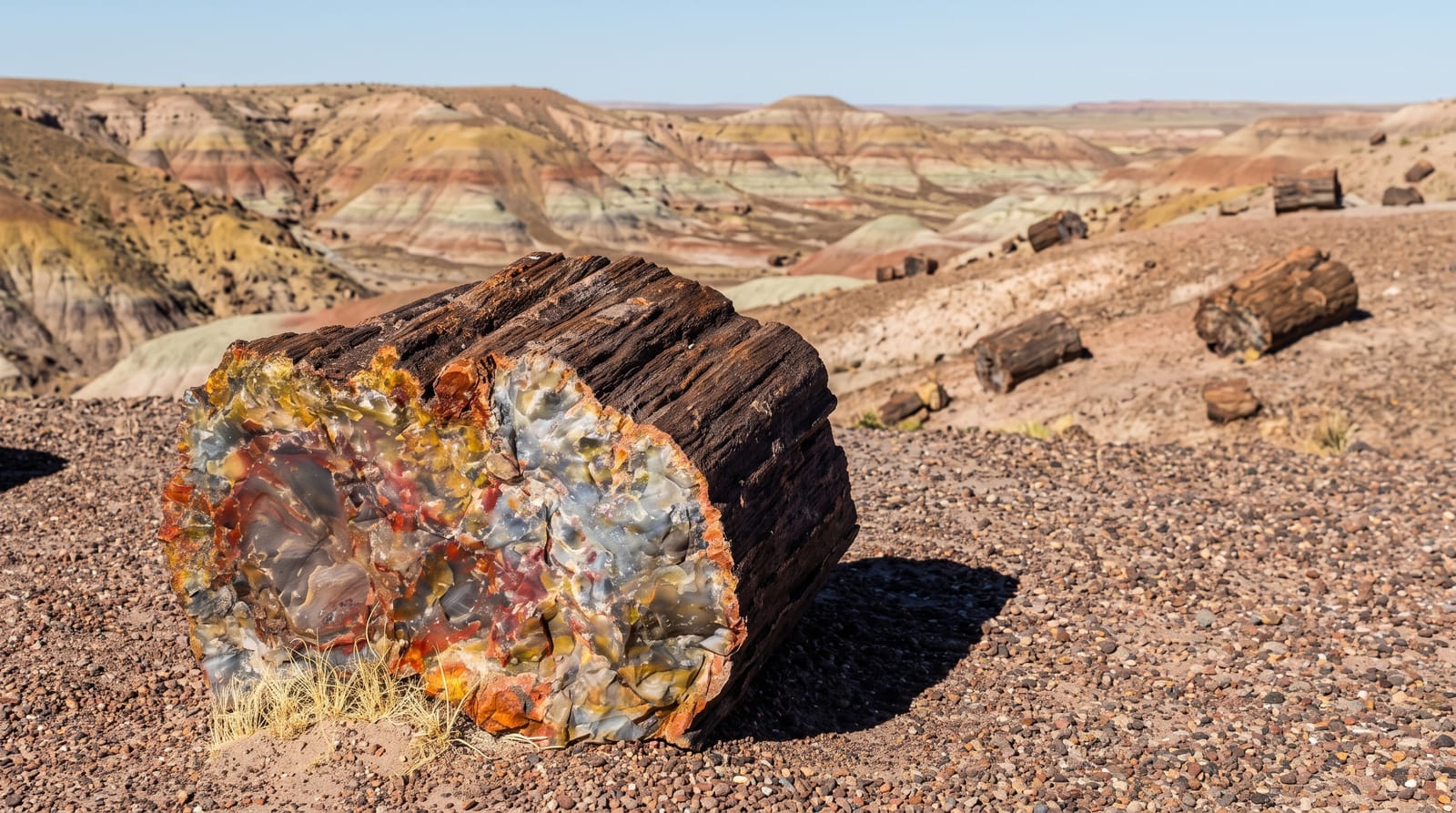
AI illustration
The petrified forest at Sarmiento sits in a landscape of eroded clay hills banded in grey, red and violet, an arid badland that was once a warm, wet forest. Volcanic ash buried the fallen trees, silica replaced the wood cell by cell, and erosion has since stripped the sediment away, leaving trunks lying where they fell, some more than a metre thick and many metres long, split into sections and hard as rock with the grain and bark still legible. A marked trail loops through the site from a small interpretation centre, passing the largest trunks and viewpoints over the coloured hills. Fossils here date to roughly sixty-five million years ago, and removing any material is prohibited.
Highlights
- The stone trunks - large petrified logs lying in the open badlands.
- The coloured hills - grey, red and violet clay banding across the site.
- The interpretation trail - the marked loop past the main specimens.
- The preserved detail - bark and grain visible in the silicified wood.
When to go
September to April for tolerable temperatures; midsummer is very hot with no shade at all. Wind is constant and can be strong enough to make walking unpleasant. Low sun in the morning or evening brings out the colours of the badlands.
What to expect
The site is small and the trail short, an hour or two at most. Access is by gravel road and there is no public transport. Facilities amount to a small centre and toilets. Taking even a fragment of petrified wood is illegal and enforced.
Nearby
Sarmiento and its lakes lie north; Comodoro Rivadavia is on the coast to the east.
What to pack for Sarmiento Petrified Forest
Chosen from what this place is for. Tap a kit for the full checklist.
- Broken-in walking shoes or boots - Grip and ankle support matter more than looks; never hike in brand-new boots. Find on Amazon
- Loose, light, long clothing - Covering up beats bare skin in the desert - and locals dress this way for a reason. Find on Amazon
- Layers + a waterproof shell - Mountain weather turns fast; a packable rain jacket saves the day. Find on Amazon
- A wide-brim hat + sunglasses - Shade for your face and eyes where there is none overhead. Find on Amazon
Some links on this page are Amazon affiliate links - if you buy through them we may earn a small commission at no extra cost to you.
All packing kitsPlan your trip
Where to start if Sarmiento Petrified Forest is going on the list.
Booking links on this page are affiliate links - if you book through them we may earn a small commission at no extra cost to you. It never changes what we write about a place.
Opening times, ticket prices and seasonal closures change - check the official source before you go: official site.