Hjorleifshofdi
A former island now stranded in black sand, holding a saga killing, a lost farm and a much photographed cave.
Updated 21 October 2026
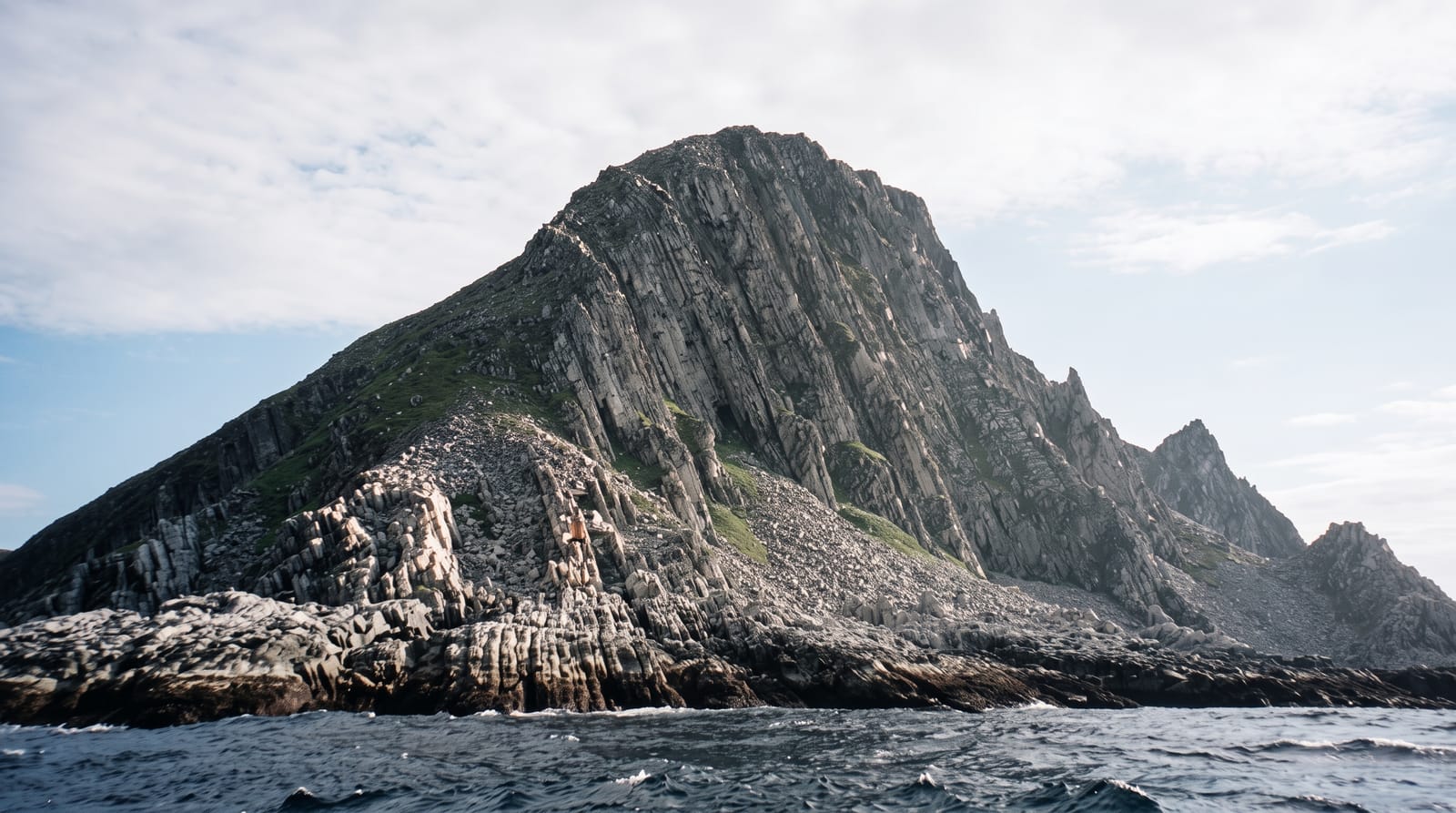
Hjorleifshofdi is a lump of rock about 220 metres high sitting alone on the Myrdalssandur, and it was once a headland on the sea until floods from Katla's eruptions poured so much sediment out that the coast moved kilometres south, leaving it inland. It is named for Hjorleifur Hrodmarsson, the foster-brother of Ingolfur Arnarson, who according to the sagas settled here and was killed by his enslaved men; a mound on the summit is pointed out as his grave. A farm stood on the hill into the twentieth century and was abandoned in 1936. At the foot of the rock a small cave, sometimes called the Yoda cave for its shape, gets most of the modern attention.
The landscape
- A former island in sand - the sea pushed back by Katla's floods.
- A saga grave on the summit - the mound named for Hjorleifur.
- A farm abandoned in 1936 - ruins on the hill.
- The cave at the foot of the rock - the shape that made it famous.
When to go
May to September; the sand track is exposed and bleak in winter. Half a day.
Things to know
The walk to the top is steep, unmarked in places and fully exposed to wind. The sand plain around it fills the air in dry weather. The cave gets busy and the parking area is small gravel. There are no facilities.
Nearby
Vik is west; Thakgil lies inland behind the sands.
Key facts
Source: Wikidata, item Q1621375, read on 18 October 2026.
What to pack for Hjorleifshofdi
Chosen from what this place is for. Tap a kit for the full checklist.
- Broken-in walking shoes or boots - Grip and ankle support matter more than looks; never hike in brand-new boots. Find on Amazon
- Head torch + spare batteries - Hands-free light is essential; caves are truly dark. Find on Amazon
- Layers + a waterproof shell - Mountain weather turns fast; a packable rain jacket saves the day. Find on Amazon
- Grippy closed shoes - Cave floors are wet, muddy and slick with formations. Find on Amazon
Some links on this page are Amazon affiliate links - if you buy through them we may earn a small commission at no extra cost to you.
All packing kitsPlan your trip
Where to start if Hjorleifshofdi is going on the list.
Booking links on this page are affiliate links - if you book through them we may earn a small commission at no extra cost to you. It never changes what we write about a place.
Opening times, ticket prices and seasonal closures change - check the official source before you go: official site.