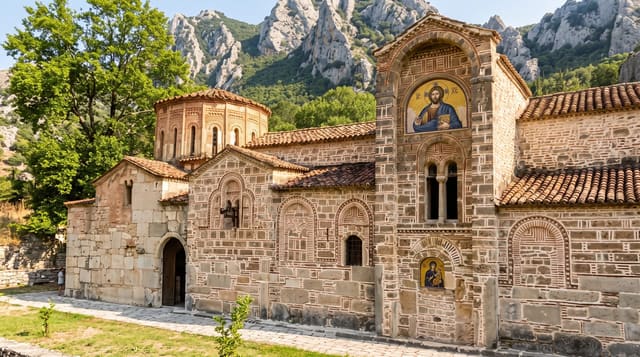
Trikala Old Town
A hillside quarter of pastel houses and lanes below a Byzantine fortress, above a river lined with cafes and bridges.
Updated 4 September 2026
AI illustration
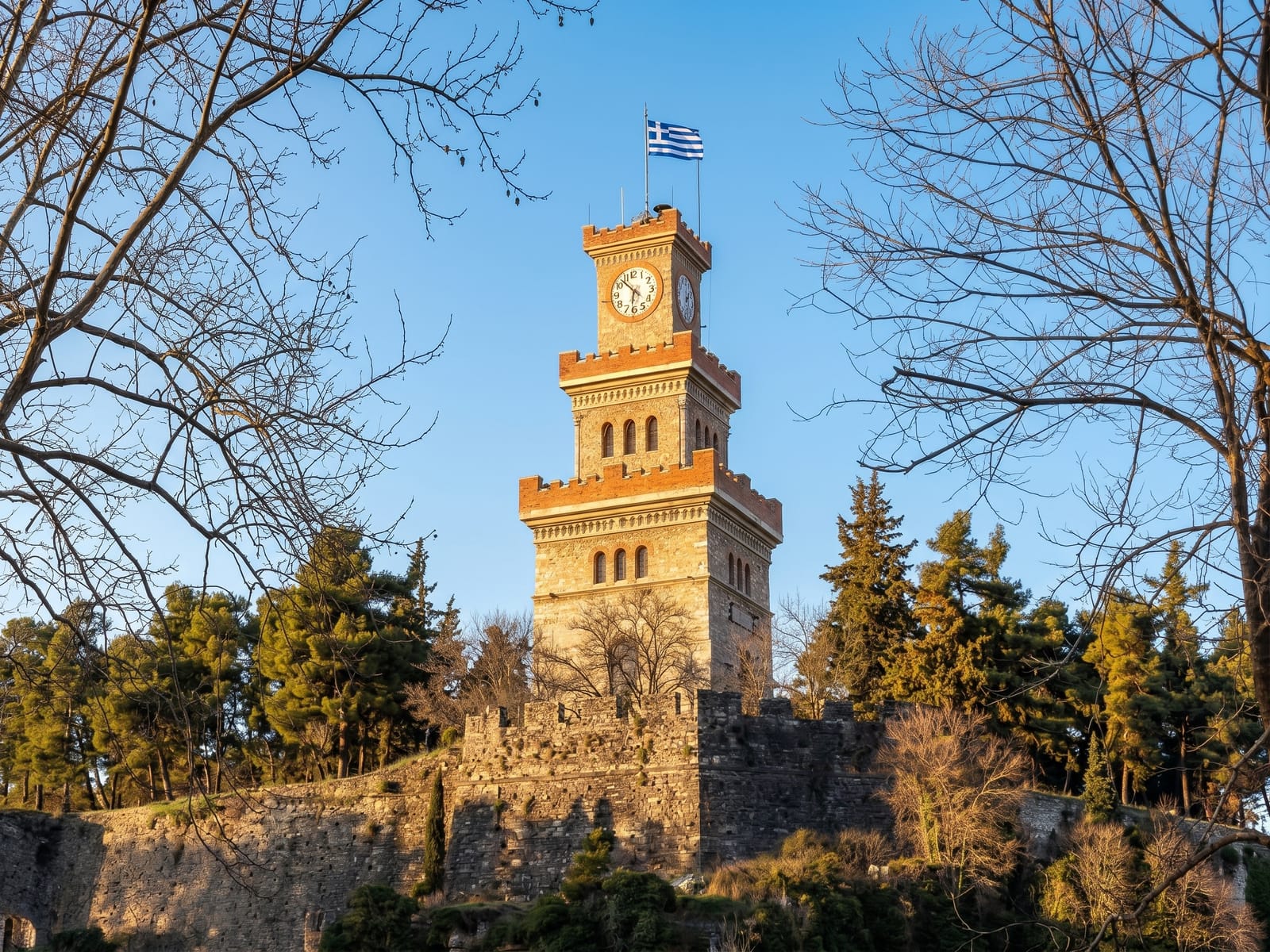
Trikala grew where the Lithaios river leaves the mountains, and the old quarter of Varousi climbs the slope below the fortress: narrow lanes of nineteenth-century houses with wooden overhangs and painted plaster, mostly restored, with small churches tucked between them. Above stands the castle, Byzantine on ancient foundations and remodelled by the Ottomans, with a clock tower and a park inside the walls looking over the Thessalian plain. Below, the river runs through the centre under stone and iron footbridges, its banks lined with cafes; the Kursum mosque of the sixteenth century, attributed to the school of the architect Sinan, stands nearby with a fine dome. Trikala was the birthplace of Asclepius in tradition, and the town is unusually walkable and green for a Thessalian city.
The main sights
- Varousi - the restored quarter of nineteenth-century houses on the slope.
- The fortress - Byzantine and Ottoman walls with a clock tower and park.
- The Lithaios riverside - footbridges and cafe terraces through the centre.
- The Kursum mosque - a domed sixteenth-century building near the river.
When to go
Spring and autumn for comfortable walking; the Thessalian plain is very hot in July and August and cold and foggy in midwinter. Evenings along the river are the town's social hour.
Good to know
Beyond Varousi and the riverside, Trikala is an ordinary provincial city. The fortress interior is largely a park rather than a monument. Several Varousi houses are private and closed.
Nearby
Porta Panagia and Pyli lie southwest; Meteora is half an hour north.
What to pack for Trikala Old Town
Chosen from what this place is for. Tap a kit for the full checklist.
- Comfortable walking shoes - Sightseeing means kilometres of pavement and cobbles daily. Find on Amazon
- Modest clothing - Shoulders and knees covered - the single most common requirement. Find on Amazon
- A slim anti-theft daypack - Zips that close properly; keep it in front in crowds and on transit. Find on Amazon
- A scarf or shawl - To cover the head or shoulders on entry; women especially at mosques. Find on Amazon
Some links on this page are Amazon affiliate links - if you buy through them we may earn a small commission at no extra cost to you.
All packing kitsPlan your trip
Where to start if Trikala Old Town is going on the list.
Booking links on this page are affiliate links - if you book through them we may earn a small commission at no extra cost to you. It never changes what we write about a place.
Opening times, ticket prices and seasonal closures change - check the official source before you go: official site.