Porta Panagia
A thirteenth-century church at the mouth of a mountain pass, with two mosaic icons that look painted until you stand close.
Updated 4 September 2026
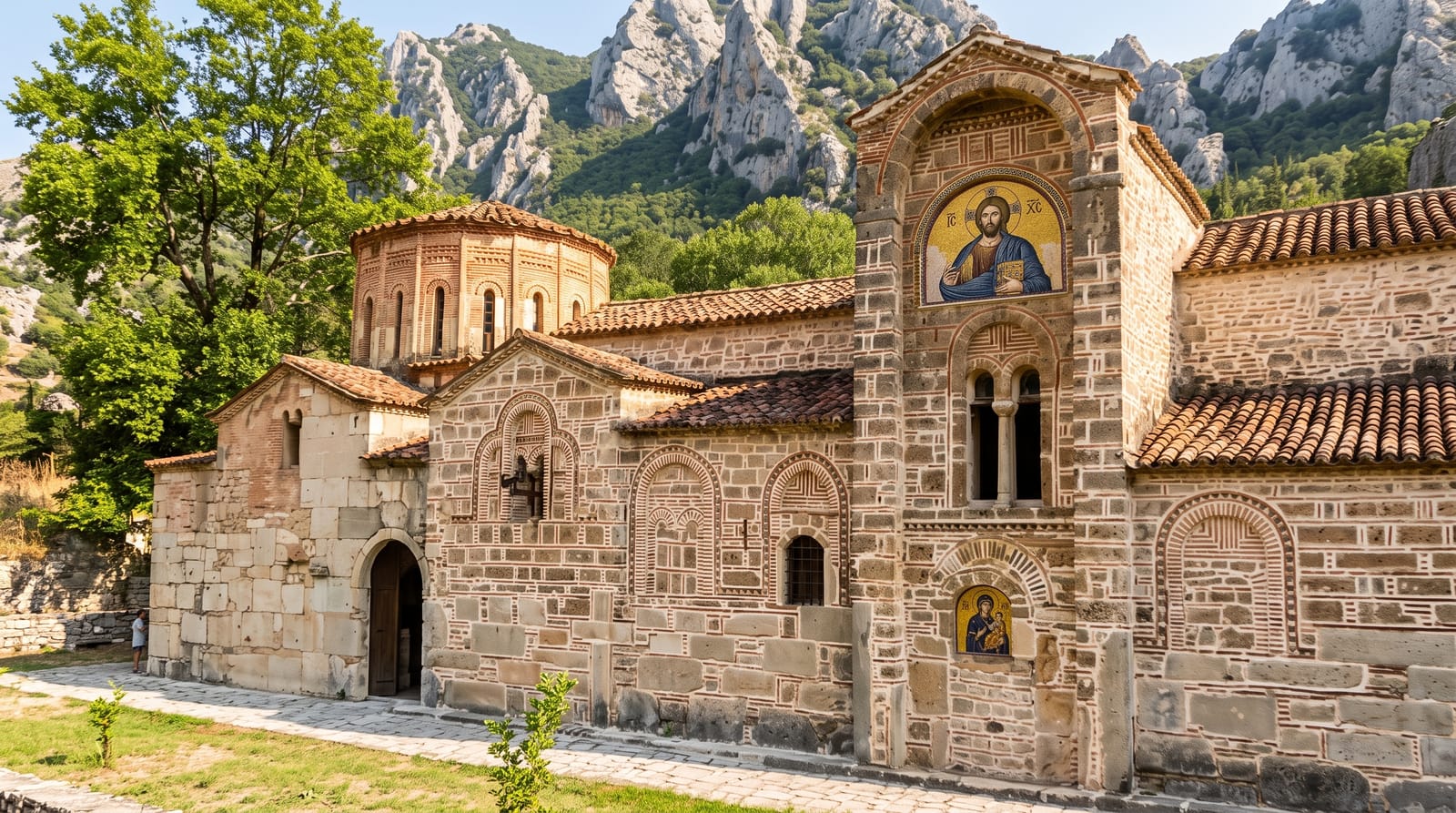
AI illustration
Porta Panagia was founded in 1283 by John Doukas, ruler of Thessaly, where the Portaikos river leaves the mountains, and it is one of the finest surviving churches of the late Byzantine period in Greece. The building mixes a western-influenced narthex with a Byzantine core, and its treasure is the templon screen holding two large mosaic icons, Christ and the Virgin, made of tiny tesserae yet reading at a distance like painted panels. Frescoes of the same period survive in parts of the interior. Beside the church stands a stone bridge of 1514, a single high arch over the river, built by a local monk, and the setting at the mouth of the gorge with the mountains behind is as much of the attraction as the architecture.
Highlights
- The mosaic icons - Christ and the Virgin in tesserae on the screen.
- The thirteenth-century church - a late Byzantine building with a western narthex.
- The stone bridge - a single-arch crossing of 1514 beside the church.
- The gorge mouth - the Portaikos emerging from the Pindus foothills.
When to go
Spring and autumn; the site is compact and can be combined with a drive into the Pindus. The church has limited opening hours and closes for a midday break.
What to expect
The interior is dim, photography is restricted, and the church can be locked outside posted times. The village of Pyli is modest, with limited facilities. The visit takes under an hour unless you walk the river.
Nearby
Trikala lies northeast; Elati and the Pertouli fir forests are up the mountain road.
Key facts
Source: Wikidata, item Q24886706, read on 18 October 2026.
What to pack for Porta Panagia
Chosen from what this place is for. Tap a kit for the full checklist.
- Comfortable walking shoes - Sightseeing means kilometres of pavement and cobbles daily. Find on Amazon
- A slim anti-theft daypack - Zips that close properly; keep it in front in crowds and on transit. Find on Amazon
- A refillable water bottle - Many cities have public fountains; save money and plastic. Find on Amazon
- A light layer + compact umbrella - For museum air-con and a sudden shower. Find on Amazon
Some links on this page are Amazon affiliate links - if you buy through them we may earn a small commission at no extra cost to you.
All packing kitsPlan your trip
Where to start if Porta Panagia is going on the list.
Booking links on this page are affiliate links - if you book through them we may earn a small commission at no extra cost to you. It never changes what we write about a place.
Opening times, ticket prices and seasonal closures change - check the official source before you go: official site.


