Thebes Archaeological Museum
A modern museum over a medieval tower, holding Mycenaean archives, painted sarcophagi and the finds of Boeotia.
Updated 19 October 2026
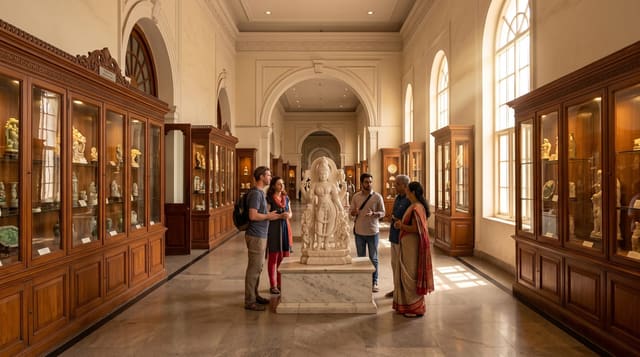
AI illustration
Thebes sits on a mound of continuous occupation, and its museum, reopened in 2016 after a long rebuild, presents the whole of Boeotia's past in a bright modern building wrapped around the thirteenth-century Frankish tower of Saint Omer. The Mycenaean material is the strength: Linear B tablets from the palace archive beneath the modern town, lapis lazuli cylinder seals imported from Mesopotamia, gold and ivory work, and above all the Tanagra larnakes, painted clay coffins whose scenes of mourning women are among the liveliest images to survive from the Bronze Age Aegean. Later rooms cover the archaic kouroi, classical Boeotia, the celebrated Tanagra terracotta figurines of elegant draped women, and Byzantine Thebes, once a centre of silk production.
History
The museum was first built between 1905 and 1912 at the northern edge of the Cadmea hill; that building was pulled down in the 1950s and a new one opened on the site in 1962. It shut for renovation in 2007, a new building by the architect Michalis Souvatzidis went up between 2005 and 2010 around a central atrium, and the renovated museum was inaugurated on 7 June 2016; inside stands the medieval tower of the Frankish fortifications of Thebes, built in 1278 by Nicholas II of Saint-Omer (Wikipedia, Archaeological Museum of Thebes).
Highlights
- The Tanagra larnakes - painted Mycenaean clay coffins with funeral scenes.
- The Linear B tablets - archive documents from the Mycenaean palace.
- The Tanagra figurines - delicate terracotta statuettes of the Hellenistic era.
- The Frankish tower - a medieval keep incorporated into the museum.
When to go
Year-round; the museum is indoors and modern, and it makes an easy day trip or a stop on the road between Athens and Delphi. It closes on some weekdays, so check.
Practical notes
Modern Thebes is an ordinary provincial town with little visible antiquity, because the ancient city lies under it, so the museum is essentially the whole visit. Excavated sites around town are fenced fragments in vacant lots.
Nearby
Orchomenos and its tholos tomb lie northwest; Livadeia and the road to Delphi are west.
Key facts
Source: Wikidata, item Q637075, read on 18 October 2026.
What to pack for Thebes Archaeological Museum
Chosen from what this place is for. Tap a kit for the full checklist.
- Comfortable walking shoes - Sightseeing means kilometres of pavement and cobbles daily. Find on Amazon
- A slim anti-theft daypack - Zips that close properly; keep it in front in crowds and on transit. Find on Amazon
- A refillable water bottle - Many cities have public fountains; save money and plastic. Find on Amazon
- A light layer + compact umbrella - For museum air-con and a sudden shower. Find on Amazon
Some links on this page are Amazon affiliate links - if you buy through them we may earn a small commission at no extra cost to you.
All packing kitsPlan your trip
Where to start if Thebes Archaeological Museum is going on the list.
Booking links on this page are affiliate links - if you book through them we may earn a small commission at no extra cost to you. It never changes what we write about a place.
Opening times, ticket prices and seasonal closures change - check the official source before you go: official site.