Eleusis Archaeological Site
The sanctuary of Demeter where the Eleusinian Mysteries were performed for two thousand years, and never explained.
Updated 4 September 2026
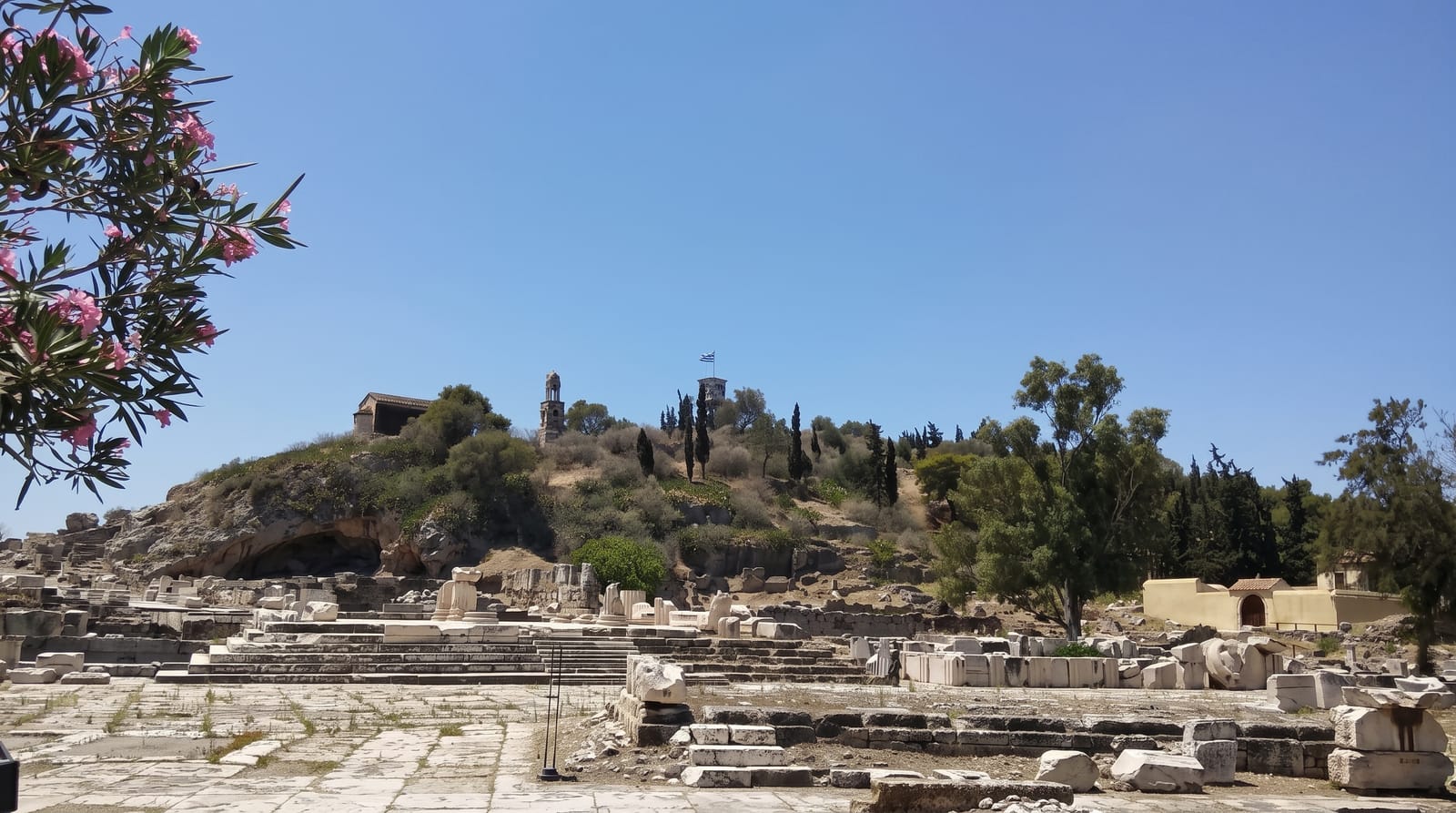
AI illustration
For close to two millennia initiates walked the Sacred Way from Athens each September to take part in rites that promised a better fate after death, and every one of them kept the secret; what happened inside the Telesterion is still unknown. The sanctuary spreads up a rocky slope: the Great Propylaia modelled on the Athenian gateway, the Plutonion cave regarded as an entrance to the underworld, and above all the Telesterion, a vast square hall with rock-cut tiers on all four sides that held thousands of initiates around a central chamber. The mysteries ended when the sanctuary was destroyed in AD 395. A small museum holds sculpture from the site, including a caryatid from the lesser propylaea. Modern Elefsina is an industrial port town, and the contrast is stark.
The main sights
- The Telesterion - the great initiation hall with its rock-cut seating.
- The Plutonion - the cave regarded as a gateway to the underworld.
- The Great Propylaia - the monumental Roman entrance to the sanctuary.
- The site museum - sculpture and votives found in the sanctuary.
When to go
Spring or autumn; the slope is bare and hot in summer. Mornings are best for light on the terraces and to avoid the industrial haze that can build later in the day.
Good to know
The setting is unlovely, refineries and shipyards surround the town, and the ruins need interpretation to come alive. Signage has improved but a guidebook helps enormously. It is rarely crowded.
Nearby
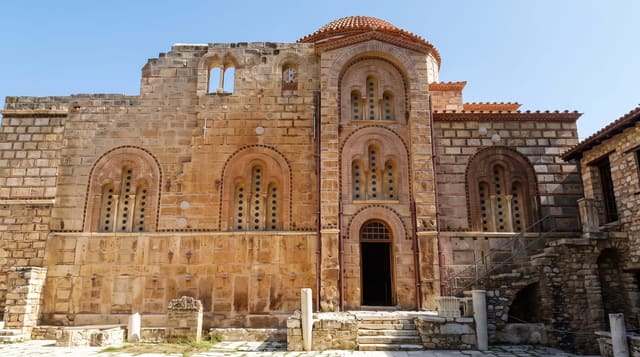
Daphni Monastery lies on the road back to Athens; the Corinth Canal is an hour west.
Key facts
Source: Wikidata, item Q38280957, read on 18 October 2026.
What to pack for Eleusis Archaeological Site
Chosen from what this place is for. Tap a kit for the full checklist.
- Head torch + spare batteries - Hands-free light is essential; caves are truly dark. Find on Amazon
- Comfortable walking shoes - Sightseeing means kilometres of pavement and cobbles daily. Find on Amazon
- Modest clothing - Shoulders and knees covered - the single most common requirement. Find on Amazon
- Grippy closed shoes - Cave floors are wet, muddy and slick with formations. Find on Amazon
Some links on this page are Amazon affiliate links - if you buy through them we may earn a small commission at no extra cost to you.
All packing kitsPlan your trip
Where to start if Eleusis Archaeological Site is going on the list.
Booking links on this page are affiliate links - if you book through them we may earn a small commission at no extra cost to you. It never changes what we write about a place.
Opening times, ticket prices and seasonal closures change - check the official source before you go: official site.