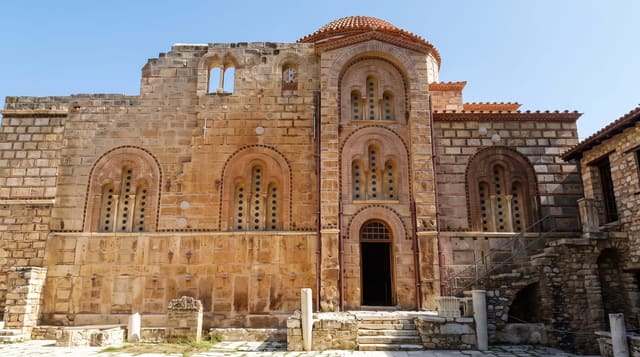
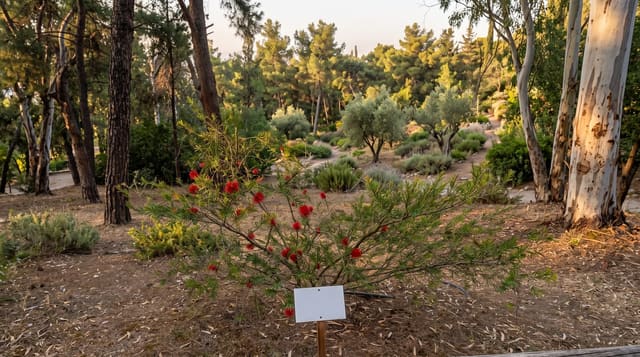
Ambelakia
A mountain village of painted mansions built on eighteenth-century dye money, home to an early cooperative of red-yarn producers.
Updated 19 October 2026
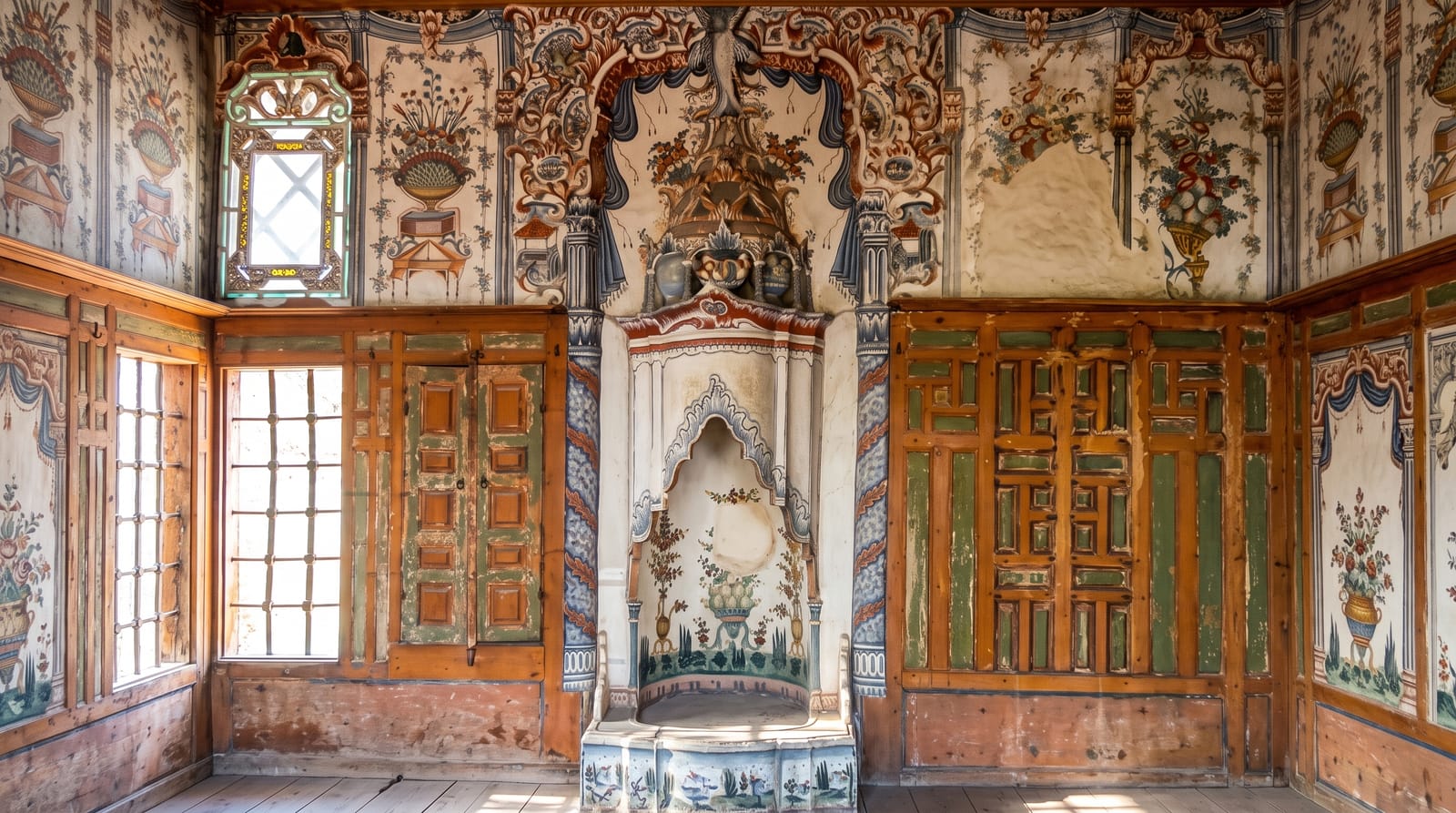
AI illustration
In the late eighteenth century Ambelakia grew rich on a single product: cotton yarn dyed a brilliant fast red with madder root, exported to Vienna, Leipzig and Dresden. To manage the trade the villagers formed a cooperative in 1780 that pooled capital and profits among producers and workers and ran its own offices abroad, an organisation often cited as one of the earliest of its kind in Europe. The money built stone mansions with painted interiors, and the finest, the house of George Schwarz, survives as a museum: carved wooden ceilings, painted walls and cupboards, coloured glass and a reception room decorated with views of Constantinople and Vienna. The trade collapsed when synthetic dyes and political upheaval arrived, and the village shrank; the mansions remain scattered along steep lanes above the Tempe gorge.
History
When Ampelakia was founded is not known for certain, since the inscriptions and church records are the main evidence; a service book bought in 1580 and given to the old church of Saint Paraskevi is among the oldest, and a researcher has argued that the village existed at least from the 14th century, in the last Byzantine era. Its name most likely comes from the vineyards around it, ambelia in Greek, and a register of 1899 records 700 vineyard owners working 1,100 acres; the village is famous for the cooperative of merchants, craftsmen, farmers and workers that produced its red-dyed yarns, regarded in Greece as one of the first cooperatives anywhere (Wikipedia, Ampelakia, Larissa).
What to look for
- The Schwarz mansion - painted rooms, carved ceilings and coloured glass.
- The stone mansions - merchant houses along the village lanes.
- The cooperative story - displays on the red-dye trade and its organisation.
- The Tempe view - the gorge and Ossa from the village terraces.
When to go
Spring and autumn; the village sits high enough to be cool in summer and can be snowbound in winter. The museum keeps limited hours and closes on some weekdays.
Good to know
The village is small and largely residential, with only one or two places to eat. The mansion is the main attraction and takes under an hour. The access road is steep and narrow.
Nearby
The Vale of Tempe lies directly below; Larissa and its ancient theatre are half an hour southwest.
Key facts
Source: Wikidata, item Q2021739, read on 18 October 2026.
What to pack for Ambelakia
Chosen from what this place is for. Tap a kit for the full checklist.
- Comfortable walking shoes - Sightseeing means kilometres of pavement and cobbles daily. Find on Amazon
- A slim anti-theft daypack - Zips that close properly; keep it in front in crowds and on transit. Find on Amazon
- A refillable water bottle - Many cities have public fountains; save money and plastic. Find on Amazon
- A light layer + compact umbrella - For museum air-con and a sudden shower. Find on Amazon
Some links on this page are Amazon affiliate links - if you buy through them we may earn a small commission at no extra cost to you.
All packing kitsPlan your trip
Where to start if Ambelakia is going on the list.
Booking links on this page are affiliate links - if you book through them we may earn a small commission at no extra cost to you. It never changes what we write about a place.
Opening times, ticket prices and seasonal closures change - check the official source before you go: official site.