Soufli
The silk town of Thrace, where mulberry trees, cocoon-rearing lofts and a working silk museum survive from a vanished industry.
Updated 19 October 2026
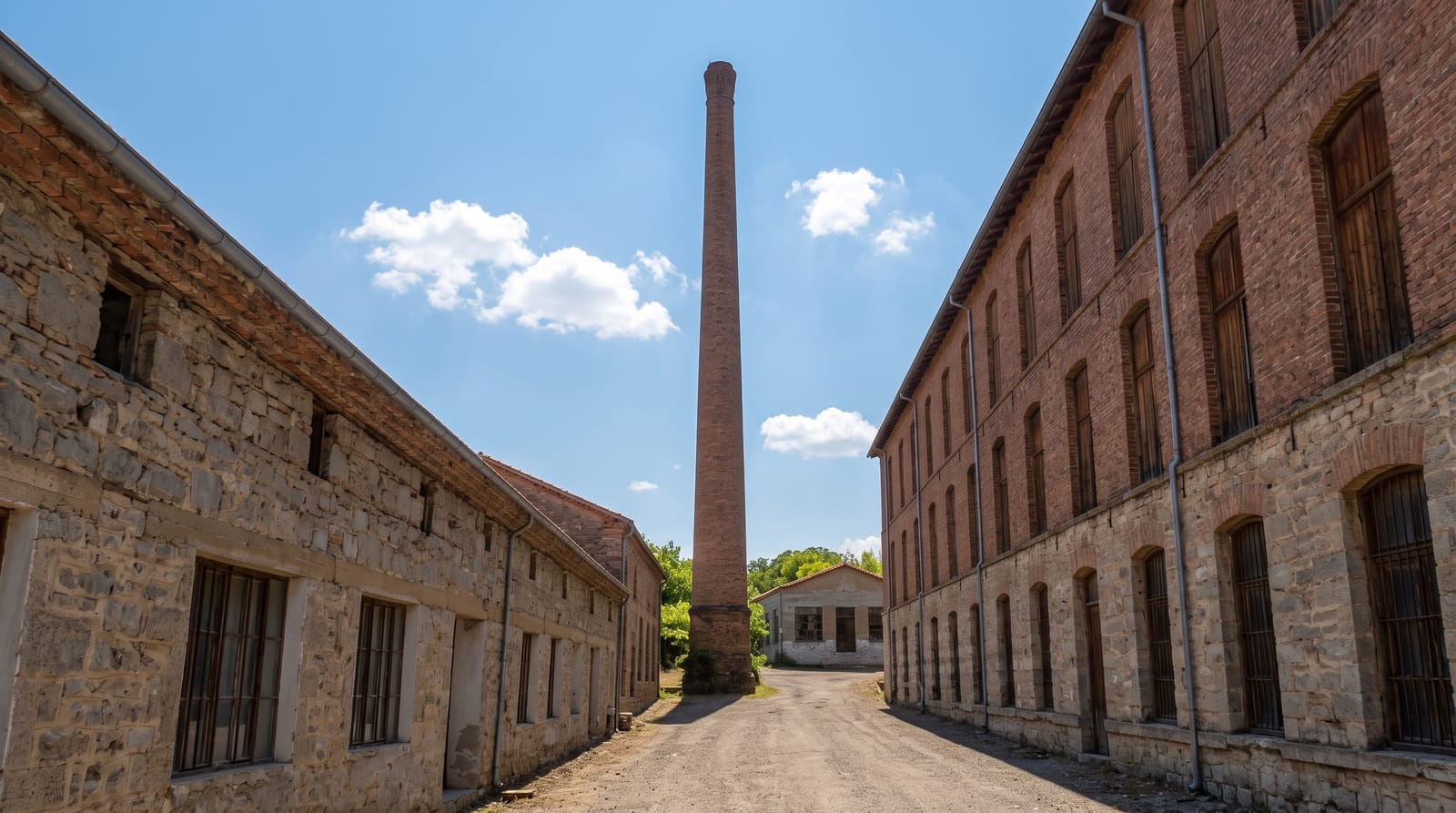
AI illustration
Soufli built its wealth on sericulture from the nineteenth century: mulberry trees fed silkworms raised in the upper floors of purpose-built houses, koukoulospita, whose distinctive tall windows and airy lofts still line the streets, and the town supplied raw silk across the Ottoman Empire and later to Europe. Disease, synthetic fibres and the loss of markets ended the industry, but Soufli has kept the memory carefully: the Silk Museum, in a restored nineteenth-century mansion run by the Piraeus Bank Cultural Foundation, explains the whole cycle from egg to thread, and the Art of Silk Museum shows weaving and dyeing with live demonstrations. A handful of workshops still produce silk goods, and mulberry trees remain a feature of the streets and the surrounding fields.
History
Finds and tombs show a settlement here in the Hellenistic period, and the first written mention, around 1667, comes from the Ottoman traveller Evliya Çelebi, who described a large tax-free village. Economic growth brought a cultural flowering, and before the middle of the 19th century the churches of Saint George and Saint Athanassios, still standing, had been built (Wikipedia, Soufli).
What to look for
- The Silk Museum - the full cycle of sericulture in a restored mansion.
- The koukoulospita - tall silkworm-rearing houses along the streets.
- The weaving demonstrations - looms and dyeing at the Art of Silk Museum.
- The mulberry trees - the feedstock of the old industry, still growing.
When to go
Spring and early summer, when the mulberries are in leaf and demonstrations are more frequent; museums keep standard hours and close on some weekdays. Summer in the Evros valley is fiercely hot.
Before you go
The town is small and quiet, with the two museums carrying the visit; an afternoon covers it. Silk goods on sale are not all locally produced, so ask. The Evros valley is remote from other destinations.
Nearby
Dadia forest lies west; Didymoteicho is north, and Alexandroupoli south on the coast.
Key facts
Source: Wikidata, item Q1014206, read on 18 October 2026.
What to pack for Soufli
Chosen from what this place is for. Tap a kit for the full checklist.
- Comfortable walking shoes - Sightseeing means kilometres of pavement and cobbles daily. Find on Amazon
- A slim anti-theft daypack - Zips that close properly; keep it in front in crowds and on transit. Find on Amazon
- A refillable water bottle - Many cities have public fountains; save money and plastic. Find on Amazon
- A light layer + compact umbrella - For museum air-con and a sudden shower. Find on Amazon
Some links on this page are Amazon affiliate links - if you buy through them we may earn a small commission at no extra cost to you.
All packing kitsPlan your trip
Where to start if Soufli is going on the list.
Booking links on this page are affiliate links - if you book through them we may earn a small commission at no extra cost to you. It never changes what we write about a place.
Opening times, ticket prices and seasonal closures change - check the official source before you go: official site.