Pythagoreion
An ancient port town on Samos, UNESCO-listed with its harbour mole, tunnel aqueduct and the sanctuary across the plain.
Updated 18 October 2026

AI illustration
UNESCO World Heritage
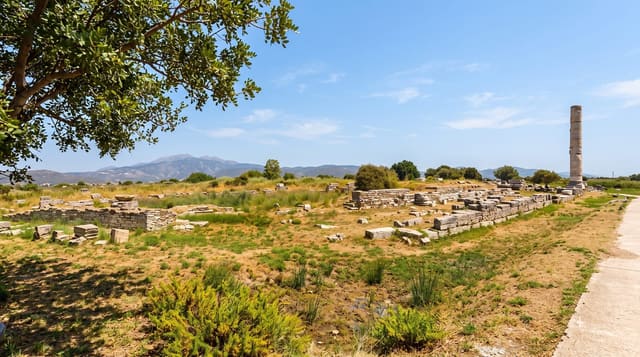
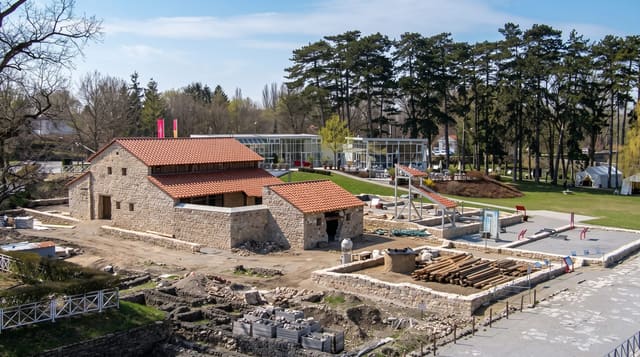
Pythagoreion occupies the site of the ancient capital of Samos, renamed for Pythagoras, who was born on the island around 570 BC. Under the tyrant Polycrates in the sixth century BC the city built three works that Herodotus called the greatest in the Greek world: a harbour mole still underlying the modern breakwater, a tunnel over a kilometre long bored through a mountain to carry water, and the great temple of Hera across the plain. UNESCO inscribed the town together with the Heraion in 1992. The modern village around the old harbour is a pleasant, low-rise resort with fish tavernas, a castle built in the nineteenth century by a local leader, a Roman bath complex, and a small archaeological museum, with the ancient walls climbing the hill behind.
History
The oldest finds at the site go back to the 4th millennium BC, though the settlement itself began around the 16th century BC, when Minoans colonised Samos; after the Trojan War the naval and economic power of Samos grew to its height in the 6th century BC, and although the Persians conquered it soon after, the town remained an influential trading centre until the 3rd century AD. Its best-known monument is the Tunnel of Eupalinos, the ancient aqueduct cut through the hill, and together with the Heraion of Samos the site was inscribed as a World Heritage Site in 1992 (Wikipedia, Pythagoreion).
The main sights
- The ancient harbour - the sixth-century BC mole beneath the modern quay.
- The city walls - fortifications climbing the hillside above the town.
- The Roman baths - excavated thermal buildings near the shore.
- The harbour village - a low-rise resort around the old port.
When to go
Spring and autumn for comfortable sightseeing; summer brings package visitors and heat, though the harbour front stays pleasant in the evening. Individual monuments keep different hours.
What to expect
The monuments are scattered and separately ticketed, and some are fenced. The modern village is a working resort rather than an archaeological park. Add the Eupalinos tunnel and the Heraion to make a full day.
Nearby
The Eupalinos tunnel is on the hill above; the Heraion lies 6 km west across the plain.
Key facts
Source: Wikidata, item Q1915216, read on 18 October 2026.
What to pack for Pythagoreion
Chosen from what this place is for. Tap a kit for the full checklist.
- Comfortable walking shoes - Sightseeing means kilometres of pavement and cobbles daily. Find on Amazon
- Modest clothing - Shoulders and knees covered - the single most common requirement. Find on Amazon
- A slim anti-theft daypack - Zips that close properly; keep it in front in crowds and on transit. Find on Amazon
- A scarf or shawl - To cover the head or shoulders on entry; women especially at mosques. Find on Amazon
Some links on this page are Amazon affiliate links - if you buy through them we may earn a small commission at no extra cost to you.
All packing kitsPlan your trip
Where to start if Pythagoreion is going on the list.
Booking links on this page are affiliate links - if you book through them we may earn a small commission at no extra cost to you. It never changes what we write about a place.
Opening times, ticket prices and seasonal closures change - check the official source before you go: official site.