Heraion of Samos
The greatest temple of Hera in the Greek world, of which one column survives at half height above a marshy plain.
Updated 18 October 2026
AI illustration
UNESCO World Heritage
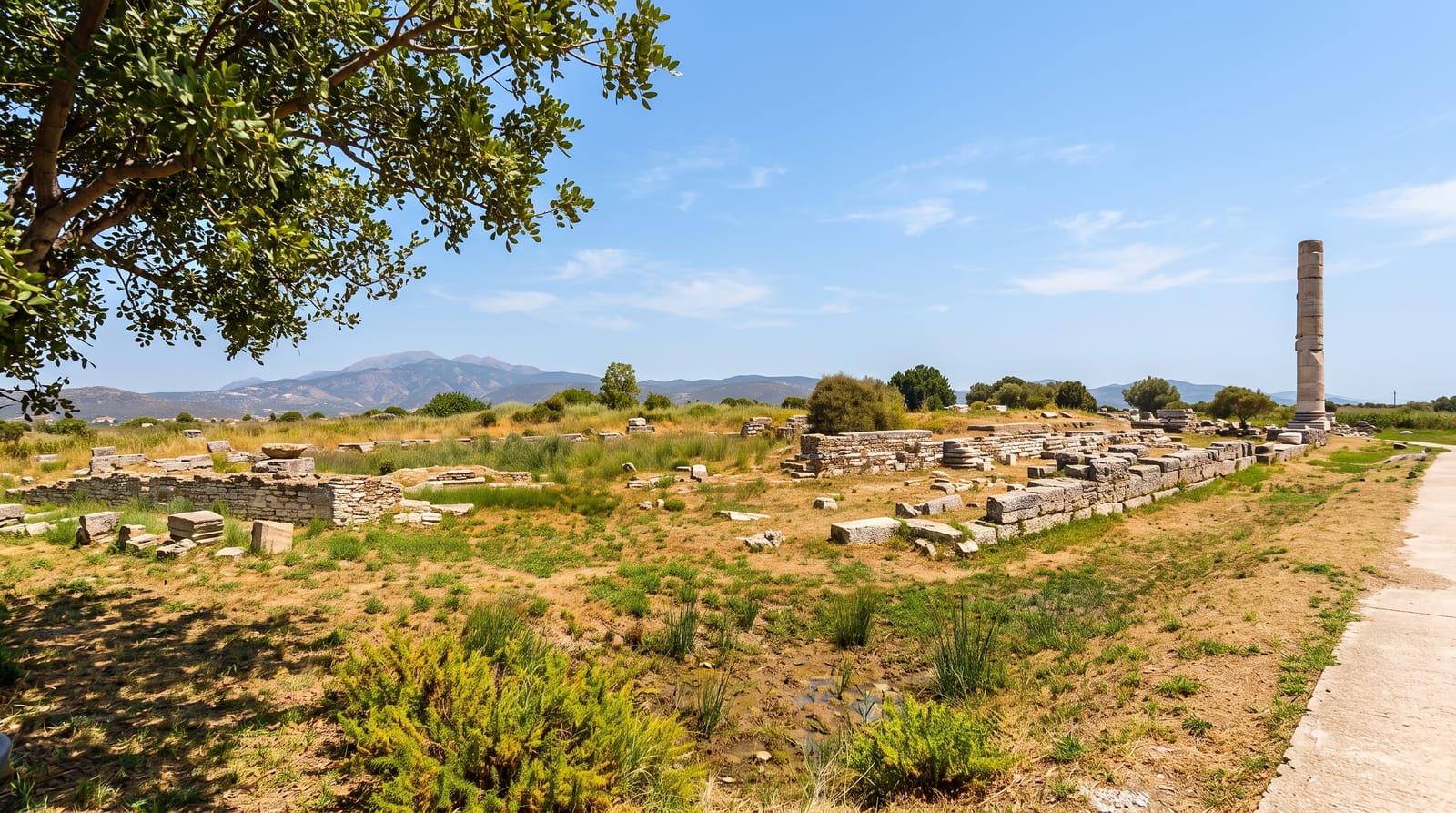
Hera was said to have been born on Samos under a willow by the Imbrasos river, and her sanctuary here grew into one of the largest in Greece. The temple begun under Polycrates around 530 BC was planned on a colossal scale, with a double row of columns, well over a hundred of them, on a platform some 108 by 55 metres, and it was never finished. Today a single column stands to about half its original height above the foundations, with the drums of others lying where they fell, an altar, a sacred way that ran to Pythagoreion, and the outlines of smaller temples and stoas. The setting is flat and often marshy, with reeds and the sea close by, and the emptiness makes the scale of the platform easier to read than a crowded site would.
History
Cult activity at the site may go back to about 1700 BC, and local tradition said Hera was born here under a lygos tree, which still stood in the sanctuary in Pausanias' day; the first temple was built in the 8th century BC, and in the late 7th century the Hekatompedos II temple, the south stoa, two colossal kouroi and the Sacred Way to the city followed. In the second quarter of the 6th century came the great altar and the Rhoikos Temple, soon replaced by a still larger temple at the height of Samian power under the tyrant Polycrates, which Herodotus called the largest of all the temples he knew. Worship ceased in AD 391 under the Theodosian edicts, a church was built on the site in the 5th century, and in 1992 the Heraion and Pythagoreion were designated a World Heritage Site (Wikipedia, Heraion of Samos).
What's there
- The lone column - a single surviving shaft on the great platform.
- The temple foundations - the outline of one of the largest Greek temples.
- The altar and sacred way - the ritual axis running toward the ancient city.
- The plain setting - reeds, river and sea around the sanctuary.
When to go
Spring and autumn; the site is flat, treeless and hot in summer, and mosquitoes gather near the marsh at dusk. Morning light is best for the column.
Things to know
There is very little standing, and visitors expecting a temple find a field of foundations with one column. Signage is limited. The site is quiet, which suits it, and the visit takes about an hour.
Nearby
Pythagoreion lies 6 km east; the Eupalinos tunnel is on the hill between them.
Key facts
Source: Wikidata, item Q841207, read on 18 October 2026.
What to pack for Heraion of Samos
Chosen from what this place is for. Tap a kit for the full checklist.
- Comfortable walking shoes - Sightseeing means kilometres of pavement and cobbles daily. Find on Amazon
- Modest clothing - Shoulders and knees covered - the single most common requirement. Find on Amazon
- A slim anti-theft daypack - Zips that close properly; keep it in front in crowds and on transit. Find on Amazon
- A scarf or shawl - To cover the head or shoulders on entry; women especially at mosques. Find on Amazon
Some links on this page are Amazon affiliate links - if you buy through them we may earn a small commission at no extra cost to you.
All packing kitsPlan your trip
Where to start if Heraion of Samos is going on the list.
Booking links on this page are affiliate links - if you book through them we may earn a small commission at no extra cost to you. It never changes what we write about a place.
Opening times, ticket prices and seasonal closures change - check the official source before you go: official site.


